
Stream Real Life Network Now

WATCH NOW
Parenthood

Faith & Culture
25 min
The Wisdom of Ecclesiastes for the Age of Superintelligence
As AI safety researchers warn about the risks of superintelligence, questions about the industry's priorities are growing. Discover why technological advancement must be guided by wisdom, and how Scripture calls Christians to trust God rather than fear the future.
The artificial intelligence community just waved goodbye to yet another top safety and regulation official — and he offers a unique angle in his warning to the world.
David Robinson had been leading safety reports for OpenAI, the maker of ChatGPT. Robinson resigned in the first week of October, stating that the industry’s approach to safety has been stemming from a broken culture. He penned the following words in a piece for The Atlantic, which contain more truth than perhaps he even knows: “The future depends on wisdom that Silicon Valley lacks.”
We’ll come back to that.
His departure comes on the heels of several other prominent AI safety researchers abandoning the industry. Their exits have paired with dreadful public warnings about the future of this technology, leaving the American people to grapple with the headlines and the unknown.
Take Jacob Coxon, for example. After leaving Claude developer Anthropic in September, he wrote on X that top tech labs are “gambling with our lives” by racing toward self-improving superintelligence. He went on to reveal that the people building AI “earnestly believe that it could kill us all by the end of the decade.”
Comforting.
For clarity, the industry term “superintelligence” refers to a hypothetical AI system that developers believe could surpass humans in overall knowledge and capability. This could happen through recursive self-improvement (RSI) in which AI models design and continually improve their own successors.
While the Trump administration has taken to using the term as a reference to AI more broadly, Coxon used it as the industry intends: the potential nightmare of AI evolving beyond our ability to contain.
Let’s go back to David Robinson for a second. Beyond diagnosing the issue of a “lack of wisdom,” he went on in his article to describe the kind of wisdom that is desperately needed — the kind that shows us “how to handle dangerous technology and, more fundamentally … what it means to care for people.”
This kind of wisdom has only one source.
Proverbs 4:7 states, “The beginning of wisdom is: Acquire wisdom; And with all your acquiring, acquire understanding.” The natural question is, how can true wisdom be acquired? Well, it is not gained by happenstance or by any means of passivity.
The word of God teaches that wisdom is found only, “if you look for it as for silver and search for it as for hidden treasure” (Proverbs 2:4).
That same proverb states that when wisdom enters the human heart, it bears fruits of knowledge, discretion, and understanding. Knowledge is pleasant, discretion brings protection, and understanding guards the one who finds it.
If those spearheading AI labs begin searching for wisdom with the same fervency as they do innovation, capital gain, and victory in the arms race, perhaps we might reap the benefits of honing a brilliant technology for human flourishing, rather than threatening it entirely.
In the absence of wisdom, we ought not to expect flourishing. Thus, the need for appropriate guardrails toward that end is becoming increasingly dire.
Whistleblowers coming forward to expose carelessness in the industry is a good thing. Speaking up when danger is on the horizon is profitable. What is not profitable, however, is responding in fear.
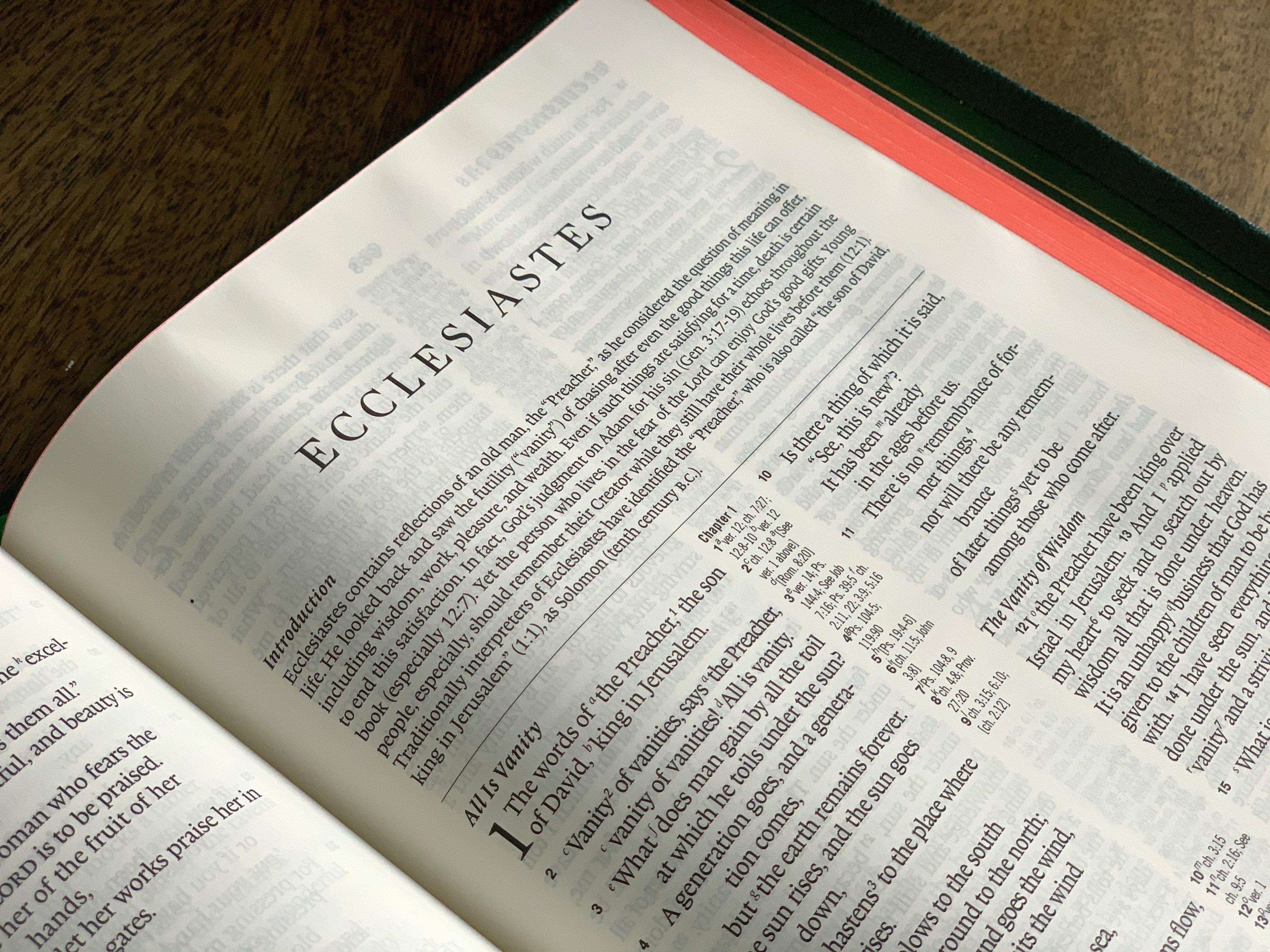
The wisest man in history, King Solomon, tells us, “There is nothing new under the sun” (Ecclesiastes 1:9).
The pride of man has reared its head through the latest technology and means of production before. As soon as human beings had the chance, they took brick and mortar and built the tower of Babel, aiming to reach as high as heaven to make a name for themselves — not for the God who gave them clay, water, and sun in the first place.
Today, we are seeing the latest expression of that sinful pride: men thinking they can hold infinite knowledge without it destroying them. Casting wisdom aside, they trust in their own minds and technical ability rather than in God.
In the Garden of Eden, Adam and Eve fell to the temptation of wanting to be all-knowing, like God. He judged that decision then, and He will not be mocked now (Galatians 6:7).
There is nothing more urgent for the unbeliever than to humble themselves, fall on their knees, and cry out to the Creator for salvation. There is, likewise, nothing more urgent for the believer than to refuse every temptation to fear in these times — to live the joyful, abundant life offered to them in Christ.
It is not a suggestion to be unafraid. It is a commandment given us by God, time and time again throughout the Scriptures.
Do not stifle your witness to the watching world.
The book of Ecclesiastes warns us that there are many dark days in this life under the sun, and that we will encounter circumstances which are difficult, perplexing, and often don’t make sense. Yet, there are a few things that author King Solomon found to be good: “Behold, what I have seen to be good and fitting is to eat and drink and find enjoyment in all the toil with which one toils under the sun the few days of his life that God has given him, for this is his lot” (Ecclesiastes 5:18).
New threats to our livelihood may come at alarming rates, but our responsibility as Christians remains the same: Do not dread the future or fear the potential of “superintelligence.” Rather, “fear God and keep his commandments, for this is the whole duty of man” (Ecclesiastes 12:13).
So, keep breaking bread with those you love. Keep enjoying the toil and the lot that God has given you with a grateful heart. Regardless of the news cycle, and whatever may come out of Washington and Silicon Valley — rejoice in what you have been given.
Our lives are but a vapor, a mist, Solomon says. The years go by quickly, and soon, we will return to dust.
That need not be depressing — in fact, let it be motivating as you live the most upright, joyous, and noble life possible along the way. Be encouraged, for we have all the instruction we need to please God in every circumstance, including the ones out of our control.
God says, “I am the Alpha and the Omega, the first and the last, the beginning and the end” in Revelation 22:13. If God is the Omega just as much as He is the Alpha, what is there to fear?
At the end of all things, just as much as at the beginning — He is there. And He rules and reigns at every point in between.
Human history was born from and ends in perfect wisdom, and God will tie the final bow on our story.
Not Sam Altman, or Dario and Daniela Amodei, or Donald Trump, or Xi Jinping — but Jesus Christ will do it, who is the same “yesterday, today, and forever” (Hebrews 13:8).
This article was written by Erica Mendel and originally published on The Washington Stand. For more content like this, visit Real Life Network.
.jpg)
Is It Time to Replace Noisy Entertainment with Faith-Based Family Media?
Is your family’s entertainment adding value or just noise? Discover how faith-based movies, documentaries, and programs can help Christian families make intentional media choices, encourage meaningful conversations, and create a more Christ-centered home.
Entertainment has never been more accessible. A television, phone, or tablet can provide an endless stream of movies, shows, short videos, news, games, and social media without ever reaching the bottom of the screen.
But having more to watch doesn’t necessarily mean families are better served by what they’re watching.
For many households, entertainment has become noisy in more ways than one. Programs compete for attention with faster pacing, stronger language, darker storylines, sexualized content, graphic imagery, and increasingly provocative themes. Algorithms encourage one more episode or video, while families can end an evening having consumed hours of media without feeling particularly rested, encouraged, or connected.
That raises a worthwhile question: Is it time to replace some of that noise with faith-based family media?
For Christian families, the answer may have less to do with watching less and more to do with choosing better.
What Does “Noisy Entertainment” Really Mean?
Noise isn’t necessarily about volume.
Media can be noisy when it constantly demands attention without giving anything meaningful in return. It can be entertainment built around shock, conflict, outrage, anxiety, or relentless stimulation. It can also be content filled with ideas and assumptions that compete with what parents are trying to teach their children.
Even material that isn’t overtly inappropriate can leave viewers feeling distracted or spiritually empty.
Philippians 4:8 gives Christians a useful standard for what deserves sustained attention, directing believers toward things that are true, noble, just, pure, lovely, and praiseworthy. That doesn’t mean every program needs to quote Scripture. But it does challenge families to think about what repeatedly occupies their minds.
Your Family’s Media Diet Matters
The phrase “media diet” is useful because entertainment has something in common with food: what is consumed occasionally matters less than what becomes normal.
One movie is unlikely to define a child’s worldview. Hundreds of hours of stories, characters, values, jokes, and messages over many years can have a much greater influence.
Children learn from stories. They notice which behaviors are rewarded, which relationships are celebrated, which beliefs are mocked, and what characters consider normal.
Adults aren’t immune either. Constant exposure to cynicism, fear, anger, or sexualized entertainment can gradually make those things feel ordinary.
Choosing faith-based media gives families an opportunity to put more spiritually nourishing material into that mix.
Replacing Is Often Easier Than Restricting
Parents can spend enormous energy saying no.
No, you can’t watch that show. No, that movie isn’t appropriate. No, we’re skipping this episode.
Boundaries are sometimes necessary, but they become much easier when there is also a good answer to, “What can we watch instead?” Faith-based streaming provides that replacement.
A family movie night could feature C.S. Lewis: The Most Reluctant Convert, opening conversations about doubt, reason, and conversion. A documentary such as The Listening Road can introduce thoughtful conversations about how people from different backgrounds think about faith. 7 Days in the Holy Land can help families visually connect places in Israel with biblical events.
The goal isn’t simply to remove entertainment. It is to replace some of it with stories and ideas worth carrying into the next day.
Faith-Based Media Can Start Conversations
One of the greatest advantages of watching Christian content together is what happens afterward. A program can naturally lead to questions that might otherwise feel forced:
- What would you have done?
- Why do you think that person responded that way?
- What does Scripture say about this?
- Do you agree with what was said?
Those conversations help turn viewing into family discipleship.
A documentary such as The Call, for example, can lead to discussion about the Great Commission and what evangelism looks like in ordinary Christian life. Way of the Master can prompt older children and adults to think about how they would talk about Jesus with someone who doesn’t share their beliefs.
The screen becomes the beginning of the conversation rather than the end of it.
Not Everything Has to Feel Like Bible Study
Replacing noisy entertainment with Christian media doesn’t mean turning every evening into a classroom. Families still need stories, laughter, discovery, music, and relaxation.
Faith-based media can include movies, animation, travel programs, interviews, biographies, documentaries, podcasts, and conversations. Some content teaches Scripture directly. Other programs simply tell compelling stories shaped by faith, courage, forgiveness, or hope.
That variety matters because healthy family media should still be enjoyable.
The distinction is that entertainment doesn’t need to undermine a family’s beliefs in order to hold its attention.
A Quieter Media Environment Can Help Families Slow Down
Another benefit of intentional viewing is simply reducing the constant demand for stimulation. Mainstream digital media often encourages viewers to keep going. Finish one episode and another begins automatically. Watch one short video and dozens more appear. Attention itself has become valuable currency.
Faith-based streaming can help families establish a different rhythm.
Choose one documentary. Watch a devotional together. Listen to a meaningful conversation. Then turn the television off and talk.
Programs such as Groundworks with Steve Wiggins are particularly suited to this approach because brief, Scripture-centered episodes can provide meaningful input without consuming an entire evening. Living Fearless with Andy and Hedieh can similarly encourage thoughtful conversation about faith and everyday challenges.
The objective isn’t to fill every available minute with Christian programming. It’s to make more intentional choices about which voices receive the family’s attention.
Parents Set the Tone
Children eventually make their own media choices. Before that happens, parents have an opportunity to model discernment. That includes more than policing what children watch. Kids also notice what their parents consume.
If adults spend hours immersed in angry commentary, dark entertainment, or endless scrolling while telling children to make healthier choices, the message can become confusing.
Christ-centered leadership in the home means asking the same questions of adult entertainment that parents ask about children’s programming.
- Is this helping or hurting?
- What is this normalizing?
- Is it worth the time being given to it?
- What could take its place?
Those questions can gradually reshape a family’s media habits without requiring an overnight purge of every mainstream platform.
Real Life Network Offers an Alternative
Real Life Network was created to provide a different kind of streaming environment.
Rather than placing biblical programming beside an enormous catalog of conflicting content, RLN carefully curates its library around Christian faith and biblical truth. Viewers can move between films, documentaries, podcasts, Bible teaching, cultural discussions, devotional programs, kids’ content, and live events without leaving that foundation.
That gives families something increasingly difficult to find in modern entertainment: a place where they can discover rather than constantly defend.
Parents still decide what fits the age and needs of their particular family. But the starting point is very different.
Replacing noisy entertainment doesn’t require rejecting technology, storytelling, or even every mainstream show. It means becoming more intentional about what receives a family’s limited time and attention.
Some entertainment merely fills a room. Better media can fill conversations, reinforce truth, encourage faith, and give families something meaningful to carry with them after the screen goes dark.
For Christian households, that makes faith-based family media more than an alternative. It can become one practical way to cultivate a home in which entertainment supports, rather than competes with, what matters most.
Explore biblically curated movies, documentaries, family programs, devotionals, and more anytime on Real Life Network.

World News
25 min
Unhappiness and Isolation Are Rising among Young People, but Those Who Are Religious Are Thriving
As loneliness and unhappiness rise among young Americans, research links religious faith and marriage with greater happiness, stronger relationships, and better educational outcomes, while Christian leaders urge Gen Z to put biblical truth into practice.
Social science data continues to emerge showing that America’s young people are increasingly non-religious, isolated, and unhappy. But the data also shows that young people who are religious are thriving, with higher levels of happiness, more friends, are more likely to be married, and better educational outcomes than their non-religious peers.
Research released by the Institute for Family Studies (IFS) notes that since 2000, reports of unhappiness among young people aged 20 to 35 has more than doubled, surging from 11% to 23%. This has coincided with an era where young people are isolating at unprecedented levels as they immerse themselves in screens, pornography, social media, video games, and AI chatbots. “Socializing among young men and women is down more than 50%, from 12 hours to 5 hours per week,” IFS observes. Unsurprisingly, this has led to a precipitous decline in relationships and dating, with two thirds of young people not in serious relationships and teen dating down 50%.
As unhappiness and loneliness has risen among young people, so too has secularism. In March, Arizona Christian University’s Cultural Research Center reported that only 1% of Gen Z (ages 18 to 22) and 4% of adults in general has a biblical worldview (defined as “individuals whose beliefs and behaviors are consistently aligned with biblical principles”). The figure is down significantly since 1994, when 12% of adults reported a biblical worldview.
But married and religious young people seem to be largely escaping the unhappiness trap, with 50% saying they are “very happy” compared to just 16% of their secular, unmarried peers. As IFS points out, “faith and family remain two of the strongest bulwarks against loneliness and despair.”
For young men in particular, religion appears to be the hinge that catapults them into a future of contentment and success. Data shows that religious men are more likely to desire and attain marriage than those who are non-religious. They are also almost twice as likely to report feeling “very happy” and to say that life feels “purposeful/meaningful” than secular men. Religious men also report less mental health issues, anxiety, and depression. They also have bachelor’s degrees at far higher rates than non-religious men (46% vs. 16%) and report finishing trade school/apprenticeships at 29% (vs. 14% of secular men).
Where a happier minority of young people find meaning and purpose in religion, a far larger percentage appear to hold politics and government as their primary focal point, especially with the rising popularity of socialism.
“[M]y generation has grown up in a very hyper political age,” Counteract USA Founder and CEO Abigail DeJarnatt contended during “Washington Watch” Friday. “… [Many believe that] government can be the arbiter of morality. That’s what happens when Marxism infuses into our society. And that’s just what we’ve grown up with. So when you’re online and you’re on TikTok [watching] recipe videos, there’s also political ideologies that are being pushed on and talked about amongst Gen Z. So it’s not surprising at all that this is where we’re at, and I think we’ll just continue to see a lot more of it among young people.”
DeJarnatt further explained how her ministry is attempting to engage Gen Z with truth. “The primary thing that we’re focusing on with Gen Z Christians is teaching them a framework of biblical critical thinking,” she explained. “Because the reality is, a lot of Gen Z’s world is unfolding online. A lot of the conversations, online friendships, relationships. … What we’re trying to teach Gen Z to do is look at what they’re seeing online and ask, ‘Is it true? Is it not?’ … We’re trying to tell Gen Z [to] ask questions as fast as we’re scrolling online. Slow down. … And as Christians, we have to weigh that against the Bible itself.”
DeJarnatt went on to argue that a sense of self entitlement undergirded by Marxism has heavily influenced young people to abandon a solid biblical ethic. “[T]his Marxism that’s invaded our culture, just the hyper individualism in Gen Z,” she emphasized. “[Much of] Gen Z is [saying], ‘We aren’t happy with either political party.’ I think we have this idea that we can have it all. [It’s the] same framework of pick and choose our own ideology to the Bible. … [W]e think, ‘I like this, I don’t like this. I’m going to choose this. I’m not going to choose this.’”
DeJarnatt concluded by urging young believers to move beyond their comfort zones in order to spread the gospel to an isolated and unhappy wider culture.
“We see so many young Christians who are taught all these amazing things and their amazing churches that are Bible-based,” she noted. “They’re in Bible-based families that are going back to Scripture, but we need to teach Gen Z to take all the things that they know and actually apply them to the key conversations happening around us, having the conversations, just getting Gen Z to talk to each other … articulating those beliefs so that they actually become effective in wielding the sword of the spirit in the spiritual battle that’s raging all around us. They have the tools. They just need to know how to use them well.”
This article was written by Dan Hart and originally published on The Washington Stand. For more content like this, visit Real Life Network.

World News
25 min
Red States Combine Forces to Choke Off Abortion Pill Pipeline
A woman’s account of being forced to take abortion pills is fueling renewed scrutiny of mifepristone, mail-order prescribing, state abortion laws, and shield laws protecting providers who send the drug across state lines.
Like a lot of girls her age, Rosalie Markezich knew the standard talking point about mifepristone. Don’t worry, the online sites say. It’s just like taking a Tylenol. “Well, I’ve taken a lot of Tylenol in my lifetime,” she tells people now, and “it has never killed my child. It has never ruined my life, and it has never made me bleed for over a week.”
Unlike most moms, Rosalie never got the chance to hear that lie from her doctor, because she didn’t ask for a prescription in the first place. Her boyfriend ordered the pills in her name, and without any sort of ID or verification, the drugs magically showed up at her house. “I told him, ‘No thank you. I do not want you to do that, and I do not want them.’ Well, [he] found the website. He filled it out all with my personal information that I did not give him to use … [and] $150 later, he successfully ordered abortion pills through the mail from a [California] doctor named Remy Coeytaux, shipped directly to my doorstep.”
When he forced her to swallow them, her plan was to go inside and throw them up. But it was too late. “That night, I laid on a blood-soaked towel by myself, choking on my own breath. I remember my body rejecting it, rejecting its own breath — the one thing that it needs. I was praying to God, ‘Please take me too.’” Now, filled with grief and anger at how the government has robbed her of everything the Left insists this debate is about — choice, privacy, and safety — she’s fighting back.
“The FDA was wrong,” Rosalie said emotionally at the Pray Vote Stand Summit. “They allowed these drugs. They allowed them to go through the mail. They knew the warnings. They knew what could happen. And yet they are still sending them through the mail after seeing firsthand what it has done to women and children.”
We’re talking about a drug, Alabama Attorney General Steve Marshall (R) reiterated, “that is facilitating domestic abuse and even murder.” And yet, four years ago, he shook his head, pro-lifers were at this same event celebrating the overwhelming victory of Dobbs, a success story a half-century of prayers and activism in the making. “But I don’t think any of us that were on that stage left the stage believing that we would have more abortions today than we had at that time.” All because of mifepristone — and the presidents since 2022 who have turned a blind eye to the violent consequences.
“It’s why, frankly, [we] are still amazed at this administration — which talks about being the most pro-life administration — simply burying their head in the sand on what we know is going on around us.” With a single signature, President Trump could turn this whole situation around, Marshall insists. “The data is there. … They have the capacity to be able to do it. The question is whether or not they have the political will.” And so far, they have not.
Instead, they’ve created a black market for abortion drugs that not only puts women who voluntarily take the pill in life-threatening situations, but sets fire to every pro-life state law in America. Right now, it doesn’t matter whether you live in Louisiana or New York, abortionists are illegally flooding every zip code of the country with mifepristone — and getting away with it.
If the Trump administration had the nerve to enforce the federal laws already on the books, Rosalie would be the happy mom of a two-year-old right now. Under the Comstock Act, the Justice Department should be cracking down on anyone shipping abortion pills through the mail — let alone to pro-life states whose voters have already made their voices heard on the issue. But instead, for reasons no one who witnessed the first Trump term can understand, Republican attorneys general like Louisiana’s Liz Murrill (R) are having to fight their way to the Supreme Court just for the right to have their laws respected.
Murrill, who’s already battling the FDA over its ridiculously lax standards on the drug, is expanding the war to states that are knowingly protecting the criminals sending pills into pro-life states. Together with Marshall and Arkansas Attorney General Tim Griffin (R), the trio is suing New York, California, and Massachusetts to try to dismantle the “shield laws” in blue states that refuse to punish anyone mailing mifepristone.
“They shield the doctor, they shield the pharmacist, they shield anybody who is involved with what I call the pill pipeline, sending those pills into our state,” Murrill told Family Research Council President Tony Perkins on “This Week on Capitol Hill.” “And they are doing it for a political purpose. They are doing it because they disapprove of the laws that our state has passed. And so they want to flood our state with those pills illegally.”
To get away with it, the prescribers leave no trace on the bottles. “They sanitize it. And so, you will never you may never know who actually prescribed those pills. … [They’re] filling the prescription bottle and sending it into our state with no name on it, no pharmacy on it, no recipient name.”
Murrill explained that her team actually tested the current market, having agents order drugs online. Asked if there’s any kind of consultation with a medical person, she replied no. “There’s none. They’re not even verifying who’s even buying them. … They mail them to anybody who basically fills out a form on the internet. So it’s extraordinarily irresponsible.” Not to mention, she added, that “they are directly trying to nullify our laws.”
And regardless of whether the women are coerced or ordering these of their own will, the AG sadly acknowledged that the number of emergency room visits is skyrocketing — mainly because no one is adhering to the FDA’s 10-week limit for the drug. “Is any other drug treated like this?” Perkins wanted to know. “None,” Murrill replied. “None,” she repeated. “That’s why I say over and over again … this is not health care. There is nothing about this that is health care. I mean, there is no situation in the medical field where they would do this with drugs or patients.”
That’s why red-state AGs sued the FDA in the first place, because it’s so shocking and unconscionable that a pill sending 10% of women to the ER doesn’t even require a doctor’s visit or approval. “Those rules are not in place anymore. And so, you know, it really poses a significant risk to women all over the country.”
Imagine, she emphasized, if blue states “mailed us cocaine or they mailed us fentanyl.” There would be legal consequences. Or, Perkins suggested, “What if … Louisiana said, ‘You know, we’re not going to work with California and New York on anything related to the Second Amendment. I don’t care what your laws say. We’re not going to support you in that.’” It’s like saying, “I’m going to mail guns to anybody who wants them,” Murrill agreed. “… They have laws that restrict gun ownership and possession in ways that we don’t. … [What if] I decided to violate those laws? And they wouldn’t be able to enforce them if we had a shield law similar to that. But we haven’t done that.”
At the end of the day, this is not a minor issue, the FRC president argued. Not for the baby, not for the mother, not for the constitutional process, and certainly not for state sovereignty. “You know,” Marshall underscored, “we can solve [this] problem right now. We have the ability to do it with the administration that’s in place. And it’s why not only is our prayer so important, but also our ability to stand together is so critical. Because the reality is it’s not about Republican or Democrat. It’s about protecting women’s health and preserving life. That’s our issue. That’s important — and on it, we’re right.”
This article was written by Suzanne Bowdey and originally published on The Washington Stand. For more content like this visit Real Life Network.

World News
25 min
Judge Throws Out Riley Gaines NCAA Lawsuit to Force Protection of Women’s Sports
A federal judge dismissed Riley Gaines and other female athletes’ Title IX lawsuit against the NCAA, ruling the organization is not subject to Title IX because it does not directly receive federal funding. The athletes plan to appeal.
A case centered on the Title IX rights of women to have male-free sports has been thrown out by a Biden-appointed judge, leaving Riley Gaines and the Independent Council on Women’s Sports (ICONS) determined to appeal.
Gaines and over a dozen female former college athletes filed the lawsuit funded and supported by ICONS in March 2024, claiming that the NCAA broke Title IX safeguards by allowing men to participate in women’s sports and infiltrate locker room spaces.
Gaines said in a statement on Tuesday, “This momentary setback will not deter me or other women athletes in the least. Rest assured, we will be appealing this decision. We are on the side of truth. I am confident Americans will rally to our side to fight the NCAA. Working together, we will defeat the NCAA’s continuing efforts to trample women’s rights in sports.”
U.S. District Judge Tiffany R. Johnson of the Northern District of Georgia on Monday dismissed the case, ruling that the NCAA does not have to abide by Title IX standards since it does not directly receive federal funding, which is a “prerequisite for liability under Title IX,” Fox News reported.
Johnson wrote, “Here, there is no evidence that the NCAA ever received, or could have received, federal funds. Thus, Plaintiffs’ Title IX claims cannot proceed.”
“Judge Johnson accepted the NCAA’s argument that the NCAA is not subject to Title IX and dismissed the case Gaines v. NCAA, brought by women college athletes seeking to hold the NCAA responsible for granting men access to women’s sports and private locker rooms,” ICONS said in a statement. “This decision removes all protections for women in NCAA collegiate competition across the country and underscores the vulnerability of women’s sports until court victories are secured.”
ICONS Co-Founder Kim Jones, a former NCAA All-American tennis player, insisted that Johnson was wrong in her ruling. “We believe the district judge erred and that the Court of Appeals will find that the NCAA, which is the controlling body of college sports for more than 1,100 member schools, almost all of which are federally funded, is subject to Title IX. We will not give up our fight for women and girls’ rights in sports.”
CEO and President of Concerned Women for America Penny Nance remarked that she is appalled by Johnson’s decision, and that it is “inexcusable for a judge to rule that the NCAA is above the law, and that a man’s identity takes priority over women’s rights.”
She continued, “This ruling effectively upholds the NCAA’s repulsive policy enabling sexual harassment and discrimination against female athletes. We are disgusted that the NCAA is lobbying for federal protections but refuses to protect female athletes. We will not back down from this fight in support of female athletes.”
The case comes at a time when far-left political candidates refuse to define what a woman is and affirm biological reality. A poll by Concerned Women for America found that “69% of Americans believe it is very or somewhat important in deciding who to vote for in this election that candidates oppose forcing female athletes to participate in sports and share locker rooms with biological boys/men identifying as girls/women.”
Nance continued, “Whether or not the NCAA takes federal funding, it directly benefits from the participation of its 1,100-plus member institutions, all of which are required to comply with Title IX. If the NCAA doesn’t comply with Title IX, no university should be allowed to be a member of the NCAA.”
“U.S. Senate passage of the Protect College Sports Act, along with this new ruling, exposes the glaring disconnect with federal civil rights law that Congress must address,” she added. “The NCAA continues to violate the rights of female athletes, but it should not be allowed to do so.”
The plaintiffs must file their notice of appeal in the next 30 days to the U.S. Court of Appeals for the 11th Circuit.
This article was written by Quinn Delamater and originally published on The Washington Stand. For more content like this, visit Real Life Network.
World News
25 min
A Hungry Generation Is Looking for Something to Believe
A spiritually hungry generation is searching for something to believe. From religious liberty and cultural influence to Israel and politics, the question is not whether young people will be formed, but what will shape their understanding of truth.
Something is happening among younger Americans. Spiritual questions have not disappeared. If anything, a generation often described as secular appears increasingly interested in religion, spirituality, meaning, and transcendence. That hunger deserves attention because hunger alone does not determine what eventually satisfies it.
That is one reason conversations about faith, culture, religious liberty, Israel, and the institutions shaping the next generation matter. Real Life Network exists to bring a biblical perspective into precisely those conversations.
The central question is not whether young people will believe in something. Human beings inevitably build their lives around some understanding of truth, identity, morality, and purpose. The more important question is what will shape those beliefs.
Joshua put the choice plainly before Israel: “Choose for yourselves today whom you will serve.” There was no illusion of neutrality. Something would occupy the center.
A spiritually hungry generation will be formed by something. The question is what reaches it first.
Religious Freedom Has to Mean Religious Freedom
That question becomes especially important when families, schools, churches, and courts disagree about religious formation.
A recent Maine custody dispute illustrates how complicated those conflicts can become. The Maine Supreme Judicial Court upheld an order giving a father final decision-making authority concerning his daughter’s involvement with a particular Calvary Chapel congregation. The mother argued that the restriction violated her constitutional religious rights.
The details matter. The court rejected the characterization that it had determined Christianity itself was psychologically harmful. Instead, it said the lower court’s concerns involved messages the child received about her father and the effects of the parental conflict. That distinction deserves to be represented accurately even as the case raises significant questions about parental rights, religious upbringing, and how courts should navigate disputes involving faith.
Similar questions emerge in public schools.
Liberty High School in Frisco, Texas, recently faced scrutiny after a Muslim student organization reportedly described a school space as intended for Muslim prayer and said “only Muslims” would be allowed. Frisco ISD responded that the space is actually a “quiet room,” is not designated as belonging exclusively to one religion, and can be used for purposes other than prayer. District policy allows students of any faith to request reasonable opportunities for voluntary prayer.
That is the standard worth defending: equal religious liberty.
Christian students should be free to read Scripture, gather voluntarily, pray, and express their faith under the same rules that protect Muslim, Jewish, or other religious students. Religious liberty becomes unstable when society begins treating freedom of religion as something that must be protected for certain beliefs but restrained for others.
The answer to religious pluralism is not less religious freedom. It is the consistent application of religious freedom.
That principle matters because schools and courts do more than settle isolated disputes. They help establish the boundaries within which families and young people understand faith in public life.
Culture Is Competing for the Next Generation
The competition for belief extends well beyond churches and schools.
Entertainment, political movements, universities, influencers, social media personalities, and celebrities all participate in forming cultural assumptions. The influence can be especially powerful when it arrives as entertainment rather than instruction.
Consider the controversy surrounding actor Adam Brody. Brody, who stars as a rabbi in Nobody Wants This, recently told GQ that he considers Israel’s conduct in Gaza a “genocide” and expressed support for a free Palestine. GQ
That is Brody’s political position, and the characterization of Israel's conduct as genocide remains fiercely disputed. But the larger cultural question extends beyond one actor or one television program: what happens when entertainment, identity, politics, and moral formation become intertwined?
Audiences should be capable of encountering political opinions without automatically adopting them. The same standard applies across ideological lines. Celebrity does not establish truth. Popularity does not establish truth. A viral video does not establish truth.
Neither does political influence.
Rep. Ro Khanna recently called for Israel to release Marwan Barghouti, describing him as a potentially unifying Palestinian leader who could contribute to a peaceful Palestinian state. Barghouti, a prominent Fatah figure, is serving multiple life sentences after an Israeli court convicted him on five counts of murder connected to attacks during the Second Intifada. Barghouti rejected the court’s jurisdiction and denied the charges.
That creates a serious policy and moral debate. Supporters of Barghouti’s release view him as a potential political alternative in Palestinian leadership. Critics point to the murder convictions and argue that presenting his release as a path toward peace minimizes the victims and the violence for which he was convicted.
Those facts should not disappear behind political slogans.
The same principle applies to Israel and Gaza more broadly. October 7, Palestinian civilian suffering, Hamas’s actions, Israel’s military response, and the future of Palestinians and Israelis deserve serious examination rather than arguments inherited from celebrities, influencers, political parties, or social-media feeds.
Discernment begins when the source of an idea matters less than whether the idea is actually true.
Everyone Is Being Formed by Something
That brings the discussion back to spiritual hunger.
A generation searching for meaning is not necessarily a generation returning to biblical Christianity. Interest in spirituality can lead toward Christianity, but it can also lead toward astrology, manifestation, political ideology, personalized spirituality, or countless other belief systems. The transcript’s central argument is precisely that distinction: spiritual appetite and Christian revival are not automatically the same thing. Pasted text
Christians should therefore resist two temptations.
The first is panic. Cultural change does not mean God has lost control.
The second is passivity. Confidence in God’s sovereignty has never meant indifference toward the formation of children, families, churches, or communities.
Parents are forming children. Teachers are forming students. Churches are forming congregations. Algorithms are forming users. Entertainment is forming audiences. Political movements are forming supporters. The question is not whether formation is happening. It is whether people recognize it.
Joshua’s challenge remains remarkably relevant: choose whom you will serve.
That choice reaches far beyond elections or partisan politics. It reaches into what is watched, what is believed, what is taught to children, what voices receive trust, what definitions of good and evil are accepted, and ultimately where authority is located.
A hungry generation is already at the table.
What matters now is what it is being fed.
Find more biblical perspective on faith, culture, Israel, and the stories shaping the next generation on The Daniel Cohen Show, streaming free on Real Life Network.
Thank you! Your submission has been received!
Oops! Something went wrong while submitting the form.
Faith & Culture
The artificial intelligence community just waved goodbye to yet another top safety and regulation official — and he offers a unique angle in his warning to the world.
David Robinson had been leading safety reports for OpenAI, the maker of ChatGPT. Robinson resigned in the first week of October, stating that the industry’s approach to safety has been stemming from a broken culture. He penned the following words in a piece for The Atlantic, which contain more truth than perhaps he even knows: “The future depends on wisdom that Silicon Valley lacks.”
We’ll come back to that.
His departure comes on the heels of several other prominent AI safety researchers abandoning the industry. Their exits have paired with dreadful public warnings about the future of this technology, leaving the American people to grapple with the headlines and the unknown.
Take Jacob Coxon, for example. After leaving Claude developer Anthropic in September, he wrote on X that top tech labs are “gambling with our lives” by racing toward self-improving superintelligence. He went on to reveal that the people building AI “earnestly believe that it could kill us all by the end of the decade.”
Comforting.
For clarity, the industry term “superintelligence” refers to a hypothetical AI system that developers believe could surpass humans in overall knowledge and capability. This could happen through recursive self-improvement (RSI) in which AI models design and continually improve their own successors.
While the Trump administration has taken to using the term as a reference to AI more broadly, Coxon used it as the industry intends: the potential nightmare of AI evolving beyond our ability to contain.
Let’s go back to David Robinson for a second. Beyond diagnosing the issue of a “lack of wisdom,” he went on in his article to describe the kind of wisdom that is desperately needed — the kind that shows us “how to handle dangerous technology and, more fundamentally … what it means to care for people.”
This kind of wisdom has only one source.
Proverbs 4:7 states, “The beginning of wisdom is: Acquire wisdom; And with all your acquiring, acquire understanding.” The natural question is, how can true wisdom be acquired? Well, it is not gained by happenstance or by any means of passivity.
The word of God teaches that wisdom is found only, “if you look for it as for silver and search for it as for hidden treasure” (Proverbs 2:4).
That same proverb states that when wisdom enters the human heart, it bears fruits of knowledge, discretion, and understanding. Knowledge is pleasant, discretion brings protection, and understanding guards the one who finds it.
If those spearheading AI labs begin searching for wisdom with the same fervency as they do innovation, capital gain, and victory in the arms race, perhaps we might reap the benefits of honing a brilliant technology for human flourishing, rather than threatening it entirely.
In the absence of wisdom, we ought not to expect flourishing. Thus, the need for appropriate guardrails toward that end is becoming increasingly dire.
Whistleblowers coming forward to expose carelessness in the industry is a good thing. Speaking up when danger is on the horizon is profitable. What is not profitable, however, is responding in fear.
The wisest man in history, King Solomon, tells us, “There is nothing new under the sun” (Ecclesiastes 1:9).
The pride of man has reared its head through the latest technology and means of production before. As soon as human beings had the chance, they took brick and mortar and built the tower of Babel, aiming to reach as high as heaven to make a name for themselves — not for the God who gave them clay, water, and sun in the first place.
Today, we are seeing the latest expression of that sinful pride: men thinking they can hold infinite knowledge without it destroying them. Casting wisdom aside, they trust in their own minds and technical ability rather than in God.
In the Garden of Eden, Adam and Eve fell to the temptation of wanting to be all-knowing, like God. He judged that decision then, and He will not be mocked now (Galatians 6:7).
There is nothing more urgent for the unbeliever than to humble themselves, fall on their knees, and cry out to the Creator for salvation. There is, likewise, nothing more urgent for the believer than to refuse every temptation to fear in these times — to live the joyful, abundant life offered to them in Christ.
It is not a suggestion to be unafraid. It is a commandment given us by God, time and time again throughout the Scriptures.
Do not stifle your witness to the watching world.
The book of Ecclesiastes warns us that there are many dark days in this life under the sun, and that we will encounter circumstances which are difficult, perplexing, and often don’t make sense. Yet, there are a few things that author King Solomon found to be good: “Behold, what I have seen to be good and fitting is to eat and drink and find enjoyment in all the toil with which one toils under the sun the few days of his life that God has given him, for this is his lot” (Ecclesiastes 5:18).
New threats to our livelihood may come at alarming rates, but our responsibility as Christians remains the same: Do not dread the future or fear the potential of “superintelligence.” Rather, “fear God and keep his commandments, for this is the whole duty of man” (Ecclesiastes 12:13).
So, keep breaking bread with those you love. Keep enjoying the toil and the lot that God has given you with a grateful heart. Regardless of the news cycle, and whatever may come out of Washington and Silicon Valley — rejoice in what you have been given.
Our lives are but a vapor, a mist, Solomon says. The years go by quickly, and soon, we will return to dust.
That need not be depressing — in fact, let it be motivating as you live the most upright, joyous, and noble life possible along the way. Be encouraged, for we have all the instruction we need to please God in every circumstance, including the ones out of our control.
God says, “I am the Alpha and the Omega, the first and the last, the beginning and the end” in Revelation 22:13. If God is the Omega just as much as He is the Alpha, what is there to fear?
At the end of all things, just as much as at the beginning — He is there. And He rules and reigns at every point in between.
Human history was born from and ends in perfect wisdom, and God will tie the final bow on our story.
Not Sam Altman, or Dario and Daniela Amodei, or Donald Trump, or Xi Jinping — but Jesus Christ will do it, who is the same “yesterday, today, and forever” (Hebrews 13:8).
This article was written by Erica Mendel and originally published on The Washington Stand. For more content like this, visit Real Life Network.
25 min
October 19, 2026
The Washington Stand
Entertainment & Lifestyle
Entertainment has never been more accessible. A television, phone, or tablet can provide an endless stream of movies, shows, short videos, news, games, and social media without ever reaching the bottom of the screen.
But having more to watch doesn’t necessarily mean families are better served by what they’re watching.
For many households, entertainment has become noisy in more ways than one. Programs compete for attention with faster pacing, stronger language, darker storylines, sexualized content, graphic imagery, and increasingly provocative themes. Algorithms encourage one more episode or video, while families can end an evening having consumed hours of media without feeling particularly rested, encouraged, or connected.
That raises a worthwhile question: Is it time to replace some of that noise with faith-based family media?
For Christian families, the answer may have less to do with watching less and more to do with choosing better.
What Does “Noisy Entertainment” Really Mean?
Noise isn’t necessarily about volume.
Media can be noisy when it constantly demands attention without giving anything meaningful in return. It can be entertainment built around shock, conflict, outrage, anxiety, or relentless stimulation. It can also be content filled with ideas and assumptions that compete with what parents are trying to teach their children.
Even material that isn’t overtly inappropriate can leave viewers feeling distracted or spiritually empty.
Philippians 4:8 gives Christians a useful standard for what deserves sustained attention, directing believers toward things that are true, noble, just, pure, lovely, and praiseworthy. That doesn’t mean every program needs to quote Scripture. But it does challenge families to think about what repeatedly occupies their minds.
Your Family’s Media Diet Matters
The phrase “media diet” is useful because entertainment has something in common with food: what is consumed occasionally matters less than what becomes normal.
One movie is unlikely to define a child’s worldview. Hundreds of hours of stories, characters, values, jokes, and messages over many years can have a much greater influence.
Children learn from stories. They notice which behaviors are rewarded, which relationships are celebrated, which beliefs are mocked, and what characters consider normal.
Adults aren’t immune either. Constant exposure to cynicism, fear, anger, or sexualized entertainment can gradually make those things feel ordinary.
Choosing faith-based media gives families an opportunity to put more spiritually nourishing material into that mix.
Replacing Is Often Easier Than Restricting
Parents can spend enormous energy saying no.
No, you can’t watch that show. No, that movie isn’t appropriate. No, we’re skipping this episode.
Boundaries are sometimes necessary, but they become much easier when there is also a good answer to, “What can we watch instead?” Faith-based streaming provides that replacement.
A family movie night could feature C.S. Lewis: The Most Reluctant Convert, opening conversations about doubt, reason, and conversion. A documentary such as The Listening Road can introduce thoughtful conversations about how people from different backgrounds think about faith. 7 Days in the Holy Land can help families visually connect places in Israel with biblical events.
The goal isn’t simply to remove entertainment. It is to replace some of it with stories and ideas worth carrying into the next day.
Faith-Based Media Can Start Conversations
One of the greatest advantages of watching Christian content together is what happens afterward. A program can naturally lead to questions that might otherwise feel forced:
- What would you have done?
- Why do you think that person responded that way?
- What does Scripture say about this?
- Do you agree with what was said?
Those conversations help turn viewing into family discipleship.
A documentary such as The Call, for example, can lead to discussion about the Great Commission and what evangelism looks like in ordinary Christian life. Way of the Master can prompt older children and adults to think about how they would talk about Jesus with someone who doesn’t share their beliefs.
The screen becomes the beginning of the conversation rather than the end of it.
Not Everything Has to Feel Like Bible Study
Replacing noisy entertainment with Christian media doesn’t mean turning every evening into a classroom. Families still need stories, laughter, discovery, music, and relaxation.
Faith-based media can include movies, animation, travel programs, interviews, biographies, documentaries, podcasts, and conversations. Some content teaches Scripture directly. Other programs simply tell compelling stories shaped by faith, courage, forgiveness, or hope.
That variety matters because healthy family media should still be enjoyable.
The distinction is that entertainment doesn’t need to undermine a family’s beliefs in order to hold its attention.
A Quieter Media Environment Can Help Families Slow Down
Another benefit of intentional viewing is simply reducing the constant demand for stimulation. Mainstream digital media often encourages viewers to keep going. Finish one episode and another begins automatically. Watch one short video and dozens more appear. Attention itself has become valuable currency.
Faith-based streaming can help families establish a different rhythm.
Choose one documentary. Watch a devotional together. Listen to a meaningful conversation. Then turn the television off and talk.
Programs such as Groundworks with Steve Wiggins are particularly suited to this approach because brief, Scripture-centered episodes can provide meaningful input without consuming an entire evening. Living Fearless with Andy and Hedieh can similarly encourage thoughtful conversation about faith and everyday challenges.
The objective isn’t to fill every available minute with Christian programming. It’s to make more intentional choices about which voices receive the family’s attention.
Parents Set the Tone
Children eventually make their own media choices. Before that happens, parents have an opportunity to model discernment. That includes more than policing what children watch. Kids also notice what their parents consume.
If adults spend hours immersed in angry commentary, dark entertainment, or endless scrolling while telling children to make healthier choices, the message can become confusing.
Christ-centered leadership in the home means asking the same questions of adult entertainment that parents ask about children’s programming.
- Is this helping or hurting?
- What is this normalizing?
- Is it worth the time being given to it?
- What could take its place?
Those questions can gradually reshape a family’s media habits without requiring an overnight purge of every mainstream platform.
Real Life Network Offers an Alternative
Real Life Network was created to provide a different kind of streaming environment.
Rather than placing biblical programming beside an enormous catalog of conflicting content, RLN carefully curates its library around Christian faith and biblical truth. Viewers can move between films, documentaries, podcasts, Bible teaching, cultural discussions, devotional programs, kids’ content, and live events without leaving that foundation.
That gives families something increasingly difficult to find in modern entertainment: a place where they can discover rather than constantly defend.
Parents still decide what fits the age and needs of their particular family. But the starting point is very different.
Replacing noisy entertainment doesn’t require rejecting technology, storytelling, or even every mainstream show. It means becoming more intentional about what receives a family’s limited time and attention.
Some entertainment merely fills a room. Better media can fill conversations, reinforce truth, encourage faith, and give families something meaningful to carry with them after the screen goes dark.
For Christian households, that makes faith-based family media more than an alternative. It can become one practical way to cultivate a home in which entertainment supports, rather than competes with, what matters most.
Explore biblically curated movies, documentaries, family programs, devotionals, and more anytime on Real Life Network.
25 min
Is It Time to Replace Noisy Entertainment with Faith-Based Family Media?
October 12, 2026
Real Life Network
World News
Social science data continues to emerge showing that America’s young people are increasingly non-religious, isolated, and unhappy. But the data also shows that young people who are religious are thriving, with higher levels of happiness, more friends, are more likely to be married, and better educational outcomes than their non-religious peers.
Research released by the Institute for Family Studies (IFS) notes that since 2000, reports of unhappiness among young people aged 20 to 35 has more than doubled, surging from 11% to 23%. This has coincided with an era where young people are isolating at unprecedented levels as they immerse themselves in screens, pornography, social media, video games, and AI chatbots. “Socializing among young men and women is down more than 50%, from 12 hours to 5 hours per week,” IFS observes. Unsurprisingly, this has led to a precipitous decline in relationships and dating, with two thirds of young people not in serious relationships and teen dating down 50%.
As unhappiness and loneliness has risen among young people, so too has secularism. In March, Arizona Christian University’s Cultural Research Center reported that only 1% of Gen Z (ages 18 to 22) and 4% of adults in general has a biblical worldview (defined as “individuals whose beliefs and behaviors are consistently aligned with biblical principles”). The figure is down significantly since 1994, when 12% of adults reported a biblical worldview.
But married and religious young people seem to be largely escaping the unhappiness trap, with 50% saying they are “very happy” compared to just 16% of their secular, unmarried peers. As IFS points out, “faith and family remain two of the strongest bulwarks against loneliness and despair.”
For young men in particular, religion appears to be the hinge that catapults them into a future of contentment and success. Data shows that religious men are more likely to desire and attain marriage than those who are non-religious. They are also almost twice as likely to report feeling “very happy” and to say that life feels “purposeful/meaningful” than secular men. Religious men also report less mental health issues, anxiety, and depression. They also have bachelor’s degrees at far higher rates than non-religious men (46% vs. 16%) and report finishing trade school/apprenticeships at 29% (vs. 14% of secular men).
Where a happier minority of young people find meaning and purpose in religion, a far larger percentage appear to hold politics and government as their primary focal point, especially with the rising popularity of socialism.
“[M]y generation has grown up in a very hyper political age,” Counteract USA Founder and CEO Abigail DeJarnatt contended during “Washington Watch” Friday. “… [Many believe that] government can be the arbiter of morality. That’s what happens when Marxism infuses into our society. And that’s just what we’ve grown up with. So when you’re online and you’re on TikTok [watching] recipe videos, there’s also political ideologies that are being pushed on and talked about amongst Gen Z. So it’s not surprising at all that this is where we’re at, and I think we’ll just continue to see a lot more of it among young people.”
DeJarnatt further explained how her ministry is attempting to engage Gen Z with truth. “The primary thing that we’re focusing on with Gen Z Christians is teaching them a framework of biblical critical thinking,” she explained. “Because the reality is, a lot of Gen Z’s world is unfolding online. A lot of the conversations, online friendships, relationships. … What we’re trying to teach Gen Z to do is look at what they’re seeing online and ask, ‘Is it true? Is it not?’ … We’re trying to tell Gen Z [to] ask questions as fast as we’re scrolling online. Slow down. … And as Christians, we have to weigh that against the Bible itself.”
DeJarnatt went on to argue that a sense of self entitlement undergirded by Marxism has heavily influenced young people to abandon a solid biblical ethic. “[T]his Marxism that’s invaded our culture, just the hyper individualism in Gen Z,” she emphasized. “[Much of] Gen Z is [saying], ‘We aren’t happy with either political party.’ I think we have this idea that we can have it all. [It’s the] same framework of pick and choose our own ideology to the Bible. … [W]e think, ‘I like this, I don’t like this. I’m going to choose this. I’m not going to choose this.’”
DeJarnatt concluded by urging young believers to move beyond their comfort zones in order to spread the gospel to an isolated and unhappy wider culture.
“We see so many young Christians who are taught all these amazing things and their amazing churches that are Bible-based,” she noted. “They’re in Bible-based families that are going back to Scripture, but we need to teach Gen Z to take all the things that they know and actually apply them to the key conversations happening around us, having the conversations, just getting Gen Z to talk to each other … articulating those beliefs so that they actually become effective in wielding the sword of the spirit in the spiritual battle that’s raging all around us. They have the tools. They just need to know how to use them well.”
This article was written by Dan Hart and originally published on The Washington Stand. For more content like this, visit Real Life Network.
25 min
Unhappiness and Isolation Are Rising among Young People, but Those Who Are Religious Are Thriving
October 6, 2026
The Washington Stand
World News
Like a lot of girls her age, Rosalie Markezich knew the standard talking point about mifepristone. Don’t worry, the online sites say. It’s just like taking a Tylenol. “Well, I’ve taken a lot of Tylenol in my lifetime,” she tells people now, and “it has never killed my child. It has never ruined my life, and it has never made me bleed for over a week.”
Unlike most moms, Rosalie never got the chance to hear that lie from her doctor, because she didn’t ask for a prescription in the first place. Her boyfriend ordered the pills in her name, and without any sort of ID or verification, the drugs magically showed up at her house. “I told him, ‘No thank you. I do not want you to do that, and I do not want them.’ Well, [he] found the website. He filled it out all with my personal information that I did not give him to use … [and] $150 later, he successfully ordered abortion pills through the mail from a [California] doctor named Remy Coeytaux, shipped directly to my doorstep.”
When he forced her to swallow them, her plan was to go inside and throw them up. But it was too late. “That night, I laid on a blood-soaked towel by myself, choking on my own breath. I remember my body rejecting it, rejecting its own breath — the one thing that it needs. I was praying to God, ‘Please take me too.’” Now, filled with grief and anger at how the government has robbed her of everything the Left insists this debate is about — choice, privacy, and safety — she’s fighting back.
“The FDA was wrong,” Rosalie said emotionally at the Pray Vote Stand Summit. “They allowed these drugs. They allowed them to go through the mail. They knew the warnings. They knew what could happen. And yet they are still sending them through the mail after seeing firsthand what it has done to women and children.”
We’re talking about a drug, Alabama Attorney General Steve Marshall (R) reiterated, “that is facilitating domestic abuse and even murder.” And yet, four years ago, he shook his head, pro-lifers were at this same event celebrating the overwhelming victory of Dobbs, a success story a half-century of prayers and activism in the making. “But I don’t think any of us that were on that stage left the stage believing that we would have more abortions today than we had at that time.” All because of mifepristone — and the presidents since 2022 who have turned a blind eye to the violent consequences.
“It’s why, frankly, [we] are still amazed at this administration — which talks about being the most pro-life administration — simply burying their head in the sand on what we know is going on around us.” With a single signature, President Trump could turn this whole situation around, Marshall insists. “The data is there. … They have the capacity to be able to do it. The question is whether or not they have the political will.” And so far, they have not.
Instead, they’ve created a black market for abortion drugs that not only puts women who voluntarily take the pill in life-threatening situations, but sets fire to every pro-life state law in America. Right now, it doesn’t matter whether you live in Louisiana or New York, abortionists are illegally flooding every zip code of the country with mifepristone — and getting away with it.
If the Trump administration had the nerve to enforce the federal laws already on the books, Rosalie would be the happy mom of a two-year-old right now. Under the Comstock Act, the Justice Department should be cracking down on anyone shipping abortion pills through the mail — let alone to pro-life states whose voters have already made their voices heard on the issue. But instead, for reasons no one who witnessed the first Trump term can understand, Republican attorneys general like Louisiana’s Liz Murrill (R) are having to fight their way to the Supreme Court just for the right to have their laws respected.
Murrill, who’s already battling the FDA over its ridiculously lax standards on the drug, is expanding the war to states that are knowingly protecting the criminals sending pills into pro-life states. Together with Marshall and Arkansas Attorney General Tim Griffin (R), the trio is suing New York, California, and Massachusetts to try to dismantle the “shield laws” in blue states that refuse to punish anyone mailing mifepristone.
“They shield the doctor, they shield the pharmacist, they shield anybody who is involved with what I call the pill pipeline, sending those pills into our state,” Murrill told Family Research Council President Tony Perkins on “This Week on Capitol Hill.” “And they are doing it for a political purpose. They are doing it because they disapprove of the laws that our state has passed. And so they want to flood our state with those pills illegally.”
To get away with it, the prescribers leave no trace on the bottles. “They sanitize it. And so, you will never you may never know who actually prescribed those pills. … [They’re] filling the prescription bottle and sending it into our state with no name on it, no pharmacy on it, no recipient name.”
Murrill explained that her team actually tested the current market, having agents order drugs online. Asked if there’s any kind of consultation with a medical person, she replied no. “There’s none. They’re not even verifying who’s even buying them. … They mail them to anybody who basically fills out a form on the internet. So it’s extraordinarily irresponsible.” Not to mention, she added, that “they are directly trying to nullify our laws.”
And regardless of whether the women are coerced or ordering these of their own will, the AG sadly acknowledged that the number of emergency room visits is skyrocketing — mainly because no one is adhering to the FDA’s 10-week limit for the drug. “Is any other drug treated like this?” Perkins wanted to know. “None,” Murrill replied. “None,” she repeated. “That’s why I say over and over again … this is not health care. There is nothing about this that is health care. I mean, there is no situation in the medical field where they would do this with drugs or patients.”
That’s why red-state AGs sued the FDA in the first place, because it’s so shocking and unconscionable that a pill sending 10% of women to the ER doesn’t even require a doctor’s visit or approval. “Those rules are not in place anymore. And so, you know, it really poses a significant risk to women all over the country.”
Imagine, she emphasized, if blue states “mailed us cocaine or they mailed us fentanyl.” There would be legal consequences. Or, Perkins suggested, “What if … Louisiana said, ‘You know, we’re not going to work with California and New York on anything related to the Second Amendment. I don’t care what your laws say. We’re not going to support you in that.’” It’s like saying, “I’m going to mail guns to anybody who wants them,” Murrill agreed. “… They have laws that restrict gun ownership and possession in ways that we don’t. … [What if] I decided to violate those laws? And they wouldn’t be able to enforce them if we had a shield law similar to that. But we haven’t done that.”
At the end of the day, this is not a minor issue, the FRC president argued. Not for the baby, not for the mother, not for the constitutional process, and certainly not for state sovereignty. “You know,” Marshall underscored, “we can solve [this] problem right now. We have the ability to do it with the administration that’s in place. And it’s why not only is our prayer so important, but also our ability to stand together is so critical. Because the reality is it’s not about Republican or Democrat. It’s about protecting women’s health and preserving life. That’s our issue. That’s important — and on it, we’re right.”
This article was written by Suzanne Bowdey and originally published on The Washington Stand. For more content like this visit Real Life Network.
25 min
Red States Combine Forces to Choke Off Abortion Pill Pipeline
October 2, 2026
The Washington Stand
World News
A case centered on the Title IX rights of women to have male-free sports has been thrown out by a Biden-appointed judge, leaving Riley Gaines and the Independent Council on Women’s Sports (ICONS) determined to appeal.
Gaines and over a dozen female former college athletes filed the lawsuit funded and supported by ICONS in March 2024, claiming that the NCAA broke Title IX safeguards by allowing men to participate in women’s sports and infiltrate locker room spaces.
Gaines said in a statement on Tuesday, “This momentary setback will not deter me or other women athletes in the least. Rest assured, we will be appealing this decision. We are on the side of truth. I am confident Americans will rally to our side to fight the NCAA. Working together, we will defeat the NCAA’s continuing efforts to trample women’s rights in sports.”
U.S. District Judge Tiffany R. Johnson of the Northern District of Georgia on Monday dismissed the case, ruling that the NCAA does not have to abide by Title IX standards since it does not directly receive federal funding, which is a “prerequisite for liability under Title IX,” Fox News reported.
Johnson wrote, “Here, there is no evidence that the NCAA ever received, or could have received, federal funds. Thus, Plaintiffs’ Title IX claims cannot proceed.”
“Judge Johnson accepted the NCAA’s argument that the NCAA is not subject to Title IX and dismissed the case Gaines v. NCAA, brought by women college athletes seeking to hold the NCAA responsible for granting men access to women’s sports and private locker rooms,” ICONS said in a statement. “This decision removes all protections for women in NCAA collegiate competition across the country and underscores the vulnerability of women’s sports until court victories are secured.”
ICONS Co-Founder Kim Jones, a former NCAA All-American tennis player, insisted that Johnson was wrong in her ruling. “We believe the district judge erred and that the Court of Appeals will find that the NCAA, which is the controlling body of college sports for more than 1,100 member schools, almost all of which are federally funded, is subject to Title IX. We will not give up our fight for women and girls’ rights in sports.”
CEO and President of Concerned Women for America Penny Nance remarked that she is appalled by Johnson’s decision, and that it is “inexcusable for a judge to rule that the NCAA is above the law, and that a man’s identity takes priority over women’s rights.”
She continued, “This ruling effectively upholds the NCAA’s repulsive policy enabling sexual harassment and discrimination against female athletes. We are disgusted that the NCAA is lobbying for federal protections but refuses to protect female athletes. We will not back down from this fight in support of female athletes.”
The case comes at a time when far-left political candidates refuse to define what a woman is and affirm biological reality. A poll by Concerned Women for America found that “69% of Americans believe it is very or somewhat important in deciding who to vote for in this election that candidates oppose forcing female athletes to participate in sports and share locker rooms with biological boys/men identifying as girls/women.”
Nance continued, “Whether or not the NCAA takes federal funding, it directly benefits from the participation of its 1,100-plus member institutions, all of which are required to comply with Title IX. If the NCAA doesn’t comply with Title IX, no university should be allowed to be a member of the NCAA.”
“U.S. Senate passage of the Protect College Sports Act, along with this new ruling, exposes the glaring disconnect with federal civil rights law that Congress must address,” she added. “The NCAA continues to violate the rights of female athletes, but it should not be allowed to do so.”
The plaintiffs must file their notice of appeal in the next 30 days to the U.S. Court of Appeals for the 11th Circuit.
This article was written by Quinn Delamater and originally published on The Washington Stand. For more content like this, visit Real Life Network.
25 min
Judge Throws Out Riley Gaines NCAA Lawsuit to Force Protection of Women’s Sports
October 1, 2026
The Washington Stand
World News
Something is happening among younger Americans. Spiritual questions have not disappeared. If anything, a generation often described as secular appears increasingly interested in religion, spirituality, meaning, and transcendence. That hunger deserves attention because hunger alone does not determine what eventually satisfies it.
That is one reason conversations about faith, culture, religious liberty, Israel, and the institutions shaping the next generation matter. Real Life Network exists to bring a biblical perspective into precisely those conversations.
The central question is not whether young people will believe in something. Human beings inevitably build their lives around some understanding of truth, identity, morality, and purpose. The more important question is what will shape those beliefs.
Joshua put the choice plainly before Israel: “Choose for yourselves today whom you will serve.” There was no illusion of neutrality. Something would occupy the center.
A spiritually hungry generation will be formed by something. The question is what reaches it first.
Religious Freedom Has to Mean Religious Freedom
That question becomes especially important when families, schools, churches, and courts disagree about religious formation.
A recent Maine custody dispute illustrates how complicated those conflicts can become. The Maine Supreme Judicial Court upheld an order giving a father final decision-making authority concerning his daughter’s involvement with a particular Calvary Chapel congregation. The mother argued that the restriction violated her constitutional religious rights.
The details matter. The court rejected the characterization that it had determined Christianity itself was psychologically harmful. Instead, it said the lower court’s concerns involved messages the child received about her father and the effects of the parental conflict. That distinction deserves to be represented accurately even as the case raises significant questions about parental rights, religious upbringing, and how courts should navigate disputes involving faith.
Similar questions emerge in public schools.
Liberty High School in Frisco, Texas, recently faced scrutiny after a Muslim student organization reportedly described a school space as intended for Muslim prayer and said “only Muslims” would be allowed. Frisco ISD responded that the space is actually a “quiet room,” is not designated as belonging exclusively to one religion, and can be used for purposes other than prayer. District policy allows students of any faith to request reasonable opportunities for voluntary prayer.
That is the standard worth defending: equal religious liberty.
Christian students should be free to read Scripture, gather voluntarily, pray, and express their faith under the same rules that protect Muslim, Jewish, or other religious students. Religious liberty becomes unstable when society begins treating freedom of religion as something that must be protected for certain beliefs but restrained for others.
The answer to religious pluralism is not less religious freedom. It is the consistent application of religious freedom.
That principle matters because schools and courts do more than settle isolated disputes. They help establish the boundaries within which families and young people understand faith in public life.
Culture Is Competing for the Next Generation
The competition for belief extends well beyond churches and schools.
Entertainment, political movements, universities, influencers, social media personalities, and celebrities all participate in forming cultural assumptions. The influence can be especially powerful when it arrives as entertainment rather than instruction.
Consider the controversy surrounding actor Adam Brody. Brody, who stars as a rabbi in Nobody Wants This, recently told GQ that he considers Israel’s conduct in Gaza a “genocide” and expressed support for a free Palestine. GQ
That is Brody’s political position, and the characterization of Israel's conduct as genocide remains fiercely disputed. But the larger cultural question extends beyond one actor or one television program: what happens when entertainment, identity, politics, and moral formation become intertwined?
Audiences should be capable of encountering political opinions without automatically adopting them. The same standard applies across ideological lines. Celebrity does not establish truth. Popularity does not establish truth. A viral video does not establish truth.
Neither does political influence.
Rep. Ro Khanna recently called for Israel to release Marwan Barghouti, describing him as a potentially unifying Palestinian leader who could contribute to a peaceful Palestinian state. Barghouti, a prominent Fatah figure, is serving multiple life sentences after an Israeli court convicted him on five counts of murder connected to attacks during the Second Intifada. Barghouti rejected the court’s jurisdiction and denied the charges.
That creates a serious policy and moral debate. Supporters of Barghouti’s release view him as a potential political alternative in Palestinian leadership. Critics point to the murder convictions and argue that presenting his release as a path toward peace minimizes the victims and the violence for which he was convicted.
Those facts should not disappear behind political slogans.
The same principle applies to Israel and Gaza more broadly. October 7, Palestinian civilian suffering, Hamas’s actions, Israel’s military response, and the future of Palestinians and Israelis deserve serious examination rather than arguments inherited from celebrities, influencers, political parties, or social-media feeds.
Discernment begins when the source of an idea matters less than whether the idea is actually true.
Everyone Is Being Formed by Something
That brings the discussion back to spiritual hunger.
A generation searching for meaning is not necessarily a generation returning to biblical Christianity. Interest in spirituality can lead toward Christianity, but it can also lead toward astrology, manifestation, political ideology, personalized spirituality, or countless other belief systems. The transcript’s central argument is precisely that distinction: spiritual appetite and Christian revival are not automatically the same thing. Pasted text
Christians should therefore resist two temptations.
The first is panic. Cultural change does not mean God has lost control.
The second is passivity. Confidence in God’s sovereignty has never meant indifference toward the formation of children, families, churches, or communities.
Parents are forming children. Teachers are forming students. Churches are forming congregations. Algorithms are forming users. Entertainment is forming audiences. Political movements are forming supporters. The question is not whether formation is happening. It is whether people recognize it.
Joshua’s challenge remains remarkably relevant: choose whom you will serve.
That choice reaches far beyond elections or partisan politics. It reaches into what is watched, what is believed, what is taught to children, what voices receive trust, what definitions of good and evil are accepted, and ultimately where authority is located.
A hungry generation is already at the table.
What matters now is what it is being fed.
Find more biblical perspective on faith, culture, Israel, and the stories shaping the next generation on The Daniel Cohen Show, streaming free on Real Life Network.
25 min
A Hungry Generation Is Looking for Something to Believe
September 29, 2026
Daniel Cohen
Entertainment & Lifestyle
Christian families have more streaming choices than ever. Alongside mainstream services, a growing number of platforms now offer Christian movies, Bible teaching, children’s programming, documentaries, inspirational series, apologetics, and family-friendly entertainment.
But the best Christian streaming platforms serve very different purposes. Some are built around biblical teaching. Others focus on movies, children’s programming, Bible studies, or simply giving families cleaner entertainment options.
Here are 10 Christian and faith-oriented streaming platforms worth considering.
1. Real Life Network: Best for Christian Teaching and Faith-Based Programming
Cost: Free
Real Life Network offers one of the broadest combinations of biblical programming available without a subscription fee. The donor-supported platform includes Bible teaching, Christian news, apologetics, documentaries, podcasts, kids’ programs, movies, cultural commentary, and live events.
Viewers can find programs such Real Life with Jack Hibbs, RLN News, The Daniel Cohen Show, Cross Examined, The Creation Today Show, Superbook, and many other offerings within one biblically curated environment.
Unlike services centered primarily on movies, RLN is particularly strong for viewers who want entertainment combined with biblical teaching and programs addressing faith, culture, current events, and worldview.
Best for: Christians looking for a broad, free streaming platform built around biblical truth.
2. Pure Flix: Best for Christian Movies and Family Entertainment
Cost: Paid subscription; plans begin at $9.99 per month
Great American Pure Flix is one of the best-known Christian streaming services for faith-forward movies and scripted entertainment.
Its catalog combines original series, Christian films, family dramas, Christmas programming, kids’ shows, and uplifting entertainment centered on faith, family, and traditional values. Multiple membership levels are available, with higher tiers adding features such as special screenings and early access.
For viewers who want a faith-oriented alternative to browsing mainstream movie libraries, Pure Flix remains one of the strongest options.
Best for: Christian movies, original series, family dramas, and faith-centered entertainment.
3. UP Faith & Family: Best for Wholesome Family Entertainment

Cost: $5.99 per month or $59.99 annually
UP Faith & Family offers thousands of hours of commercial-free family movies, dramas, series, and inspirational entertainment.
Its catalog is broader than explicitly Christian programming. Viewers will find faith-friendly movies alongside wholesome family dramas and popular series such as Heartland.
That distinction makes UP Faith & Family particularly useful for households looking for cleaner entertainment without requiring every program to function as Christian teaching.
Best for: Wholesome dramas, family movies, romantic stories, and uplifting entertainment.
4. Faith Channel: Best for Faith-Based Shows and Inspirational Content
Cost: Free
FaithChannel is a free Christian streaming service offering movies, television shows, documentaries, preaching, teaching, music, podcasts, children’s programming, and other inspirational content.
Its growing library includes programming from a variety of independent Christian ministries and content producers. Titles range from Heroic Faith and The Torchlighters to apologetics, Bible prophecy, family films, podcasts, and children’s shows.
Because much of its catalog comes from different creators and ministries, viewers can encounter a particularly wide variety of formats and perspectives.
Best for: Exploring free Christian films, independent programs, teaching, podcasts, and inspirational content.
5. Go Minno: Best for Christian Kids’ Shows and Bible-Based Content

Cost: $10.99 per month or $69.99 annually after a free trial
Minno is designed specifically for Christian families with younger children.
Its library includes more than 175 shows, including the classic VeggieTales collection, Bible stories, music, educational programs, and Christian children’s entertainment. Families can stream across multiple devices and download programming for offline viewing.
Because the service is built specifically for children rather than including kids’ programming as one category within a larger library, it gives parents a focused alternative to mainstream children’s streaming.
Best for: Preschool and elementary-age children, Christian cartoons, Bible stories, and faith-based learning.
6. Yippee: Best for Safe, Faith-Focused Kids’ Entertainment

Cost: $7.99 per month or an annual subscription after a free trial
Yippee combines Christian children’s television with the energetic creator-driven format kids often encounter online.
Its library includes thousands of episodes from hundreds of series and movies, including Superbook, Christian programming, music, educational shows, and parent-approved creators. Yippee emphasizes that its environment contains no ads and no recommendation algorithms.
That makes it especially attractive to parents whose children enjoy online video but who want more control over what appears next.
Best for: Families seeking a Christian alternative to children’s YouTube viewing.
7. RightNow Media: Best for Bible Studies and Church Groups

Cost: Access is generally provided through subscribing churches and Christian organizations
RightNow Media is less like Netflix and more like an enormous digital discipleship library.
It offers more than 25,000 video Bible studies covering Scripture, marriage, parenting, leadership, finances, recovery, Christian living, and other topics. The service also includes more than 2,000 children’s episodes and downloadable materials for many studies.
Rather than purchasing individual subscriptions, users generally receive access through a participating church, ministry, or organization.
Its combination of teaching videos and discussion materials makes RightNow Media particularly useful for small groups and church ministries.
Best for: Bible studies, small groups, church discipleship, leadership development, and Christian education.
8. RedeemTV: Best Free Christian Film Streaming Platform
Cost: Free
RedeemTV offers more than 2,000 faith-filled titles without subscription fees or advertising.
Its donor-supported library includes Christian movies, documentaries, animated programs, television series, and family entertainment. Titles include The Pilgrim’s Progress, Vindication, Fragments of Truth, Ryan Defrates, and many others.
RedeemTV is especially strong for viewers whose primary interest is films and entertainment. Real Life Network offers a broader mix of teaching, news, cultural programming, and entertainment, while RedeemTV concentrates more heavily on movies and series.
Best for: Free Christian movies and shows without commercials.
9. VidAngel: Best for Filtering Movies and TV Shows

Cost: $9.99 per month when billed directly; supported streaming subscriptions may also be required
VidAngel takes a completely different approach to family entertainment.
Rather than providing only a traditional catalog of Christian programming, VidAngel lets viewers apply customizable filters to supported movies and shows from other streaming services. Families can choose categories of language, sexual content, violence, and other material they would prefer to mute or skip.
That means parents do not necessarily have to reject an entire movie because of a handful of objectionable scenes.
VidAngel requires users to have their own subscriptions to compatible streaming services for much of its filtered content.
Best for: Families who want more control over mainstream movies and television shows.
10. Christian Cinema: Best for Renting and Buying Christian Movies

Cost: Individual rentals and purchases; optional subscription plans are also available
Christian Cinema is useful for viewers who do not necessarily want another monthly streaming subscription.
Movies can be rented individually and streamed for a limited viewing period or purchased and stored in a digital library for on-demand viewing. The service specializes in Christian and faith-based films rather than trying to compete as a broad general-entertainment platform.
Christian Cinema also offers optional subscription plans for additional movies and television programming, but its rent-or-buy model remains a major distinction.
Best for: Viewers who want specific Christian movies without committing to another full streaming subscription.
What Should You Look for in a Christian Streaming Service?
The best platform depends on what you want from it.
Start by considering biblical alignment. A platform described as “family-friendly,” “inspirational,” or even “faith-based” is not necessarily the same as a service intentionally grounded in Scripture. Families should consider who selects the programming and what worldview shapes the library.
Next, consider the type of content your household actually watches. Parents with young children may get more value from Minno or Yippee, while a small-group leader may find RightNow Media far more useful. Movie lovers may prefer Pure Flix or RedeemTV, while viewers interested in Bible teaching, apologetics, news, and culture may find Real Life Network a better fit.
Finally, consider cost, commercials, device compatibility, offline viewing, parental controls, and whether a service requires other subscriptions to function.
Are There Any Free Christian Streaming Platforms?
Yes.
Real Life Network is completely free and donor-supported, offering Christian teaching, news, movies, kids’ programs, apologetics, podcasts, and more without a paid tier. RedeemTV is also donor-supported and offers more than 2,000 titles free without ads. FaithChannel provides free faith-and-family programming as well.
Angel has selected titles available without a Guild membership, although most of its full catalog now requires paid access.
For families trying to reduce monthly subscription costs, the amount of Christian programming available free is substantial.
Which Christian Streaming Platform Is Best for Families?
There is no single answer for every household. For families seeking a platform the whole household can use, Real Life Network has an advantage because its free library extends beyond children’s entertainment to Bible teaching, movies, documentaries, current events, apologetics, podcasts, and family programming.
Families primarily concerned with younger children may prefer Minno or Yippee. Those wanting a traditional movie-and-series experience may choose Pure Flix, UP Faith & Family, or RedeemTV.
The best choice is the one that not only avoids objectionable material but also supports the values parents are working to build at home.
Frequently Asked Questions About Christian Streaming Platforms
What Is the Best Christian Streaming Platform?
The best platform depends on your priorities. Real Life Network is a strong all-around choice for viewers seeking free biblical teaching, Christian news, apologetics, kids’ programming, movies, documentaries, and cultural content. Pure Flix is particularly strong for Christian movies and scripted entertainment, while Minno and Yippee specialize in children’s programming.
What Is the Best Free Christian Streaming Service?
Real Life Network and RedeemTV are two of the strongest completely free options. RLN provides a broad mix of programming, while RedeemTV has a particularly large free library of Christian films and series. FaithChannel is another free option worth exploring.
Is There a Christian Alternative to Netflix?
Several services can function as Christian or family-oriented alternatives to Netflix. Pure Flix most closely resembles a traditional subscription movie-and-series platform, while Real Life Network combines entertainment with teaching, news, apologetics, and family programming at no cost.
What Is the Best Christian Streaming Platform for Kids?
Minno and Yippee are specifically built around Christian children’s entertainment. Real Life Network also offers free children’s programming within a larger platform designed for the whole family.
Do I Need to Pay for Christian Streaming?
No. While many Christian streaming services charge monthly or annual subscription fees, Real Life Network, RedeemTV, and FaithChannel offer free options.
Finding the Best Christian Streaming Platform for Your Home
Christian streaming is no longer a single category. Families can now choose platforms specializing in movies, Bible studies, kids’ shows, documentaries, teaching, news, apologetics, and wholesome general entertainment.
The right choice depends on what you want entering your home and what role you want media to play in your family.
For viewers who want to begin with a service built around biblical truth without adding another monthly expense, Real Life Network provides free access to Christian teaching, news, family programming, movies, documentaries, podcasts, apologetics, kids’ shows, and more.
Explore free Christian streaming today on Real Life Network.
25 min
10 Best Christian Streaming Platforms in 2026

September 25, 2026
Real Life Network
World News
More than 50,000 Americans from across the country signed a new “Declaration for Life” within hours of its public release that calls on them and their fellow citizens “to stand for life” and for Congress “to ban the chemical abortion drug mifepristone,” Senator Josh Hawley (R-Mo.) told reporters during an impromptu news conference in a Senate office building Wednesday.
“We think this declaration, written by pastors, is calling on spiritual leaders and everyday Christians across America to stand for life and to confront the scourge of chemical abortion. It is so critical on this the 250th anniversary of America,” Hawley said, referring to the four-page declaration he and a committee of pastors and other spiritual leaders from multiple denominations drafted.
The Declaration for Life was officially unveiled Wednesday during the first annual Missouri Prayer Breakfast hosted by the Show-Me State’s senior senator. The document is being circulated nationwide by multiple pro-life groups, including Family Research Council, and millions of Americans are expected to sign the document in the coming days.
“The Declaration of Independence gives us three examples of ‘inalienable rights:’ life, liberty, and the pursuit of happiness. Life is the first of those rights because it is the condition of the others. It is thus the most foundational of rights,” the document proclaims at its outset.
“We believe we have an obligation as Christians and spiritual leaders to remind our countrymen of what Scripture and conscience together proclaim: That every human being from the moment of our knitting together in our mothers’ wombs, was fearfully and wonderfully made. The divine image each human being bears was not earned. It cannot be forfeited. And it is the first duty of the Church to defend human dignity where it is denied,” the document states.
The declaration continues, noting that “what is at stake on this anniversary is nothing less than the conviction on which every flourishing society finally rests: That each and every member of the human family, as a creature fashioned in the image of the divine Creator and Ruler, is the bearer of profound dignity. Where that conviction is honored, civilizations flourish. Where it is forgotten, cultures decline and fall.”
The declaration explains that while in the four years since the Supreme Court’s Dobbs decision “returned the abortion question from courts to legislatures,” that decision “did not end abortion in America. Far from it. More abortions are performed in this country today than when [Roe v. Wade] was still the law of the land — over one million abortions in 2025 alone.”
Three-fourths of those abortions are carried out using the chemical drug mifepristone, and, the declaration points out, “thanks to recent changes in government regulations, mifepristone can now be mailed into every state and city in America, regardless of local rules. The abortion drug is nearly always fatal to the unborn child and frequently injurious to the mother. Recent studies indicate the drug puts more than one in 10 women who take it at risk of serious, life-threatening complications, including hemorrhaging, infections and sepsis.”
Hawley told reporters he believes “the time has come to ban mifepristone abortions, and I want to emphasize this is something only Congress can do. … Only Congress can act to take mifepristone off of the Food and Drug Administration’s [approved drug] schedule, only Congress can say it will not be available for abortions. That’s something that Congress should do. Congress should stop passing the buck to other people. Congress should stand up and act.”
As long as Congress fails to act, Hawley emphasized, state actions such as those in Louisiana, Missouri, and others that have banned chemical abortions carried out by medical professionals in those jurisdictions will continue to be rendered meaningless so long as the drug can be mailed across state lines and administered in private by the mother with a cup of water.
Hawley added that “when it comes to elected officials in Congress, there hasn’t been much of anything [done] to protect the innocent unborn, and I think we’ve got to change that. One of the things we want to do with this Declaration for Life is call on candidates for public office in both parties to sign this declaration, to say ‘We support it, we support protecting human life.’”
Earlier this year, Hawley introduced S. 4066, the Safeguarding Women from Chemical Abortion Act that would outlaw chemical abortions. On the House side of the Capitol, the same legislation was introduced as H.R. 7902 by Rep. Diana Harshbarger (R-Tenn.). The Senate bill has seven co-sponsors, all Republicans, while the House bill has 11 co-sponsors, also all GOPers. Neither proposal has been advanced to committee hearings, as Republican leaders focus on other issues.
Another major obstacle for such reforms includes the lack of action from President Donald Trump, whose administration approved in October 2025 a second generic version of mifepristone for abortion use and has delayed a promised FDA study of the drug.
In addition, as Family Research Council President Tony Perkins told reporters during the Hawley news conference, the Republican Party at its 2024 convention abandoned its long-standing defense of the right to life, and its congressional leadership has since failed to act vigorously on the issue.
“Unfortunately, the Republican Party has lost its voice on the right to life issue, and in that vacuum, there are leaders who are stepping forward like Senator Hawley calling upon the church, communities, and the country to step up on behalf of the unborn,” Perkins said.
“We have made great progress,” FRC’s president continued, “but there has been a tremendous setback, and we’ve reached a point where I think we have to call upon the faith community, Christian pastors, to step into this vacuum and speak unequivocally about the sanctity of human life and hold elected officials accountable to the standard. This declaration is a starting point for establishing a standard for what we should be aspiring to as a nation.”
When asked by The Washington Stand if he would initiate legislative action in response to a Government Accounting Office (GAO) study released earlier this week that found thousands of abortions are being paid for annually with federal tax dollars through the Obamacare health insurance program, Hawley replied, “100 percent, and the other thing that is happening is that Planned Parenthood is getting funded right now. The ban on Planned Parenthood funding has expired, [and] it’s being funded with taxpayer dollars.”
The Hyde Amendment — named after former Rep. Henry Hyde (R-Ill.) who authored the measure — was approved by a Democrat-controlled Congress and signed into law by Democratic President Jimmy Carter in 1977. That law bars the use of federal tax dollars to pay for abortions except in a tiny class of exceptions.
This article was written by Mark Tapscott and originally published on The Washington Stand. For more content like this, visit Real Life Network.
25 min
Right to Life Is ‘Most Foundational of all Rights,’ New ‘Declaration For Life’ Proclaims
.jpg)
September 23, 2026
The Washington Stand
World News
“The Declaration of Independence gives us three examples of ‘unalienable’ rights: life, liberty, and the pursuit of happiness. Life is the first of those rights because it is the condition of the others. It is thus the most foundational of all rights.”
Those words come from the opening paragraph of a “Declaration for Life: A Statement from Christian Leaders,” spearheaded by Missouri Senator Josh Hawley (R). I joined Senator Hawley in releasing the declaration this week after a prayer breakfast with Missouri pastors who traveled to Washington for the occasion.
The biblically and historically guided statement lays out the reason for the declaration: “The divine image each human being bears was not earned. It cannot be forfeited. And it is the first duty of the Church to defend human dignity where it is denied.”
The Declaration says life is foundational because of both America’s founding principles and the biblical doctrine of the image of God. But what makes this declaration timely is that it does not stop with the prose of biblical purpose; it moves to practical application with what has happened since the overturning of Roe v. Wade.
Roe v. Wade did not end abortion in America. “Far from it. More abortions are performed in this country today than when Roe was still the law of the land.” The reason? Federal policy governing the abortion drugs, like mifepristone, that now accounts for over two-thirds of the abortions in the United States. The FDA dropped the in-person dispensing requirement for mifepristone, and the DOJ refuses to enforce federal law that prohibits abortion materials being sent through the mail. The result? Mailboxes in America have been turned into potential abortion facilities.
From the abortion industry’s own estimates, annual abortions have gone from about 930,000 prior to the overturn of Roe to over 1.1 million — an over 20% increase. That comes despite the efforts of many states to protect the unborn.
There are Republican members of Congress and state leaders who continue to champion the unborn, but the Republican Party has gone all but silent on the issue of life. The strong pro-life language that was a part of the GOP platform for decades was removed, and little is said about abortion.
Political parties may change their platforms. Politicians may change their priorities. But the responsibility of the church does not change.
Proverbs 31:8-9 says, “Open your mouth for the speechless, in the cause of all who are appointed to die. Open your mouth, judge righteously, and plead the cause of the poor and needy.”
In the context of that passage, it is a call to the king, the civil leader. But in America, ours is a government of the people, by the people, and for the people. We cannot simply outsource the responsibility for justice to those we elect.
We are called to defend the defenseless and speak for those whose voices have been silenced. Justice must have an advocate.
And that begins with life. Because the Declaration for Life gets this fundamental truth exactly right: life is the condition of every other right. If we will not defend the right that makes every other right possible, we weaken the foundation of justice itself.
To sign the declaration, text “declaration” to 67742.
This article was originally published on The Washington Stand. For more content like this, visit Real Life Network.
25 min
A Declaration for the Defenseless

September 22, 2026
Tony Perkins
World News
“An innocent, defenseless human life, in a caring and humane society, deserves better than to be flushed down a toilet or burned in an incinerator.” Such are the words of Henry Hyde, the former U.S. congressman from Illinois who tirelessly championed life and introduced the Hyde Amendment in 1976. Almost 50 years later, the legislative rider faces the opportunity to be renewed again.
For a half-century, the Hyde Amendment has stopped taxpayer dollars from funding abortion.
On Wednesday evening, Rep. Chris Smith (R-N.J.), co-chair of the Congressional Pro-Life Caucus, hosted a Special Order on the House floor to acknowledge the upcoming 50th anniversary of the Hyde Amendment on September 30. “The promise of America is that life is not just for the privileged, the planned, or the perfect,” Smith said, quoting Hyde. “This may sound odd, even ironic; you are here in the flush of victory. And yet it is precisely now that I ask you to contemplate the possibility of defeat, perhaps even the necessity of defeat. If you don’t know the principle or the policy for which you are willing to lose your office, then you are going to do damage here.”
Quena González, senior director of Government Affairs at Family Research Council, explained to The Washington Stand that Smith and Hyde have a history. “Representative Chris Smith served with Representative Henry Hyde for 26 years; he’s been a tireless defender of the unborn in Congress for 45 years and comes as close as anyone to carrying Hyde’s inimitable mantle.”
After the Roe v. Wade decision in 1973, the U.S. government paid for an estimated 300,000 abortions each year via Medicaid. According to the Charlotte Lozier Institute, since the Hyde Amendment’s first enactment in 1976, approximately 2.7 million lives have been saved.
During Wednesday’s event, Rep. Chip Roy (R-Texas) asserted that society has a duty to protect the unborn. “Life matters. Who are we as a people if we cannot stand up in defense of the most innocent form of life there is — a child in the womb of its mother? That should be our calling. And we should be able to unite as human beings in defense of the defenseless.”
Legislative Assistant for FRC’s Government Affairs Chantel Hoyt praised what House members shared during the Special Order. “I appreciated seeing Representative Chip Roy connect this important anniversary to the toll that chemical abortion is taking,” she told TWS. “It’s encouraging to see members like Representative Chris Smith carrying on Henry Hyde’s legacy and seeking to not only retain but build on the protections of the Hyde Amendment.”
Rep. Tracey Mann (R-Kan.) observed during the House event that he believes that abortion is not consistent with the Constitution. “Hyde should not be viewed as the finish line for the pro-life movement. It’s the floor. It’s a bare minimum compromise,” he shared. “America is founded on the self-evident truth that every person is created equal and endowed with our creator with an inherent right to life. That right is the foundation of every other right that we enjoy. As a father, I believe that every child is fearfully and wonderfully made by God. Every life has value, every child has purpose, and no child is a mistake.”
The Special Order and Hyde Amendment anniversary come at a time when chemical abortion has become a hot button issue on Capitol Hill. Pro-life politicians, lobbyists, and organizations continue to work tirelessly to ban the abortion drug mifepristone. “It’s always great to see members of Congress speak on the floor in defense of life, but especially now as we are urging the Trump administration to take action on chemical abortion to protect mothers and their babies,” Hoyt concluded.
This article was originally written by Quinn Delamater and published on The Washington Stand. For more content like this, visit Real Life Network.
25 min
Hyde Amendment Approaches 50th Anniversary Having Saved almost 3 Million Babies
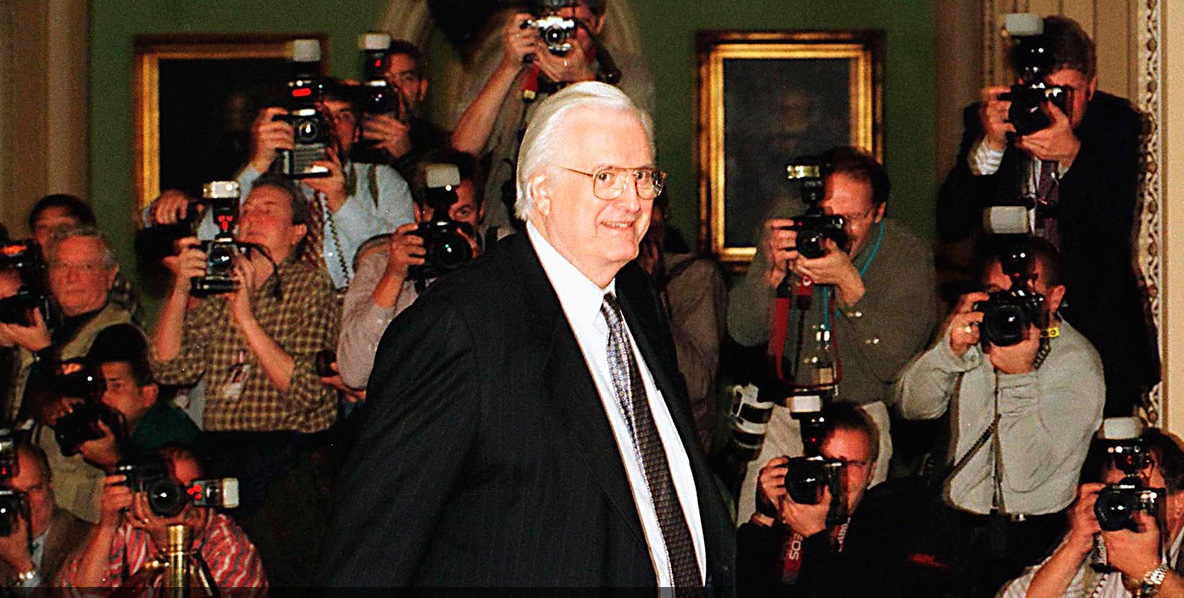
September 18, 2026
The Washington Stand
World News
A healthy society depends on institutions that understand both their responsibilities and their limits. Elections require rules voters can trust. Immigration requires laws that can be enforced while treating people with dignity. Schools and child-welfare agencies exercise enormous power, but parents retain profound responsibilities toward their children.
These debates may look unrelated. They are not.
Running through each is the same fundamental question: Who has authority, where does that authority come from, and what happens when institutions move beyond their proper boundaries?
For Christians, authority is neither meaningless nor absolute. Government has a legitimate role. Parents have a legitimate role. Laws matter. Compassion matters. And none of those principles should be rewritten simply because the political circumstances have changed.
That framework is increasingly important in an America where arguments over election administration, immigration, parental rights, and political power are testing public trust from several directions.
Trust Requires Rules That Apply Consistently
The Supreme Court recently blocked the Trump administration from implementing new Postal Service requirements for mail ballots before the 2026 midterms. The proposed system would have required states to provide lists of eligible voters and use USPS-approved, barcoded ballot envelopes. The Court divided 7-2, with Justices Clarence Thomas and Samuel Alito dissenting. Justice Brett Kavanaugh indicated there was a reasonable argument that the Postal Service possesses authority to impose some requirements, but concluded that changing procedures this close to voting risked significant disruption.
There are legitimate disagreements over the proposal. The administration presented additional verification as an election-integrity measure. Opponents argued that the Postal Service was assuming authority traditionally exercised by states and that last-minute changes could prevent legitimate ballots from being counted.
Those arguments deserve more than slogans.
Election integrity and voter access do not have to be enemies. Americans should be able to expect systems that verify lawful votes while also ensuring lawful voters can participate. Confidence deteriorates when either concern is dismissed simply because it is associated with the other political party.
Trust cannot survive indefinitely when rules are treated as essential under one set of political circumstances and disposable under another.
The same principle applies to immigration.
The Trump administration has expanded the federal government's consideration of public benefits when determining whether certain immigrants qualify for permanent residency. New York City Mayor Zohran Mamdani is leading a coalition of local governments challenging the new public-charge rule, while New York Attorney General Letitia James is leading a separate state lawsuit. The plaintiffs argue that the rule exceeds federal authority and could discourage immigrant families from using health care and nutrition programs for which they are legally eligible. The administration argues that the policy promotes self-sufficiency and reduces dependence on public assistance.
The legal dispute will work its way through the courts. The broader question is worth considering now: What obligations accompany legal immigration, and what obligations does a nation have toward those it admits?
Scripture commands God's people to treat the stranger with justice and compassion. It also recognizes governments, nations, boundaries, and civil authority. Biblical compassion cannot be reduced to a slogan for one immigration policy any more than biblical order can be used to excuse mistreatment of immigrants.
Hospitality and order are not inherently contradictory.
When Government Authority Enters the Home
Nowhere does the question of authority become more personal than when the government intervenes between parents and children.
Joseph and Arlene Kutzko, a Catholic couple in Massachusetts, are fighting a legal battle involving their teenage daughter, Sophie. The parents say Algonquin Regional High School supported their daughter's male gender identity without their knowledge and that their religious objections later became intertwined with a child-welfare dispute. Sophie was removed from their custody in 2024, and the parents say they have since been prevented from maintaining contact with her.
The case includes important details that should not be ignored. An allegation of physical abuse against the father was reportedly found unsupported, according to recent reporting and the family's legal advocates. The family is now seeking to prevent testosterone treatment while pursuing its custody claims; treatment has reportedly been paused while litigation continues.
The family's account has become part of a much larger national disagreement over parental rights, gender identity, medical treatment for minors, religious liberty, and the circumstances under which child-welfare authorities should intervene.
Those are serious questions precisely because the state sometimes must intervene. Children can genuinely suffer abuse and neglect, and government has a legitimate responsibility to protect them.
But that extraordinary power also requires extraordinary care.
Parents should not automatically lose their authority simply because their religious or moral convictions conflict with prevailing cultural beliefs. At the same time, disagreements over a child's care cannot by themselves establish every fact in a contested custody case.
The power to protect children must never quietly become the power to require ideological conformity from their parents.
For Christians, parenthood is not merely a legal status granted by government. Scripture repeatedly places responsibility for the instruction and formation of children upon families. Government can protect children from genuine harm, but it should approach replacing parental judgment as an exceptional intervention, not an ordinary solution to ideological disagreement.
That distinction matters far beyond Massachusetts.
Political Power Is Not the Highest Authority
The question of authority also appears inside political parties themselves.
The Democratic National Committee has officially changed its early presidential-primary calendar for 2028. South Carolina will vote first, followed by Nevada, New Hampshire, New Mexico, Michigan, and Virginia. The DNC says the calendar gives a more representative mix of voters an early role and better tests candidates across diverse constituencies and battleground states.
The change will inevitably affect campaign strategy. South Carolina's large Black Democratic electorate and Nevada and New Mexico's Latino populations will matter earlier than under the old Iowa-and-New Hampshire-centered system. But it is too early to know which prospective candidate, if any, will ultimately benefit most.
That uncertainty is important. Politics tempts people to treat every institutional decision as evidence of a predetermined outcome. Christians should resist that impulse just as strongly as they resist political naivete.
Political parties pursue power. Candidates pursue office. Governments exercise authority. Courts interpret law. None deserves the kind of unquestioning allegiance that belongs to God.
That should produce Christians who can think clearly rather than react predictably.
A Republican administration should not receive automatic approval merely because it invokes election integrity, immigration enforcement, or parental rights. A Democratic official should not receive automatic approval merely because a policy is presented in the language of compassion, democracy, or inclusion. Every claim still has to be examined.
Proverbs 14:34 provides a standard much older than any American political coalition: “Righteousness exalts a nation, but sin is a reproach to any people.”
That standard does not change with election results.
Christian political discernment begins when truth matters more than protecting a party, an institution, or a preferred political narrative.
Government matters. Elections matter. Borders matter. Parents matter. Protecting children matters. So do due process, compassion, religious liberty, and the rule of law.
The difficult work is refusing to sacrifice one principle whenever another becomes politically convenient.
That is why Christians need more than political instincts. They need a biblical framework capable of asking not merely, Which side is doing this? but Is this true? Is it just? Is authority being exercised within its proper limits? And does the standard remain the same when political power changes hands?
Those are the questions worth continuing to ask through Real Life Network and The Daniel Cohen Show, where the headlines are examined alongside the deeper questions of faith, culture, government, and truth.
25 min
Who Has the Authority? Government, Families, and the Institutions Americans Are Asked to Trust

September 17, 2026
Daniel Cohen
World News
A Catholic couple in Massachusetts had their daughter taken away by the state under the guise of child abuse after refusing to affirm her so-called transgender identity. In 2024, the 15-year-old child was removed from the home of Joseph and Arlene Kutzko after they say she was secretly socially “transitioned” at Algonquin Regional High School. Now, they’re fighting to get her back before she is medically “transitioned” on high-dose testosterone.
“Here, a public school is ‘stuck on stupid’ by engaging in the willful and dehumanizing practice of destroying both family and child. This school should be closed permanently,” Walt Heyer, senior fellow at Family Research Council, told The Washington Stand. “The school abused the child emotionally and psychologically, causing lifelong damage. My life was destroyed by the trans insanity. Stop the madness.”
Fox News reported that a permanent restraining order was issued against the family, and the Department of Children and Families (DCF) cut off the Kutzkos’ contact with their daughter, Sophie, when they refused to refer to her by male pronouns. Fox also reported that the Kutzkos say DCF has “housed their daughter in a boys’ dormitory, stripped away her Catholic faith by denying her Sunday Mass, and put her on birth control and psychiatric drugs.”
“In Massachusetts today, a sizable portion of government and the population will call you a good mom if you violently strangle your own three kids to death but will take custody of your teenage daughter away from you if you don’t want her to be castrated & mutilated by the gender lobby. Let that sink in,” Daily Wire personality Isabel Brown posted on X Monday.
The Kutzkos appeared on the Fox News “Lighthouse Faith” podcast hosted by Religion Correspondent Lauren Green to share about the dire situation over the weekend, alongside their attorney Vernadette Broyles. “The Northborough-Southborough public schools and their counseling practices exposed our daughter to teachings on LGBTQ [ideology] and topics that conflict with our Catholic beliefs about human dignity, creation as male and female in Catholic teaching,” Joseph Kutzko said.
He continued, “[O]ur daughter had been placed in counseling with sessions at Algonquin Regional High School [with] school counselor … Denise Brienze, without our knowledge or consent. [W]e were told she was simply staying after school for extra math help.”
The Kutzkos say that they have not been able to have contact with their daughter since January 2025. “I even begged them [to allow me] just to hug her or kiss her. They say they can’t. They will not allow it,” Arlene Kutzko explained.
Just months before Sophie was taken from them, she wrote her dad a heartfelt birthday card. In October of 2024, her words to her father said, “Without you, I would have nothing. So wholeheartedly, fully, sincerely. I love you with no end,” Joseph read during an appearance on “America’s Newsroom” with Bill Hemmer and Dana Perino.
The Kutzkos explained that Sophie grew up loving church. “She led the parish in rosary before mass, and she was so faithful — everybody in the church knew it — that she was given a special dispensation to be confirmed early. So, one year early, she was allowed to make her confirmation.”
But at age 15, Sophie started experiencing some inner turmoil. Next thing they knew, the Kutzkos were losing custody of their daughter. They had no idea what had been going on at the school.
“The most important thing is to bring her back to our family. But a shorter-term goal is to prevent them from giving her testosterone,” Joseph Kutzko reiterated. Boyer explained that under Massachusetts state law, DCF could administer the hormones to Sophie without her parents’ permission even though she is still a minor.
“We are actively fighting in court to keep them from really poisoning this young lady with testosterone that would have the capacity to cause her to become potentially infertile, would harm her cardiovascular system, and would have a number of irreversible effects and harms to her body,” Boyer lamented. She added that DCF is hoping to move forward with giving Sophie the testosterone.
Time may be running out, but the Kutzkos are actively working to bring their daughter home. “We love her. We love her. We miss her,” Joseph Kutzko wanted people to know.
This article was originally written by Quinn Delamater and published on The Washington Stand. For more content like this, visit Real Life Network.
25 min
Massachusetts Takes Daughter from Catholic Parents for Refusing to Affirm Trans Identity

September 16, 2026
The Washington Stand
Entertainment & Lifestyle
Choosing what your family watches used to be relatively simple. Today, children can encounter movies, shows, videos, games, social media, podcasts, and other digital content across multiple devices throughout the day.
That makes media decisions about more than whether a particular movie contains bad language or an inappropriate scene. Stories communicate ideas. Characters model attitudes. Entertainment can reinforce beliefs about relationships, identity, success, morality, authority, and what makes life meaningful.
Christian parents don’t need to approach every screen with suspicion. But thoughtful questions can help families move beyond simply asking, “Is this allowed?” toward developing genuine biblical discernment.
Here are seven questions worth asking.
1. What Is This Teaching My Child to Admire?
Every story has heroes. Sometimes they’re obvious. Other times the audience is simply encouraged to sympathize with certain characters, choices, or lifestyles.
Ask what qualities the program presents as admirable. Is courage celebrated? Loyalty? Honesty? Sacrifice? Compassion? Or does the story consistently reward selfishness, dishonesty, disrespect, cruelty, or behavior that conflicts with what your family is teaching?
This doesn’t mean every protagonist must behave perfectly. Some of the best stories involve flawed people learning from mistakes.
The more important question is whether the story ultimately recognizes the difference between wisdom and foolishness, good and evil, truth and deception.
2. What Does This Program Treat as Normal?
Media doesn’t always persuade through direct arguments. Often, it influences simply by repetition.
When children repeatedly see particular attitudes, relationships, behaviors, or beliefs presented as normal, those ideas can gradually begin to feel ordinary. That is why parents should pay attention not only to dramatic objectionable moments but also to the assumptions underneath a story.
What does the program communicate about marriage? Parents? Faith? Sexuality? Authority? Success? Human worth?
Children may not consciously identify those ideas, but that doesn’t mean they aren’t noticing them.
Parents can help by occasionally asking, “What do you think that show is saying about this?” That simple question teaches children to watch actively rather than absorb everything passively.
3. Is This Appropriate for My Particular Child?
An age rating can be helpful, but parents know their children better than a rating system does.
Two children of the same age may react very differently to the same movie. One might handle a tense historical story well, while another has nightmares after mild suspense. One teenager may be ready to engage thoughtfully with difficult cultural questions while another isn’t.
Christian parenting requires more than finding the boundary of what is technically permitted.
Romans 14:19 encourages believers to “pursue the things which make for peace and the things by which one may edify another.”
A useful question, then, is not only, Can my child watch this? but Will this be beneficial for my child right now?
4. How Does My Child Feel After Watching It?
Sometimes the effect of media becomes clearer after the screen turns off. Does a child seem encouraged, curious, imaginative, or eager to talk? Or irritable, anxious, fearful, disrespectful, restless, or obsessed with watching more?
One viewing won’t necessarily reveal a pattern. But repeated reactions can tell parents something important.
The same is true for adults. Some entertainment leaves viewers refreshed. Other content leaves them angry, agitated, discouraged, or mentally exhausted.
Philippians 4:8 directs believers toward what is true, noble, just, pure, lovely, commendable, virtuous, and praiseworthy. That provides a useful biblical framework for considering not just what enters the mind, but what it produces there.
5. Is Screen Time Crowding Out Something Better?
A perfectly acceptable program can still become a problem if it consumes too much time.
The issue may not be what a child is watching. It may be what he or she is no longer doing. Is screen time replacing sleep? Outdoor play? Reading? Family conversation? Church involvement? Homework? Prayer and Scripture? Time with friends?
Sometimes the wisest media decision is not finding a better show but leaving the television off.
Healthy media habits recognize entertainment as one part of life rather than the center of it.
6. Can This Become a Conversation Instead of Just Consumption?
Parents don’t have to eliminate every story containing an idea they disagree with. Sometimes those moments provide valuable opportunities to teach.
Watching together allows parents to ask questions.
- Why do you think that character made that choice?
- Was it wise?
- What consequences followed?
- What does the Bible teach about that issue?
- How would following Jesus change the way someone responds?
Those conversations help children build discernment that will eventually matter far more than parental controls.
Christian media can provide especially natural opportunities for these discussions. A program such as LifeWise Academy can lead into conversations about bringing biblical truth into everyday life. Genesis Science Minute can introduce questions about creation and science in just 60 seconds. The Pilgrim’s Progress can start conversations about temptation, perseverance, and following Christ.
The goal isn’t to interrogate children after every episode. It’s to make talking about ideas a normal part of family life.
7. Does Our Entertainment Support the Kind of Home We’re Trying to Build?
This may be the most important question of all.
Parents spend years teaching children what is true, who they are, what relationships should look like, why Scripture matters, and what it means to follow Christ.
It makes sense to ask whether the family’s entertainment choices generally support those priorities or continually work against them. That doesn’t require every show to be overtly Christian. But intentionally including faith-based programming can help create a healthier balance.
Younger children might enjoy biblical programming such as Superbook, iBible, or Learn, Grow and Go! Older children and teens can explore apologetics through In Depth Apologetics for Kids or creation-focused content. Families can also choose movies, documentaries, Bible teaching, and programs built around Christian service, history, and worldview.
Real Life Network provides these kinds of options in one biblically curated streaming environment, giving parents a place to begin without having to sort through an enormous mainstream catalog first.
Teach Discernment, Not Just Rules
Parents cannot screen every piece of media their children will encounter forever.
Eventually, children become teenagers. Teenagers become adults. They choose their own movies, follow their own accounts, download their own apps, and decide which voices deserve their attention.
That’s why the long-term goal is bigger than creating a list of approved and prohibited programs. It is helping children learn to ask good questions themselves.
- What is this teaching me?
- Does it agree with what I know to be true?
- How is it affecting my thoughts and attitudes?
- Is this worth my time?
- Would I make this same choice if Jesus were sitting beside me?
Those questions turn media discernment from a parental restriction into a lifelong Christian practice.
The goal isn’t a home without screens. It’s a home where screens know their place, parents remain engaged, and entertainment doesn’t get the final word on what children learn to value.
Explore free, biblically curated kids’ shows, family programs, movies, Bible teaching, and more on Real Life Network.
25 min
7 Family Media Questions Every Christian Parent Should Ask

September 16, 2026
Real Life Network
Entertainment & Lifestyle
Christian streaming has grown far beyond Sunday sermons on demand. Today, viewers can find Christian news, Bible teaching, apologetics, podcasts, documentaries, movies, children’s programs, cultural discussions, devotional content, and live events without paying for another monthly subscription.
For families accustomed to searching across YouTube, television networks, podcast apps, and multiple streaming services, having those options together in one place can make Christian media much easier to discover.
Real Life Network offers all of it for free. Whether you’re looking for something to watch with your children, a Bible teacher to follow throughout the week, a podcast for the commute, or news viewed through a Christian worldview, there are thousands of episodes and many different types of programming to explore.
Here’s a guide to what you can find.
Christian News and Cultural Commentary
For viewers who want to stay informed without leaving their biblical worldview at the door, Christian streaming offers an alternative to relying exclusively on mainstream news.
RLN News covers national and international developments from a Christian perspective, while The Daniel Cohen Show brings a particular focus to Israel, global affairs, culture, and the intersection between current events and faith.
Other programs approach culture from different angles. Rose Unplugged features interviews and conversations about issues shaping society. Cure America with Star Parker examines public policy, faith, freedom, and the cultural questions facing the nation.
Viewers interested in deeper examinations of particular issues can also turn to documentaries such as Truth Rising, The Great Global Reset, and The Eye of the Storm.
Together, these programs give viewers more than headlines. They encourage Christians to consider what is happening in the world in light of Scripture.
Bible Teaching and Sermons
Bible teaching remains at the heart of Christian streaming, but there is no single style.
Real Life with Jack Hibbs offers Bible teaching with application to Christian living and the issues believers face today. A Daily Walk with John Randall provides steady verse-by-verse teaching, while So True with Philip De Courcy brings biblical truth into practical areas of everyday life.
Bridge Bible Talk takes a different approach, allowing listeners to hear actual questions about Scripture, doctrine, and Christian living discussed in a conversational format.
Viewers can also explore the Legacy: Pioneers of the Faith collection for teaching from influential Christian voices of previous generations, including Billy Graham, Chuck Smith, Martyn Lloyd-Jones, and others.
For someone who wants to move beyond occasional sermon viewing and develop a regular habit of biblical learning, there is plenty to explore.
Apologetics, Creation, and Biblical Worldview
Some of the most useful Christian streaming content begins with difficult questions.
Does God exist? Can the Bible be trusted? How should Christians think about science and creation? What evidence supports the resurrection? How can believers respond when friends challenge Christianity?
Cross Examined with Frank Turek tackles many of those questions through Christian apologetics. I Don’t Have Enough Faith to Be an Atheist also examines the evidence and reasoning behind central Christian truth claims.
For questions involving creation and science, viewers can explore The Creation Today Show and ICR’s Creation Podcast. In Depth Apologetics for Kids makes some of these same kinds of questions approachable for younger audiences.
There is also Lamps Lit Youth Prophecy Conference, which gives teens and adults an opportunity to explore Bible prophecy through sessions with Jeff Kinley, Todd Hampson, and Jack Hibbs.
These programs can be useful for personal viewing, family discussions, youth groups, and small-group studies.
Christian Podcasts and Conversations
Sometimes watching a full teaching program isn’t practical. Podcasts make Christian content easy to fit into driving, exercise, chores, or other parts of the day.
The Jack Hibbs Podcast discusses Scripture, culture, current issues, and Christian living in a conversational format. Ignite with Barry Meguiar focuses on helping believers become more comfortable sharing their faith.
The Prophecy Pros Podcast with Jeff Kinley and Todd Hampson explores biblical prophecy, while Victor Marx brings conversations shaped by ministry, hardship, faith, and real-world experiences.
For something much shorter, Groundworks with Steve Wiggins offers brief, Scripture-based devotional teaching that can fit into just a few minutes.
There are also programs such as Living Fearless with Andy and Hedieh, which offers conversations about faith, courage, and living faithfully through difficult circumstances.
Christian Documentaries and Movies
Christian streaming also gives viewers access to stories that can educate, challenge, and entertain.
For apologetics and prophecy, Before the Wrath explores the connection between ancient Galilean wedding customs and biblical teaching concerning Christ’s return.
Those interested in Christian history and biography can watch titles such as C.S. Lewis: The Most Reluctant Convert, Billy Graham: A Life Remembered, Billy Sunday, and Louis Zamperini: Captured by Grace.
Other documentaries offer very different experiences. The Listening Road follows conversations about faith across America. The Call examines what can happen when the Great Commission becomes part of a church’s culture. 7 Days in the Holy Land takes viewers to biblical locations, while Scarred Earth considers the Grand Canyon from a creationist perspective.
Families looking for a movie night can explore titles including Seven Days in Utopia, The Jesus Film, and the animated The Pilgrim’s Progress.
The variety is an important point. “Christian entertainment” no longer describes just one kind of program.
Christian Shows for Kids and Families
Parents looking for alternatives to mainstream children’s programming have their own selection of options.
Superbook brings children into the events of Scripture through animated adventures. iBible presents the biblical narrative visually, while Ryan Defrates: Secret Agent combines humor and adventure with lessons about Christian character.
Star-Spangled Adventures gives children an animated introduction to American history and faith, and The Pilgrim’s Progress provides a full-length family movie based on John Bunyan’s classic Christian allegory.
These programs can do more than occupy children’s screen time. They give parents opportunities to ask questions, discuss Scripture, and connect entertainment with family discipleship.
Evangelism, Ministry, and Christian Leadership
Christian streaming can also help believers put their faith into practice.
Way of the Master focuses on evangelism and real Gospel conversations. Ignite with Barry Meguiar encourages Christians to share their faith naturally in everyday situations. Content from Samaritan’s Purse provides glimpses of Christian service and humanitarian ministry around the world.
For those serving in churches, ministries, workplaces, or other leadership roles, RLN also offers leadership-focused teaching designed to connect biblical principles with the responsibilities of Christian leadership.
These programs help move Christian streaming beyond simply learning more. They encourage viewers to consider what faithful action looks like.
One Free Platform, Many Ways to Watch
A Christian streaming library can serve very different purposes from one day to the next. Monday might mean catching up on the news. Tuesday could include a Bible teaching during lunch. A podcast might accompany Wednesday’s commute, followed by a documentary with a small group on Thursday and a family movie on Friday night.
That breadth is one of the advantages of Real Life Network.
Instead of searching separately for Christian news, sermons, apologetics, podcasts, movies, children’s programming, and documentaries, viewers can explore them in one biblically curated environment without adding another subscription bill.
For anyone wondering whether free Christian streaming offers enough variety to become a regular part of their viewing, the answer is worth discovering firsthand.
Explore free Christian news, teaching, podcasts, documentaries, movies, family shows, and more anytime on Real Life Network.
25 min
A Guide to Free Christian Streaming: News, Bible Teaching, Family Shows, and More

September 15, 2026
Real Life Network
Entertainment & Lifestyle
Screens are part of modern family life. Children use them for school, entertainment, communication, creativity, and even Bible study. The question for Christian parents is no longer simply whether children should have screen time.
A more important question is: What is that screen time forming in them?
Every day, children are absorbing stories about what matters, what makes someone valuable, what relationships should look like, how problems should be solved, and what is ultimately worth pursuing. Some of those messages are obvious. Others are woven so naturally into entertainment that children may absorb them without recognizing them as messages at all.
For Christian parents, managing screen time therefore involves more than counting minutes. It means considering how media fits into the much larger work of spiritual formation.
Children Are Always Being Formed
Soul formation doesn’t happen only during family devotions or Sunday school.
Children are constantly developing beliefs, habits, desires, and assumptions about life. Parents, teachers, friends, churches, books, music, social media, and entertainment all contribute to that process.
Jesus said, “For where your treasure is, there your heart will be also” (Matthew 6:21 NKJV). What consistently receives a person’s attention often begins to shape that person’s affections.
That makes attention an important part of parenting.
If a child spends a few minutes reading Scripture but several hours each day immersed in entertainment, games, videos, and social media, parents should at least consider which voices are receiving the greatest opportunity to influence that child.
Screen Time Is About More Than Minutes
Much of the conversation surrounding children and technology focuses on quantity: How many hours are too many?
That can certainly be useful. Families need boundaries, and unlimited access to screens can crowd out sleep, physical activity, responsibilities, relationships, church participation, and time outside.
But two children can spend the same amount of time watching screens and have very different experiences.
An hour spent watching random short-form videos isn’t the same as an hour spent watching a meaningful story with the family. A Bible program isn’t equivalent to a violent video game. A documentary that leads to an hour-long family conversation isn’t necessarily comparable to mindless scrolling.
Christian parents can therefore ask two questions:
How much is my child watching?
And just as importantly:
What is my child watching?
Entertainment Teaches Even When It Isn’t Trying To
Stories carry values.
They teach viewers which characters should be admired and which should be ridiculed. They show what produces happiness, what makes someone successful, what families look like, how authority should be treated, and how people respond when something goes wrong.
Sometimes those values align with Scripture. Sometimes they don’t.
That doesn’t mean Christians can only watch explicitly Christian programs. It does mean parents should recognize that entertainment is rarely worldview-neutral.
An animated show can communicate ideas about identity. A sitcom can normalize particular attitudes toward marriage or parents. A superhero movie can raise questions about justice, sacrifice, and power. Even comedy reveals something about what a culture considers worthy of celebration or ridicule.
Helping children identify those messages is an important part of discipleship.
Christian Media Can Reinforce What Parents Are Teaching
One way parents can become more intentional about screen time is by adding content that supports the beliefs and values being taught at home.
For younger children, Superbook brings biblical stories to life through animation, while iBible presents the biblical narrative in an accessible visual format. In Depth Apologetics for Kids can help children begin thinking about why Christians believe what they believe.
Older children and teens may benefit from programs that tackle larger worldview questions. The Creation Today Show explores creation, science, and apologetics, while LifeWise Academy content can encourage conversations about Bible education and living out Christian faith in the broader culture.
Sometimes even very short content can be useful. Genesis Science Minute with David Rives delivers a creation and science insight in just 60 seconds, giving parents an easy way to introduce a topic that can continue around the dinner table or in the car.
The point isn’t to replace every form of entertainment with a sermon. It’s to make sure some of the voices entering the home are intentionally reinforcing biblical truth.
Watching Together Changes the Experience
One of the simplest ways parents can make screen time more formative is to participate.
Watching together gives parents opportunities to notice what their children are seeing and ask questions afterward.
- Why did that character make that decision?
- Was it right?
- What could the person have done differently?
- Does that idea agree with Scripture?
- What would following Jesus look like in that situation?
These conversations do something parental controls cannot. They teach children discernment.
Eventually, parents won’t choose every movie, video, or social media post their children encounter. Children need more than a list of prohibited titles. They need the ability to recognize truth and error for themselves.
Shared viewing provides a low-pressure place to practice.
Don’t Let Screens Crowd Out the Things That Form Faith
Even excellent Christian media has limits.
Watching a Bible program isn’t the same as reading Scripture. Streaming a church service isn’t the same as belonging to a local church. Listening to Christian conversations isn’t a substitute for talking with parents, mentors, pastors, and other believers.
Christian media should support those relationships and practices, not replace them.
Children need time to pray. They need unhurried conversations with parents. They need friendships. They need church. They need service, play, reading, outdoor activity, boredom, imagination, and face-to-face interaction.
Sometimes the most spiritually healthy decision regarding a screen is simply to turn it off.
Parents’ Screen Habits Matter Too
Children notice what adults do.
A parent can establish strict limits for children while spending every spare moment checking a phone. That contradiction can communicate more than the rule itself.
Parents can model healthier habits by putting devices away during meals, choosing programming intentionally, avoiding endless scrolling, talking about why certain shows are or aren’t appropriate, and occasionally choosing something the whole family can watch together.
It also helps children understand that media discernment isn’t punishment.
It’s something Christians practice because what occupies the heart and mind matters.
Choose Media That Serves Your Family
The goal of Christian parenting isn’t to create children who have never encountered a questionable idea. Eventually, they will.
The deeper goal is to raise young people who know Scripture, love Christ, recognize truth, understand the beliefs shaping the culture around them, and have learned how to make wise choices.
Media can either make that job harder or help support it.
Real Life Network gives Christian families another option by offering free, biblically curated programming across children’s shows, Bible teaching, apologetics, documentaries, family content, and more.
Parents still have the responsibility to decide what fits their children and their household. But instead of spending every evening filtering an enormous mainstream library, they can begin with content created or selected to support a biblical worldview.
Screen time is ultimately only one part of childhood. Yet because screens occupy so much attention in modern life, they deserve thoughtful consideration.
The question isn’t simply, How long have they been watching?
For Christian parents, an even better question may be: Who are they becoming while they watch?
Explore free Christian kids’ programs, family shows, Bible teaching, apologetics, and more on Real Life Network.
25 min
Screen Time Versus Soul Formation: What Parents Need to Know
.jpg)
September 14, 2026
Real Life Network
Entertainment & Lifestyle
Some truths become easier to understand when you hear them through another person’s experience. A sermon may explain forgiveness, while an interview with someone who has forgiven an enemy can show what forgiveness looks like when it costs something. A Bible study may teach about trusting God through hardship, while a conversation with someone who has survived persecution, addiction, grief, or war can bring that truth into everyday life.
That is part of what makes personal interviews so valuable in Christian media. They allow viewers to hear ideas explored through stories, questions, experiences, and honest reflection. When those conversations are grounded in biblical truth, they can strengthen faith while also helping Christians think more carefully about the world around them.
1. Personal Stories Make Biblical Truth Concrete
Christians often know important biblical principles long before they understand how those principles play out in difficult circumstances. It is one thing to read that believers should trust God. It is another to hear someone explain how he or she continued trusting God after losing a career, facing persecution, walking through serious illness, or experiencing personal tragedy.
Programs such as The Resilient Show, hosted by Chad Robichaux, can open conversations about trauma, recovery, purpose, and resilience through the experiences of people who have endured significant challenges. Stories like these help viewers see that biblical faith is not reserved for ideal circumstances. It is meant to shape how believers live when life becomes difficult.
2. Interviews Allow Important Questions to Be Asked
Strong interviews do more than provide inspiring stories. They ask questions: Why did you believe that? What changed your mind? How did your faith affect your decision? What would you say to someone who disagrees?
Those questions create space for ideas to be examined rather than merely stated. This can be especially valuable when discussing theology, culture, politics, science, or apologetics because viewers get to hear not only a conclusion but also some of the reasoning behind it.
Programs such as Small Talk Big Issues bring together conversations with faith leaders, journalists, entrepreneurs, political figures, and other guests to explore significant issues from a Christian perspective. The interview format makes room for nuance that is often missing from headlines or short social-media clips.
3. Testimony Can Strengthen Faith
Personal testimony has always had an important place in Christianity. The New Testament repeatedly records people describing what Christ had done in their lives. The man healed by Jesus in John 9 offered one of the simplest examples: “One thing I know: that though I was blind, now I see” (John 9:25 NKJV).
A testimony does not replace Scripture, but it can illustrate Scripture. Hearing how someone came to faith, overcame fear, remained faithful under pressure, or experienced God’s provision can encourage believers facing their own struggles.
Living Fearless with Hedieh, for example, draws in part from Hedieh Mirahmadi’s experience of leaving Islam and becoming a follower of Christ. Conversations shaped by experiences like hers can introduce viewers to questions involving religious belief, freedom, culture, fear, and the work of the Gospel.
4. Conversations Help Christians Understand Different Perspectives
It is easy to form opinions about people we have never heard speak for themselves. Interviews slow that process down by allowing viewers to hear how another person understands an issue, why someone holds a particular belief, or how circumstances shaped his or her perspective.
That does not require Christians to agree with everything a guest says. In fact, disagreement can be useful when viewers are learning to compare ideas with Scripture. A strong biblical worldview is developed as believers learn to identify assumptions, examine arguments, recognize truth, and test what they hear against God’s Word.
That kind of discernment is especially important in a culture where complicated issues are often reduced to slogans.
5. Interviews Can Connect Faith with Current Events
Christians do not live their faith in isolation from the world. Questions about government, education, technology, religious freedom, economics, international conflict, family, and culture all affect daily life.
Interview-based programs can help connect those developments with biblical principles. The Daniel Cohen Show, Rose Unplugged, Cure America, and The City of God each use conversations and interviews to engage cultural or public issues from faith-informed perspectives.
Rather than treating Christianity as something confined to church services, these discussions encourage viewers to consider how biblical truth relates to public life.
6. Real People Can Challenge Easy Assumptions
Some of the most valuable interviews are uncomfortable. A person who has experienced persecution may challenge a casual approach to religious freedom. A missionary may challenge assumptions about evangelism. A veteran may speak differently about courage or sacrifice than someone who has never faced danger. A Christian serving the poor may cause viewers to reconsider how they think about generosity.
Programs connected with ministries such as Samaritan’s Purse, Fred Jordan Missions TV, and Evangelism Explosion International can introduce viewers to Christians putting faith into action through service, outreach, disaster response, and evangelism. Those stories can move the question from “What do Christians believe?” to “What should Christians do because they believe it?”
7. Interviews Can Support Apologetics Without Becoming a Debate
Not every interview is an apologetics program, but interviews can still help Christians understand why they believe what they believe. A scientist can discuss evidence for creation. A former skeptic can explain objections that once kept him from Christianity. A historian can discuss the reliability of biblical accounts. A pastor or theologian can respond to difficult questions about suffering, morality, or the resurrection.
Programs such as Cross Examined and The Creation Today Show give viewers opportunities to hear Christian truth claims examined through questions and conversation. Sometimes a thoughtful interview can accomplish something a formal debate cannot because it lets viewers follow the reasoning at a more natural pace.
Hearing Truth Through Someone Else’s Story
Christian faith ultimately rests on the truth of God’s Word, not the personality or experiences of an interview guest. But personal conversations can help illuminate those truths in memorable and practical ways.
A good interview lets viewers encounter people they might never meet, hear perspectives they might never otherwise consider, and see biblical principles applied to real circumstances. It can encourage faith, expose assumptions, deepen understanding, and prompt better questions.
That is why interviews occupy an important place in Christian media. They remind us that faith is not merely a collection of ideas. It is lived out by real people facing real choices in a complicated world.
Explore personal interviews, Christian conversations, cultural discussions, testimonies, and more for free on Real Life Network.
25 min
How Personal Interviews Can Strengthen Faith, Reveal Truth, and Shape a Biblical Worldview
.jpg)
September 11, 2026
Real Life Network
Entertainment & Lifestyle
When people discover a new streaming platform, one of the first questions they often ask is: Is there a free trial?
That makes sense. Most streaming services today require a monthly subscription, a limited trial period, or tiered upgrades before viewers can fully access content. But Real Life Network works differently.
The simple answer is this: RLN does not require a free trial because the entire platform is ALREADY FREE to watch.
There are no subscription tiers, hidden fees, or surprise upgrades needed to access the content.
Why Real Life Network Is Free
Real Life Network was created with a mission-first approach rather than a subscription-first model. The goal is to make biblical teaching, faith-based programming, documentaries, podcasts, and family-friendly content accessible to as many people as possible without financial barriers.
Instead of charging viewers, RLN is supported entirely through the generosity of donors who believe in the mission of Real Life with Jack Hibbs and the broader outreach of the network.
This allows viewers to:
- Stream content without monthly payments
- Explore the full platform freely
- Share programs with friends and family easily
- Access biblical teaching regardless of financial situation
For many families, this removes a major obstacle and makes faith-based streaming far more accessible.
No Subscription Required
Unlike many mainstream streaming platforms, RLN does not require:
- Paid memberships
- Credit card trials
- Premium unlocks
- Hidden add-ons
- Automatic billing after a trial period
Viewers can simply create an account and begin watching.
This straightforward approach reflects the network’s focus on ministry and outreach rather than maximizing subscriptions.
What You Can Watch on RLN
Even though RLN is free, the platform includes a wide variety of content across multiple categories. Viewers can explore:
- Bible teaching and sermons
- Podcasts and interviews
- Faith-based films and documentaries
- Apologetics and worldview programs
- Family and kids’ programming
- Cultural discussions and special events
Programs such as Real Life with Jack Hibbs, A Daily Walk, Bridge Bible Talk, Way of the Master, and documentaries like Before the Wrath and C.S. Lewis: The Most Reluctant Convert are all available without requiring a paid subscription.
Why This Matters for Families
Streaming costs can add up quickly. Many households already juggle multiple subscriptions across entertainment, music, and live TV platforms. By offering free access, RLN gives families a way to add faith-based content into their homes without increasing monthly expenses. It also makes it easier to:
- Introduce children to biblical programming
- Watch sermons and teaching regularly
- Share content with small groups or friends
- Explore faith-based media without commitment pressure
This accessibility is especially meaningful for viewers who are exploring Christian content for the first time.
A Different Kind of Streaming Model
Most modern streaming services are built around subscriptions because content licensing and original production are expensive. Christian streaming platforms often operate differently, especially those tied closely to ministry outreach.
RLN’s donor-supported model allows the platform to focus on:
- Expanding biblical content
- Supporting discipleship and evangelism
- Reaching viewers globally
- Providing family-safe programming without paywalls
Rather than asking viewers to “upgrade” for better access, the platform is designed to make truth available as broadly as possible.
What If You Want to Delete Your Account?
Another common concern with streaming services is cancellation. Many viewers are frustrated by complicated account systems or unclear billing structures. RLN keeps the process simple.
If a user decides they no longer want an account, they can:
- Go to their account settings
- Select delete account
- Confirm deletion
There are no cancellation fees, hidden commitments, or subscription complications because there is no paid membership attached to the account.
Why Donors Support Free Christian Streaming
The reason RLN can remain free is because many people believe biblical teaching and Christ-centered content should remain widely accessible. Supporters of Real Life with Jack Hibbs help fund:
- Ongoing platform development
- New programming and documentaries
- Streaming infrastructure
- Outreach and discipleship efforts
Their generosity allows viewers around the world to access content without worrying about cost barriers.
Real Life Network does not offer a free trial because it doesn’t need one. The platform is already free to access, with no subscriptions, hidden fees, or premium tiers required.
That approach reflects the heart behind the network: making biblically grounded content available to anyone seeking truth, encouragement, and faith-based programming.
Explore free Christian streaming anytime on Real Life Network.
25 min
Can I Try Real Life Network Before Subscribing?

September 3, 2026
Real Life Network
World News
The relentless hold that online pornography has on American society is continuing unabated, with limited public effort to contain or reduce it. Surveys show that porn use is almost as widespread among practicing Christians as it is in the general public. Even as age verification laws have spread throughout the country, a lingering question remains: could an internet service provider (ISP) filtration model implemented in the U.K. help lower porn consumption in the U.S.?
With the universal adoption of internet-enabled phones has come the reality that smut is now consumed as easily and privately as viewing a text. AddictionHelp.com estimates that an astounding 95% of porn traffic is viewed on phones, with just 5% of traffic viewed on desktops. This may help explain why porn use is so rampant among younger generations of adults aged 18-35 in America, with a stunning 87% of men and 28% of women viewing it at least weekly. Porn is so omnipresent that the vast majority (70%) of males under 18 have viewed porn, along with 40% of minor females. Fully half of teens under 15 have also viewed online obscenity.
Perhaps most distressing for the church is that even the majority of practicing Christians are consuming porn. According to a 2024 report from Barna and Pure Desire, 54% of those who say “faith is important to them and have attended church in the last month” sometimes view porn, compared to 61% of all U.S. adults.
All of this consumption is taking place on human beings who are being sexually abused and coerced into being filmed. One study found that all porn subjects were coerced to participate in being filmed in some way, with 96% of them being victims of sexual abuse as children.
The effects of porn use on consumers are also contributing to a spiraling mental health crisis in the U.S. Research shows that habitual consumption causes increased anxiety and depression, emotional numbness and relationship strain, impaired focus and productivity, and increased isolation and loneliness, not to mention increased sexual dysfunction.
The immense damage that porn has inflicted on public health has led to a large swath of U.S. states enacting laws that require porn sites to verify the age of potential users before allowing them website access. Since 2023, 25 states have passed such laws. While human rights advocates have rightly celebrated these efforts at reducing minors’ consumption of porn, subsequent studies have found that the laws have done little to mitigate overall porn use. One study found that the laws’ effect induced a 10% reduction in time spent on porn sites, but “Many users appear to have circumvented restrictions with VPNs [virtual private networks] or shifted to noncompliant sites that did not verify age.”
Another way that countries like the U.K. are attempting to tackle the smut problem is by requiring ISPs to offer internet services that filter out porn sites. In 2011, the U.K. government announced an agreement with the country’s four largest ISPs in which their default internet service would be free of porn sites, requiring subscribers to “opt in” to an unfiltered service if they wanted access to smut. ISPs began implementing the policy in 2013. But subsequent reports revealed that the vast majority of British users opted out of the service, showing that the model has likely had a negligible effect on lessening porn consumption in the country.
Still, the model remains untried in the U.S., where many parents would likely choose to curtail porn at its source instead of having to navigate third-party filters to protect their children. However, experts like Benjamin Bull, who serves as general counsel for the National Center on Sexual Exploitation, say that the ISP filtration model may not stand up to legal scrutiny if it were enacted in the U.S.
“While we admire the U.K. model for blocking pornography unless users opt out, I fear the First Amendment to the United States Constitution would likely make such a law in this country be held unconstitutional,” he told The Washington Stand. “Although pornography found by a court to be legally ‘obscene’ has no constitutional protection, there is a presumption of constitutional protection until such a ruling occurs. Our Supreme Court would likely strike down the U.K. model as a ‘prior restraint’ on presumptively protected expression and therefore a violation of the First Amendment.”
Bull continued, “However, in the most recent term of our Supreme Court, the court upheld a Texas law that prohibits dissemination of pornography to minors unless the online platform first obtains confirmation that the recipient is 18 years of age or older. In other words, age verification is now a requirement for online dissemination of pornography in Texas and several other states that have adopted this law. The reason is that while pornography is presumptively protected for adults, it has little, if any, protection for minors. Because of a ‘compelling’ governmental interest in protecting children, the Supreme Court held that the burden of determining that the recipient is an adult prior to dissemination passes constitutional muster.”
“This is much weaker than the U.K. model, and our Supreme Court may not have reached this decision had the U.K. not been a leader in curtailing unlimited access to pornography, which social scientists have concluded has a corrosive and negative effect on society in so many ways,” he added.
This article was written by Dan Hart and originally published on The Washington Stand. For more content like this, visit Real Life Network.
25 min
Internet Service Providers in the U.K. Have a Porn Opt-Out Option. Why Doesn’t America?

September 1, 2026
The Washington Stand
Entertainment & Lifestyle
Streaming was supposed to make entertainment easier. Instead, many Christian families now find themselves spending more time filtering, previewing, skipping, and explaining what appears on their screens.
Popular mainstream platforms still offer plenty of enjoyable programming, but the overall viewing environment has changed. Libraries are larger, mature content is easier to encounter, and shows often reflect values that do not align with a biblical worldview.
As a result, some Christian families are reconsidering where they spend their viewing time and turning toward faith-based streaming platforms instead.
The shift is not simply about avoiding bad content. For many families, it is about choosing something better.
1. Parents Are Tired of Constantly Filtering Content
One of the biggest frustrations with mainstream streaming is the amount of supervision it can require.
Parents may need to research a movie before watching it, check content ratings, monitor recommendations, or keep the remote nearby in case something unexpected appears. Even children’s profiles and parental controls cannot always eliminate questionable themes, previews, or suggestions.
Christian streaming platforms reduce much of that friction by curating the library before content reaches the viewer.
At Real Life Network, programs are intentionally selected by a team of Christians committed to biblical truth. Content is evaluated not simply for whether it is technically “clean,” but for whether its overall message aligns with Scripture.
For parents, that means less time policing and more confidence in what the family chooses to watch.
2. Families Want Content That Does More Than Avoid Objectionable Material
There is an important difference between content that is merely harmless and content that is genuinely helpful.
A movie can contain no profanity or explicit sexuality and still offer very little that strengthens faith, character, or family life. Many Christian families are beginning to ask a different question:
Instead of simply avoiding what is harmful, what if the family watched more content that actively reinforces what matters?
Faith-based streaming gives families access to Bible teaching, Christian documentaries, testimonies, apologetics, devotionals, and programs built around truth, courage, forgiveness, evangelism, and spiritual growth.
That turns screen time into an opportunity rather than simply a neutral activity.
3. Parents Are Becoming More Concerned About Worldview
Every story says something about what is true, valuable, admirable, or worth pursuing.
Sometimes those messages are obvious. Often they are subtle.
A show may communicate assumptions about relationships, human identity, authority, morality, success, or the purpose of life without ever stating them directly. When those assumptions appear repeatedly, they can gradually influence how viewers understand the world.
Christian parents increasingly recognize that media is one of the many forces shaping their children’s worldview.
Faith-based platforms offer a more consistent foundation. Whether viewers are watching a documentary, listening to a podcast, or enjoying a family program, the content is selected with biblical truth in mind.
That consistency can help reinforce what children are already learning through Scripture, church, and discipleship at home.
4. Families Want More Shared Viewing
Mainstream streaming can easily separate a household into individual screens. One child watches one series, another watches something completely different, and parents have their own shows.
Christian streaming can create more opportunities to watch together.
A documentary can lead to a conversation about faith. A Bible program can prompt questions from children. A testimony can introduce discussions about courage, suffering, or God’s faithfulness.
Real Life Network includes programming across a wide range of interests and ages, from films and documentaries to Bible teaching, cultural discussions, podcasts, and family content. Programs such as The Listening Road, The Call, and So True with Philip De Courcy give families different ways to engage with faith-centered stories and teaching without relying on the same type of programming every night.
The value is not simply what happens on the screen. It is what can happen after the screen goes dark.
5. Families Want Their Media Habits to Support Discipleship
Most Christian parents would never expect television to disciple their children. But media inevitably participates in formation.
What a family repeatedly watches affects conversations, attitudes, interests, and expectations.
That is why some households are intentionally redirecting a portion of their entertainment time toward content that supports spiritual growth.
A Christian streaming platform can make it easier to build small discipleship rhythms into ordinary life. A short devotional can become part of breakfast. A podcast can play during a road trip. A documentary can become the focus of a family evening. A teaching program can help an older teen wrestle with a difficult biblical question.
Streaming does not replace prayer, Scripture, church, or parental leadership. But it can either compete with those things or help reinforce them. Families increasingly want the latter.
6. They Want a Streaming Environment They Can Trust
Perhaps the biggest difference is not one individual program. It is the environment surrounding it.
On a mainstream platform, family-friendly programming sits alongside mature entertainment, conflicting worldviews, and content designed for entirely different audiences. Algorithms, thumbnails, and recommendations can move viewers quickly from one category to another.
A Christian platform begins with a different assumption: The entire environment should serve the viewer well.
Real Life Network is built around that idea. Its library is curated for biblical integrity, and programs that stray from that standard are not included simply because most of their content is good.
That creates something increasingly valuable in modern media: trust.
Parents still have an important role in deciding what is appropriate for each child and age level, but they are starting from a much stronger foundation.
Choosing Better Rather Than Simply Watching Less
Leaving or reducing time on mainstream platforms does not necessarily mean rejecting every secular movie or television show. Christian families will make different decisions about what they watch.
The larger shift is toward intentionality.
Instead of allowing algorithms to determine what fills the home, families can decide what deserves their attention. Instead of constantly asking, “Is this okay to watch?” they can also ask, “Is there something better we could be watching?”
That is where Christian streaming offers a compelling alternative.
Families can enjoy entertainment while also discovering content that encourages faith, strengthens biblical understanding, and creates opportunities for meaningful conversation.
For Christian households trying to lead their homes with greater purpose, changing streaming habits can be a small decision with a lasting influence.
Explore biblically curated movies, programs, documentaries, and teaching anytime on Real Life Network.
25 min
6 Reasons Christian Families Are Switching Away From Popular Mainstream Platforms
.jpg)
August 25, 2026
Real Life Network
Entertainment & Lifestyle
For many believers, live worship is a meaningful part of their Christian experience. Whether it’s a concert, a special worship night, or a large conference gathering, music has a unique way of drawing people together and pointing hearts toward God.
But not everyone can attend these events in person. That’s why many people are now asking: Can I watch Christian music concerts online?
The answer is yes. Christian streaming platforms increasingly offer access to worship events, concerts, and music-centered programming, bringing these experiences into homes around the world.
How Christian Concert Streaming Works
Christian music events are now regularly recorded and streamed through dedicated platforms. Some are broadcast live, while others are made available on demand after the event. Viewers can typically access:
- Full-length worship concerts
- Conference worship sessions
- Special music events and seasonal programs
- Behind-the-scenes or artist-focused features
This allows people to experience worship beyond a single moment, revisiting it throughout the week or sharing it with others.
Live vs. On-Demand Worship Events
There are two primary ways Christian concerts are streamed.
Live events create a sense of shared experience. Viewers know they are watching alongside others, often at the same time as the in-person audience. This can feel especially meaningful during large gatherings, conferences, or special worship nights.
On-demand content offers flexibility. Viewers can watch at their convenience, pause or revisit songs, and incorporate worship into personal or family rhythms.
Most platforms now offer a combination of both.
What You Can Expect from Online Christian Concerts
Streaming a worship concert is not exactly the same as being in the room, but it offers its own advantages. High-quality video and audio allow viewers to focus on lyrics, musicianship, and the message behind the music.
Online concerts often provide:
- Clear, distraction-free viewing
- The ability to revisit meaningful moments
- Access to events you might not otherwise attend
- A way to include the whole family
For many households, this becomes a regular part of their week rather than a one-time experience.
Christian Music and Worship on Real Life Network
Real Life Network includes a variety of music-centered programming and worship experiences that help bring this kind of content into everyday life.
In addition to teaching and documentaries, viewers will find:
- Worship segments from conferences and special events
- Music integrated into larger teaching gatherings
- Seasonal programming that includes worship and reflection
- Faith-centered productions where music plays a central role
Because RLN’s content is curated, these worship moments are part of a broader experience—one that includes teaching, Scripture, and encouragement rather than existing in isolation.
Why Families Are Streaming Worship at Home
Streaming Christian concerts isn’t just about convenience. For many families, it has become part of their spiritual routines. Parents may:
- Play worship music during evenings at home
- Watch a concert together as part of a family night
- Introduce children to worship in an accessible way
- Use music as a starting point for conversation or prayer
While it doesn’t replace gathering with a local church, it can support a home environment where worship is present throughout the week.
A Different Kind of Viewing Experience
Mainstream platforms may feature concerts as entertainment. Christian streaming approaches them differently: as worship.
That distinction matters. The focus shifts from performance to purpose. Songs are not just heard; they are engaged with. Lyrics are not just catchy; they are meaningful.
This changes how viewers interact with what they watch. Instead of passive consumption, it becomes participation.
How to Make the Most of Streaming Worship
Watching a Christian concert online can be more than background content. A few simple steps can make it more meaningful:
- Set aside time rather than multitasking
- Follow along with lyrics when possible
- Watch with others when you can
- Take a moment to reflect or pray afterward
These small shifts turn a viewing experience into something more intentional.
Christian music concerts are no longer limited by location. Through streaming platforms, worship experiences can now reach homes, families, and individuals wherever they are.
For those who want to incorporate more worship into their daily lives, online Christian concerts offer a simple and accessible way to do so.
Explore worship-centered programming and more anytime on Real Life Network.
25 min
Can I Watch Christian Music Concerts Online?

August 19, 2026
Real Life Network
World News
The biggest battles shaping America are not always fought in Congress or decided at the ballot box. Many begin in classrooms, universities, churches, newsrooms, and other institutions entrusted with shaping how Americans understand truth. From election integrity and higher education to religious liberty and biblical authority, the question is increasingly clear: Who gets to shape the next generation? Real Life Network examines these cultural debates through a biblical worldview, while The Daniel Cohen Show connects today's headlines to deeper questions of faith, truth, and freedom.
Election Integrity and the Battle Over Education
Confidence in elections depends on Americans believing that every legitimate vote counts and that safeguards exist to prevent unlawful participation.
That concern has returned to Minnesota, where state law allows a registered voter in a precinct to vouch for the residence of up to eight people registering on Election Day. Recent videos from James O'Keefe drew renewed attention to the practice after he questioned polling workers about how the process operates. Minnesota officials responded that participants sign legal oaths regarding residency and criticized O'Keefe's conduct.
A legal voting procedure is not itself proof that illegal votes were cast. But Americans should be able to scrutinize election procedures and ask whether existing safeguards are sufficient.
Election integrity should not be partisan. Every American benefits from a system that makes voting accessible to eligible citizens while maintaining meaningful safeguards against unlawful participation.
The same need for scrutiny applies to education.
Universities have long presented themselves as places where students encounter competing ideas and learn to think critically. Yet Americans increasingly disagree over whether political activism has become intertwined with education itself.
The discussion highlighted comments from University of Chicago professor Eman Abdelhadi at a 2025 socialism conference, where she discussed political organizing and her involvement with students. Her remarks were presented as part of a broader concern about political activism on university campuses.
Students should encounter ideas they disagree with. They should wrestle with competing political, religious, and philosophical arguments. But education becomes something different when students are taught what to think rather than equipped to determine what is true.
The debate begins long before college. A Texas school district also drew attention after students visited an Islamic center as part of an educational experience designed to expose them to another faith and culture. That prompted questions about whether public schools apply religious neutrality consistently, particularly when Christian practices or symbols have generated constitutional controversies.
Religious liberty cannot mean accommodating one faith while treating another as inherently dangerous to public life. The standard should protect Muslims, Christians, Jews, and everyone else equally.
Biblical Authority Cannot Be Redefined by Politics
For Christians, the question of who shapes the next generation eventually reaches the Church itself.
Political candidates frequently invoke Christianity and Scripture. But theological vocabulary should never substitute for examining what someone actually believes.
The discussion highlighted Texas political debates over teaching biblical material to children and comments from Senate candidate James Talarico criticizing a state curriculum that he argued would present Christian Bible stories as historical fact and exclusive truth to young students. The program challenged that characterization and raised a broader question: If children are being formed by what they encounter at school, who determines which worldviews are acceptable?
Christians should apply that scrutiny in every direction.
A seminary degree does not automatically make someone's theology biblical. Neither does being a pastor, writing Christian books, or speaking from a pulpit.
The program also highlighted comments from pastor and political candidate Adam Hamilton concerning the eternal destiny of adherents of other religions. Hamilton expressed hope that people of other faiths could ultimately encounter Christ without embracing the traditional evangelical understanding that explicit faith in Jesus is necessary for salvation.
For Christians, that is no minor theological disagreement. Jesus declares in John 14:6, "I am the way, and the truth, and the life. No one comes to the Father except through me."
Christianity loses its foundation when Jesus becomes merely one path among many rather than the Savior at the center of the gospel.
Biblical literacy therefore matters. Christians cannot determine truth according to a political party, favorite pastor, media personality, or cultural trend. Scripture itself must remain the standard.
Truth Matters in the Newsroom Too
The responsibility to pursue truth extends to journalism.
A complicated surrogacy case involving a baby born with hypoplastic left heart syndrome demonstrated how framing can affect the way audiences understand a story. According to the account discussed on the program, the surrogate objected when the biological parents chose to terminate the pregnancy after learning of the diagnosis. She eventually traveled to Texas, carried the baby to term, and became involved in a legal dispute over the child's future.
The program criticized national media coverage for framing the situation primarily as a custody battle rather than emphasizing the earlier disagreement over terminating the pregnancy. The biological parents' attorneys, meanwhile, said their clients were devastated by the circumstances and focused on ensuring the child received necessary medical care.
Journalism inevitably involves choices. Editors decide which facts lead, which quotations appear, and what context audiences receive. That power carries responsibility.
The same principle applies to questions surrounding COVID-19. Former ABC News correspondent Terry Moran described internal changes to a report concerning the origins of the pandemic and Anthony Fauci's involvement in the review process. His account raises questions about how major news organizations handled competing theories during a period of extraordinary uncertainty.
The answer is neither blind trust nor automatic distrust. It is discernment.
America's institutions will continue competing for the attention and allegiance of the next generation. Schools will teach. Politicians will persuade. Journalists will frame stories. Pastors will preach. The question is whether Christians will simply absorb those messages or learn to test them.
Christians should be among the people most committed to truth because Christianity itself makes objective claims about what is true.
Facts matter. Context matters. Evidence matters. Most importantly, Scripture matters.
At Real Life Network, believers can find programming designed to help navigate today's cultural and political questions without separating the news from the truth of God's Word. Watch The Daniel Cohen Show for more conversations examining faith, politics, culture, and the ideas shaping America's future.
25 min
The Institutions Shaping America’s Future

August 17, 2026
Daniel Cohen
World News
America is having more than a political debate. It is having a debate about what kind of country it will hand to the next generation. From abortion and delayed family formation to declining academic standards, distrust in public health, and the growing influence of democratic socialism, seemingly unrelated headlines point toward a common question: What values are shaping America's future? At Real Life Network, these cultural questions are examined through a biblical worldview, while The Daniel Cohen Show challenges viewers to look beyond the headline and consider what today's decisions could mean tomorrow.
When Life Becomes a Matter of Convenience
Few issues reveal America's competing views of human life more clearly than abortion.
Recent changes to Massachusetts abortion law became a focal point of the discussion. Supporters have characterized the changes as strengthening reproductive protections, particularly for families facing devastating circumstances late in pregnancy. The argument presented on the show, however, is that removing specific statutory criteria and relying more heavily on a physician's professional judgment raises serious questions about protections for unborn children later in pregnancy.
That debate becomes especially striking when considered alongside modern neonatal medicine. Hospitals routinely devote extraordinary resources to saving premature babies. Physicians, nurses, and parents fight for children born months before their due dates, carefully monitoring every ounce of growth and every sign of progress.
For Christians, the value of those children does not depend on whether they are wanted, healthy, convenient, or capable of surviving without assistance. Human worth begins with the reality that every person is made in the image of God.
A culture cannot consistently defend human dignity if the value of a human life changes according to circumstances, location, or whether that life is wanted.
The conversation about children extends beyond abortion. Alexandria Ocasio-Cortez's public discussion of freezing her eggs prompted another debate about marriage, motherhood, career, and the cultural message surrounding delayed childbearing. The personal circumstances of any individual remain their own, but the broader cultural question is worth examining.
Modern society often tells young adults that family can be postponed while education, career, financial security, and personal achievement take priority. Technology may provide additional options, but it cannot eliminate every biological reality or guarantee future outcomes.
The Christian vision offers something different. Children are not obstacles to self-fulfillment. Marriage and family are not consolation prizes after professional goals have been accomplished. Scripture consistently presents children as a blessing and family as one of God's fundamental institutions.
That does not minimize the genuine heartbreak of infertility or prescribe an identical timeline for every person. It does challenge a culture that increasingly treats fertility as another part of life to be engineered around personal ambition.
What Happened to Truth and Excellence?
The same question of what America is handing the next generation reaches into education.
Thousands of University of California faculty members have reportedly called for reconsideration of the system's test-free admissions policy amid concerns about incoming students' mathematical preparation. The episode highlighted reports of substantial growth in the number of students arriving at UC campuses without high-school-level math proficiency.
Whatever role standardized testing ultimately plays in admissions, the larger lesson is difficult to ignore: lowering or removing a measurement does not automatically solve the underlying inequality.
Students deserve compassion and opportunity. They also deserve honesty.
Real education prepares young people to confront difficult standards, not simply removes the standards that reveal where preparation has failed.
The concern goes beyond mathematics. The program also examined course offerings at Arizona State University involving witchcraft, magic, and the occult, contrasting those offerings with the university's limited coursework specifically devoted to Christianity. The point was not that universities should prohibit the academic study of other beliefs. Universities should be places where competing ideas can be seriously examined.
The question is whether Christianity receives the same serious intellectual consideration in institutions that often pride themselves on diversity of thought.
Ideas never exist in a vacuum. When biblical Christianity disappears from education and public life, the resulting space does not remain philosophically neutral. Another understanding of humanity, morality, identity, and truth eventually takes its place.
Parents should therefore pay attention not only to whether their children earn degrees, but to what they are actually learning. A beautifully decorated dorm room means very little if students leave college academically unprepared and spiritually confused.
A Crisis of Trust and a Battle of Worldviews
Few institutions illustrate America's crisis of trust more clearly than public health.
The program revisited Anthony Fauci's pandemic-era statements and discussed recently publicized communications concerning COVID-19 vaccination and pregnancy. The episode argued that private discussions about possible risks deserve scrutiny when compared with the confident public assurances Americans heard during the pandemic. Claims about miscarriage rates and the meaning of those communications remain matters that require careful evaluation of the underlying evidence rather than conclusions drawn from isolated messages.
That distinction matters because public trust is difficult to rebuild once it is lost.
Scientific institutions should be able to acknowledge uncertainty. Officials should be willing to correct themselves when evidence changes. Americans should be able to ask difficult questions without immediately being treated as enemies of science.
The goal should not be replacing blind trust in government with blind distrust of government. It should be restoring a culture in which evidence can be examined openly and authorities are held accountable for what they tell the public.
That need for discernment extends into politics.
The program concluded by examining statements from leaders associated with the Democratic Socialists of America, including comments about the October 7 Hamas attack and the organization's position on policing and incarceration. Those comments were presented as evidence of a broader ideological movement that deserves far more scrutiny from American voters.
Elections matter because ideas have consequences. Political philosophies eventually become policies, and policies eventually affect families, neighborhoods, schools, churches, and communities.
Christians cannot afford to evaluate those ideas merely by party labels or campaign personalities. Every worldview makes assumptions about human nature, justice, authority, freedom, family, and morality. Those assumptions must be examined against Scripture.
The most important question is not whether an idea sounds compassionate or progressive, but whether it is true and whether its consequences honor the God-given dignity of human beings.
That requires Christians to remain engaged rather than retreat from difficult cultural conversations. It requires knowing Scripture, examining evidence, voting thoughtfully, raising children with conviction, and refusing to surrender truth for cultural acceptance.
The stories will change. The political candidates will change. Today's controversy will eventually be replaced by tomorrow's headline. But the underlying battle over truth, human dignity, family, freedom, and the next generation will remain.
Christians therefore need more than outrage at what is happening around them. They need discernment about why it is happening and courage to respond faithfully. Real Life Network provides free, biblically grounded programming designed to help families navigate those questions, including The Daniel Cohen Show, where today's cultural and political headlines are examined through the enduring truth of a biblical worldview.
25 min
America’s Next Generation Is Paying the Price

August 13, 2026
Daniel Cohen
World News
A Christian education program previously canceled in Georgia has gotten the green light to restart after its director was punished for exercising his free speech rights on social media.
Vidalia City Schools made the decision to cut the program after director of Sweet Onion Christian Learning, Rev. Gady Youmans, criticized a possible spike in taxes on Facebook. His attorneys at Alliance Defending Freedom defended the pastor, arguing, “Every American has the right to publicly criticize the government — that’s what makes the First Amendment guarantee of free speech so special and the envy of the world. Vidalia City Schools can’t punish Rev. Youmans — or his ministry providing high school students with free religious education — for simply sharing his opinion of a proposed tax hike,” Legal Counsel Mercer Martin insisted. “We’re pleased the court has reinstated Sweet Onion’s released-time program and restored Rev. Youmans’ constitutionally protected freedoms while his lawsuit proceeds.”
Like a growing number of school districts, Vidalia had allowed the program, which, with parental approval, releases students “for a part of the school day to attend off-site religious instruction offered by a private sponsoring group. It recognizes and reinforces the constitutionally protected right of parents to direct the religious education of their children.”
Sitting down with Family Research Council’s Jody Hice on “Washington Watch” Tuesday, ADF Senior Counsel Phil Sechler reiterated, “The school had no business canceling the Sweet Onion Christian Learning Center and the release time program simply because of the Facebook posts that the executive director had made.”
“Basically,” Sechler continued, “he was criticizing proposed tax increases that he thought were unnecessary and unwise. And the school board didn’t like what he said. And soon he learned that the program would be canceled. And that’s just not consistent with the Constitution.”
According to its website, Sweet Onion’s mission is to make disciples through education centered around God’s word.
“We accomplish our mission to eradicate Biblical illiteracy by walking students through the Scriptures so that they can know God’s ways, in order to better know Him. When students know Him better they will know how to find favor in His sight,” the site reads.
ADF reported that the superintendent of Vidalia City Schools “secretly investigated Sweet Onion and learned that, six years ago, a parent from another school had removed her child from a Sweet Onion course after learning the ministry did not exclusively use the parent’s preferred version of the Bible. Based on this incident, the superintendent reported to the board that, in addition to disagreement with the content of Youmans’ Facebook posts, his instruction ‘reflected a particular interpretation of the Bible’ that wasn’t presented in a ‘neutral or well-balanced manner.’ By targeting his religious instruction, the district violated Youmans’ right to the free exercise of religion.”
When ADF filed the lawsuit in May, Sechler was optimistic about the case’s chances. Sechler stressed that it’s important to stand up for values, and to stand by them, such as in the case of Sweet Onion. “Don’t worry about the government coming after you. The First Amendment is there for a reason to protect your right to say things, and especially on social media.”
Sechler added that ADF hopes the case will inspire others to not let their voices be drowned out when it matters.
“The First Amendment protects Youmans’ right both to criticize the proposed tax increase and to teach the Bible from his religious perspective,” ADF noted. “By punishing him and his ministry for his criticism of the government and his religious instruction, school officials violated that fundamental right.”
This article was originally written by Quinn Delamater and published on The Washington Stand. For more content like this, visit Real Life Network.
25 min
Georgia Court Reinstates School Bible Program

August 7, 2026
The Washington Stand
Faith & Culture
These reflections first aired as part of an episode of Rose Unplugged on Real Life Network.
I've been doing a lot of thinking lately about how my life and responsibilities have changed. In a good way. A very good way. Maybe it's because I'm a grandmother now. Watching my son and daughter-in- law with their toddler has a way of pulling me backward and forward at the same time. It's made me think about my early days as a mom and the joys and challenges that came with that responsibility. And let's be honest, parenting really is the best job in the world… but it is also a very intense job.
And I've been thinking about the difference — the very real difference — between moms and dads. In fact, this is exactly what they're meant to do — be different. When a man lays his head down on the pillow at night, he's out. Just like that. He sleeps, he gets up, and he goes back out the next day to care for his family in his own steady way.
But when women lay their heads down at night? Our minds are still running. It takes us a while to fall asleep. Because every single day, as a mom, you are carrying around more information than anybody else on the planet. You know exactly where your child is. You know his schedule by heart. You know he has study hall sixth period. You know what he's going to have for lunch — not just today, but tomorrow. You know the school lunch menu better than the cafeteria does.
Moms know how to handle doctor's appointments. We know how to get them seen when they're sick. We know what soothes our children, what worries them, and what they're not saying out loud. Why? Because we're moms. And that's the job. But I also know the men in our audience — they are there, engaged. They work hard. That's why families work best when both roles are honored.When strong families are built intentionally.
And thinking about that strong family unit brought back a memory for me. Years ago, when my son was about five, I wrote a letter to my dad. I don't remember every word, but I remember the heart behind it. Even then, I understood that while Mom was holding the details of our days together, Dad was the foundation.
I remember going fishing with him. I don't remember if we caught a single fish — but I remember the ham and capicola sandwich, and the cold can of Coke we packed for lunch. I remember how excited I was to just have that time alone with him. I remember the sacrifices. I remember the day he had to sell the car he loved when the steel mills began shutting down in Pittsburgh. He owned a design business that had worked with many of them, and when that industry faltered, so did his livelihood.
After he sold the car, I can still see him counting the cash out on the table. I think he sensed how badly we felt watching him give up something he really enjoyed. So, he suddenly tossed the money into the air, just to make us laugh. I was sad for him — but relieved when he did that. He did what he had to do for us. And because he was a resilient man, he redirected, rebuilt, and his business thrived until the day he retired.
Aristotle explained: “A multitude of great events if they turn out well will make life happier … while if they turn out ill, they crush and maim happiness … Yet even in these — nobility shines through, when a man bears with resignation many great misfortunes, not through insensibility to pain but through nobility and greatness of soul.”
I remember hard moments, too. Sitting in the front seat as he drove me to the hospital after I fell down a hill. I was crying, asking if I was going to die. Yeah — I was always dramatic. Dad answered with such calm assurance — even though I could see the worry in his eyes. And that's the thing about fatherhood. So much of its impact is quiet. You don't always see it in the moment — you feel it later, when you realize how much of what steadied you was simply someone showing up day after day.
And there's another memory that shaped me just as deeply. I remember sitting at my mother's bedside as she was dying from non-Hodgkin's lymphoma. I was the oldest of four — all of us rather young; heck, she was young. Only 48 years old. I told her I was so sorry for all the trouble I caused her as a teenager — and let me tell you, I caused plenty. I was rebellious, strong- headed, and well — a bit wild.
Do you know what she said to me? She said, “Do you think I don't know how teenagers are?” That moment was grace. It was forgiveness without a lecture. It was a salve to my spirit. And what's remarkable is that years later, as I was parenting a teenager myself, I heard her words again — steadying me, softening me, reminding me what love looks like in hard seasons. Because parenting is a long game. I remember when my own five-year-old once said, “I don't like you, Mom,” after I had to discipline him. It hurt. But then I thought about my parents. And I realized something — children don't always understand love in the moment. But they remember it over time.
I remember far more now than I did then. And I honestly believe I wouldn't have the joy, the home, the fulfillment I have today without my parents — and without God's faithfulness woven through it all. That's what I want to dig into here — the mother's heart, the father's role, and the strength of the family unit. There is a poem written by Maureen Hawkins called The Miracle of Life, and there's a line I read while I was pregnant that has never left me: “Before you were conceived, I wanted you. Before you were born, I loved you. Before you were here an hour, I would die for you. This is the miracle of life.”
It truly is the miracle of life — a truth every mother recognizes, deep in her bones, long before she ever has the words for it. While preparing for my show on parenting, I was reminded of Jochebed — Moses' mother. She's mentioned only briefly in Scripture, yet her obedience and courage changed history. Her love didn't just save a child — it contributed to leading a nation out of slavery.
There was a new king of Egypt who didn't have the relationship with Joseph that the previous king had. As a result, over time the Israelites were no longer favored guests in their land. The Pharaoh began to imagine them as the enemy, and as a people to be feared should they rise or join forces against Egypt. Out of fear and growing hatred of the Israelites, Pharaoh first enslaves them then commands the death of male children. Exodus 1:15-21 reads: “The king of Egypt said to the Hebrew midwives, whose names were Shiphrah and Puah, ‘When you are helping the Hebrew women during childbirth on the delivery stool, if you see that the baby is a boy, kill him; but if it is a girl, let her live.’”
The midwives couldn't bring themselves to obey Pharaoh's command. When they were questioned, they answered with remarkable courage and wisdom. They said in their defense that the Hebrew women gave birth so quickly the babies were already born before the midwives arrived. I love that. Very clever. You must admire their boldness — their cleverness, their reverence for life, and their fear of God. And Scripture tells us that God honored their faithfulness by blessing them with families of their own.
During the time that Jochebed gave birth to her son Moses, Pharaoh ordered all Hebrew boys thrown into the Nile. So, she hid her baby for three months. When she could no longer keep him safe, she did the unthinkable — she placed him in a waterproof basket and set him among the reeds. Can you imagine the heaviness of her heart? Keeping him meant certain danger. Letting him go meant uncertainty. But one choice offered a chance at life. That's what mothers do — risk everything for their children.
God honored that trust. Moses was discovered by Pharaoh's daughter, and through Jochebed's daughter Miriam's quick thinking, Jochebed was chosen to nurse her own son — was even paid to do so. God allowed Moses to be loved by both his biological mother and his adoptive mother. What compassion. What grace. Especially towards Jochebed.
Moses is remembered for leading a nation out of bondage. But behind that story is a mother who trusted God with what she loved most. Jochebed's story is really a story of surrender. Of trusting God to take an impossible situation and turn it into something miraculous. I remember the day Iplaced my fears for my son into God's hands.
I had given my son my very best. I raised him up in the way he should go, I loved him, sacrificed for him. But there comes a moment when we must do what Jochebed did. We must entrust our children to the One who loves them even more than we do. I remember telling God: I love my son so much — but however much I love him I realize that my love cannot possibly compare to the love that you have for him.
Setting our children free to be what God intended them to be is, at some point in their lives, the right thing to do — the only thing to do. Setting our children free to become who God created them to be isn’t easy — but it is right. And like Jochebed, that act of trust becomes part of our own story too.
I began with a quote about a mother's love. But it also echoes the heart of God toward each of us: “Before I formed you in the womb, I knew you; before you were born, I set you apart.”
Women — we must trust our child's life to the One who gives life. And that same God still holds our children — and us — in His hands.
For more content like this, visit Real Life Network.
25 min
What Jochebed Knew

August 7, 2026
Rose Unplugged