
Stream Real Life Network Now

WATCH NOW
America

World News
25 min
France's Unrest, Michigan's Senate Race, and the Warning Signs America Cannot Ignore
Violent unrest in France, a contentious Michigan Senate race, and attacks on Christians in Nigeria raise urgent questions about national security, religious freedom, and political leadership. Explore how biblical discernment guides Christians in responding to these challenges.
Violent unrest in France, political divisions in Michigan, and deadly attacks against Christians in Nigeria are raising urgent questions about religious freedom, national security, and the responsibility of government to protect its citizens. Although these developments are unfolding in different parts of the world, they share a common concern: what happens when violence, extremism, and political instability threaten the institutions people depend on?
With the November 3 midterm elections approaching, Americans are also considering how immigration policy, public safety, religious liberty, and foreign affairs could shape the nation's future.
For Christians, these conversations involve more than political preferences. They raise questions about discernment, the protection of innocent life, and the responsibilities that accompany citizenship.
As these issues receive attention on The Daniel Cohen Show, available through Real Life Network, the biblical image of a watchman provides a framework for understanding the importance of recognizing danger and responding wisely.
France's Unrest and the Challenge of Protecting Religious Freedom
Recent reports and footage of unrest in France have brought renewed attention to the country's challenges involving public safety, immigration, social integration, and political extremism.
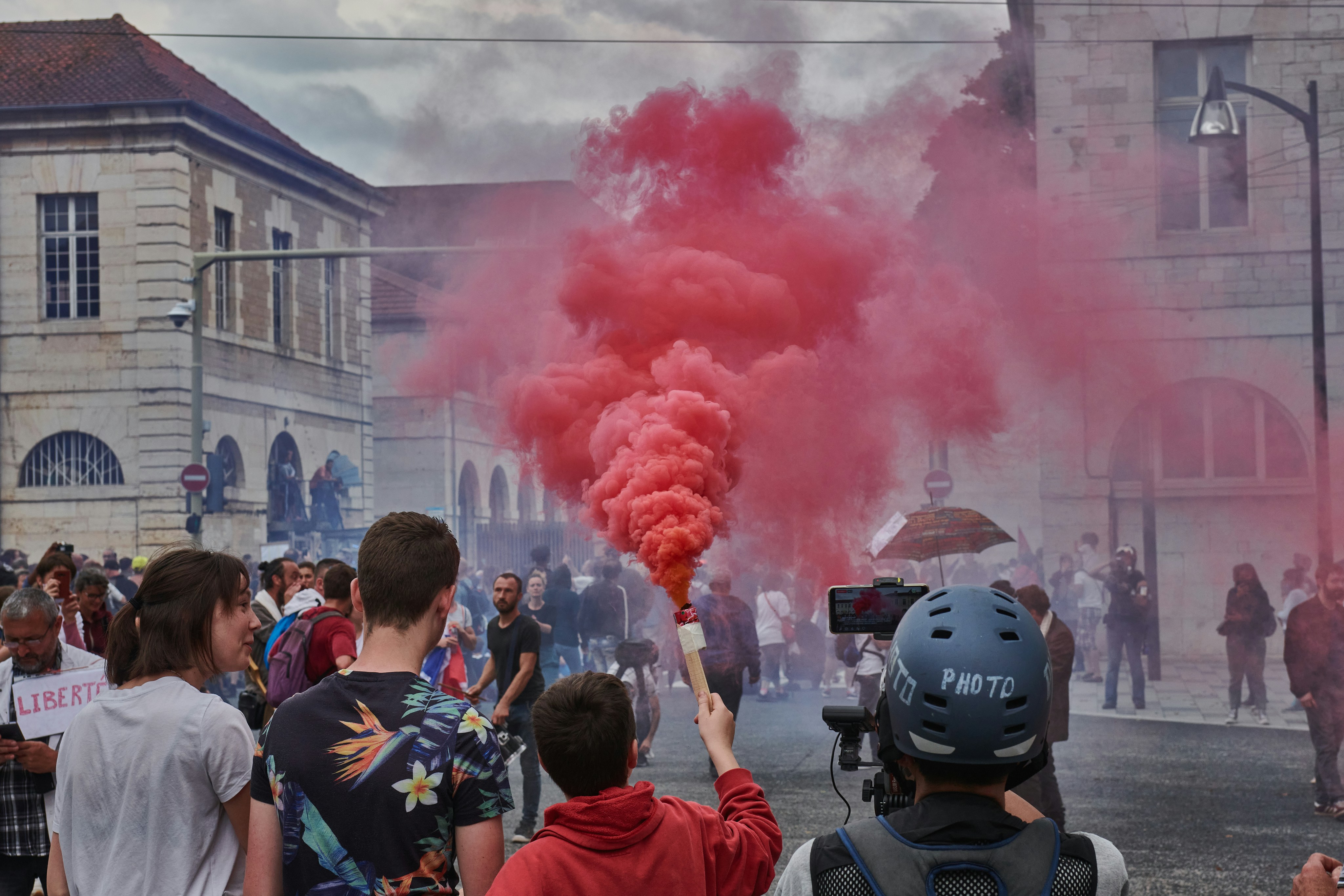
Images discussed during the unrest include damaged businesses, confrontations between demonstrators and police, and destruction of public property. Such scenes raise serious concerns about the government's ability to maintain order while protecting the rights of peaceful demonstrators and ordinary citizens.
France has experienced devastating Islamist terrorist attacks over the past decade.
In January 2015, gunmen attacked the offices of Charlie Hebdo, killing 12 people. Later that year, coordinated terrorist attacks in Paris, including the massacre at the Bataclan concert hall, killed 130 people.
In July 2016, a terrorist drove a truck into crowds celebrating Bastille Day in Nice, killing 86 people. That same month, two attackers murdered Catholic priest Jacques Hamel during a church service in Normandy.
The murder of schoolteacher Samuel Paty in 2020 further exposed the dangers posed by violent extremism and threats against freedom of expression.
These attacks remain significant reminders of the consequences of radicalization and failures to prevent terrorism.
However, understanding contemporary unrest requires distinguishing between peaceful political demonstrations, criminal violence, and ideologically motivated terrorism. The presence of religious or political symbols at a protest does not establish that every participant supports violence.
Protecting a nation's security requires confronting violent extremism without abandoning the religious freedoms and individual rights that make a free society worth defending.
For France, these questions are particularly important because its population includes people from many religious and cultural backgrounds. Government leaders face the difficult responsibility of maintaining public order while preserving freedom of conscience and equal protection under the law.
The biblical principle of responsible leadership offers an important perspective.
Romans 13 describes civil authority as bearing responsibility for restraining wrongdoing. Government is not simply an administrative institution. Its decisions have consequences for the safety and well-being of the people entrusted to its care.
The failures of political leaders deserve scrutiny, especially when innocent people suffer. Yet that scrutiny must remain grounded in truth rather than treating entire religious communities as responsible for the actions of extremists.
Michigan's Senate Race and the National Security Debate
Across the Atlantic, similar concerns about national security, political leadership, and public trust are influencing the 2026 midterm elections.
Michigan's Senate contest between Republican Mike Rogers and Democrat Abdul El-Sayed has become a focal point for debates involving foreign policy, Israel, healthcare, and the direction of the federal government.
Rogers, a former congressman and chairman of the House Intelligence Committee, has emphasized his national security experience. El-Sayed, a physician and former public health official, has focused heavily on affordability, healthcare, and economic concerns.
The candidates represent different approaches to the responsibilities of government.
Their disagreements have also prompted scrutiny of their political statements and positions concerning the Middle East.
Questions have been raised about past Muslim Brotherhood associations attributed to members of El-Sayed's family. Such claims warrant careful examination, but a relative's political history does not independently establish a candidate's personal beliefs, affiliations, or wrongdoing.
Voters should distinguish documented evidence from allegations and evaluate candidates according to their own records, statements, and proposed policies.
That standard applies equally to every candidate, regardless of political party or religious identity.
Meanwhile, some longtime Democratic voters have publicly expressed support for Rogers. Former Pontiac City Council member Melanie Rutherford has described reconsidering her traditional party allegiance after examining the candidates and their priorities.
Other Michigan Democrats have raised concerns about healthcare proposals, particularly the implications of a Medicare for All system for existing private insurance arrangements.
These disagreements illustrate how political coalitions can change when voters place greater emphasis on individual policies than longstanding party loyalties.
They also demonstrate why national security cannot be separated entirely from domestic policy. Senators influence defense spending, intelligence oversight, immigration legislation, and the nation's relationships with allies.
The debate over Israel remains especially consequential.
Former President Barack Obama's criticism of Israeli policy and Prime Minister Benjamin Netanyahu's defense of the Jewish people's historical connection to Israel reflect deeply contested questions about territory, national identity, security, and peace.
Jewish historical and religious ties to the land extend back thousands of years. At the same time, the Israeli-Palestinian conflict involves competing national claims and a history of displacement, warfare, and unsuccessful diplomatic efforts.
Responsible analysis should recognize that complexity while unequivocally condemning terrorism and attacks against civilians.
Voters should demand clarity from candidates on national security, religious freedom, and foreign policy while refusing to substitute accusations or political slogans for verifiable evidence.
Proverbs 18:17 reminds readers that the first account of a dispute may appear convincing until another examines it. That principle is particularly valuable during election season, when political advertisements and selective reporting can obscure important context.
Persecuted Christians and the Biblical Call to Remain Watchful
While Americans debate their political future, Christians in other parts of the world face threats far more immediate than an election result.
Nigeria continues to experience devastating violence involving armed militant groups, communal conflicts, and attacks against vulnerable villages.
Reports highlighted by International Christian Concern describe deadly attacks on Christian communities in Plateau State, including the killing of a pastor and numerous other residents.
The human cost extends beyond casualty figures.
Families lose loved ones, churches lose their leaders, and entire communities confront the possibility of further violence. Survivors may be forced to leave their homes, abandon farmland, or live with the uncertainty of future attacks.
Some attacks have been attributed to armed Fulani militants, while the wider violence in Nigeria involves overlapping religious, ethnic, criminal, and land-related tensions. Not all Fulani people are militants, and the circumstances of individual attacks require careful investigation.
Nevertheless, violence directed against Christians because of their faith demands international attention.
The suffering of these communities should challenge believers elsewhere to consider how they respond to persecution.
Ezekiel 33 describes the responsibility of a watchman who sees danger approaching and sounds a warning. The passage emphasizes the seriousness of recognizing a threat and responding before lives are lost.
That biblical image speaks to the importance of vigilance, but it also requires wisdom.
Christians must be careful not to confuse fear with discernment or assume that every political controversy represents the same kind of danger.
Scripture calls believers to exercise sound judgment, seek justice, defend the vulnerable, and speak truthfully.
The biblical command to love one's neighbor does not disappear when that neighbor belongs to a different religious or political community.
Nor does love require ignoring genuine threats.
Christian discernment means recognizing real danger, defending innocent people, and responding with courage rather than allowing fear or hostility to determine our actions.
For Americans, the approaching midterms provide an opportunity to consider these responsibilities within a constitutional system that allows citizens to participate in selecting their leaders.
Political engagement can be one expression of responsible citizenship, but it must never become the measure of someone's faithfulness to Christ.
No candidate or political party can provide ultimate security. Governments remain accountable for their actions, and Christians remain accountable to God for how they conduct themselves.
That responsibility includes prayer for persecuted believers, concern for victims of terrorism, thoughtful examination of political claims, and a commitment to religious liberty for all people.
France's struggles with public order, Michigan's debates over national security, and Nigeria's ongoing violence against Christian communities are different situations requiring different responses. Yet each illustrates why truth, responsible leadership, and the protection of human life matter.
The challenge is not merely to recognize warning signs. It is to respond with wisdom, justice, and faithfulness.
For more reporting and biblical perspectives on international developments, religious freedom, and the 2026 midterm elections, watch The Daniel Cohen Show on Real Life Network.
World News
25 min
When the State Tries to Train the Church
California’s new hate speech training law is raising concerns about religious liberty and government authority. Critics warn that vague definitions and unclear protections for churches could put biblical teachings on marriage, gender, and faith at odds with state requirements.
If voters are trying to imagine what the nation would look like under the socialist policies of a Democratic majority in Congress, look no farther than California.
Governor Gavin Newsom (D) and the Democratic supermajority in both chambers of the state legislature offer an extensive list of policies flowing from the same socialist and Marxist ideology being championed by the ascendant wing of the Democratic Party.
The latest example is AB 1803, signed by Governor Newsom last week. Authored by Assemblyman Josh Lowenthal (D), the law requires employers with five or more employees to add training on hate speech to the growing list of California’s harassment-training laws.
Lowenthal said, “California must make meaningful progress to train Californians on the danger of hate speech not only in the workplaces, but in society as a whole.”
The law describes speech covered by the training as speech that “vilifies, humiliates, or incites hatred” against people based on protected characteristics.
And what are those protected characteristics? They include religion, sex, gender, gender identity, gender expression, sexual orientation, and reproductive health decision-making — which includes abortion.
There are others, but those are enough to raise serious questions for Christians and religious organizations.
First, there is no clear legal definition of hate speech. Whatever the intent, the effect is to give the term enormous elasticity. Who decides when a deeply held religious conviction crosses the line from disagreement into “humiliation” or “vilification” and is then defined as hate speech?
Second, California law does not make sufficiently clear how this new mandate applies to churches and religious ministries. That ambiguity itself should concern anyone who values religious freedom, because the protected categories include subjects on which biblical Christianity makes unmistakable moral and theological claims.
Jesus said in Matthew 19 that the Creator “made them male and female,” and then described marriage in terms of a man and a woman. Does teaching those words humiliate someone who rejects the biblical understanding of sex and marriage?
What about Jesus’s words in John 14: “I am the way, the truth, and the life. No one comes to the Father except through Me”? Christianity is inherently exclusive in its truth claims. Could that someday be deemed vilifying toward another religion?
This is why California’s law should concern the church and everyone else, for that matter. When state officials declare the state needs to train society on what is appropriate speech, all of society is in trouble. Frankly, the state of California should not be instructing the church — the church should be instructing the government on what is right and wrong.
For Christians, this is an Acts 4 moment. When Peter and John were ordered not to speak or teach in Jesus’s name, they answered: “Whether it is right in the sight of God to listen to you more than to God, you judge.”
California is not merely a laboratory for the Left; it is a warning to the rest of America. The question for voters is whether California’s experiment stops at the state line, or comes to Washington. And the question for the church is even more fundamental: when government demands that we compromise biblical truth, will we have the courage of Peter and John to stand firm and speak it?
This article was originally published on The Washington Stand. For more content like this, visit Real Life Network.
Faith & Culture
25 min
What’s on Your Ballot? How to Research Your 2026 Local Elections
Your 2026 ballot includes more than the races making national headlines. Learn how to research candidates, understand local offices, evaluate ballot measures, and approach Election Day with greater knowledge and discernment.
National races dominate election coverage, but some of the decisions that affect your daily life may appear much farther down the ballot.
The 2026 midterm elections on November 3 will determine control of the U.S. House and affect the makeup of the Senate, but voters across the country will also encounter state legislative races, governors’ contests, county and city offices, judges, school boards, and ballot measures.
That is why researching the 2026 ballot should involve more than recognizing a few names from national television.
If you are beginning to ask, “What’s on my ballot in 2026?”, the next step is to understand the different kinds of races and measures you may encounter and know what questions to ask about each one.
Start With the Full Ballot, Not Just the Headline Races
Most voters hear far more about Congress than they do about county government, school boards, judges, or local ballot initiatives.
That imbalance can make the bottom half of a ballot feel unfamiliar.
Before Election Day, take time to review the ballot information published for your jurisdiction and identify every race and measure that will require a decision. Instead of trying to research everything at once, make a list and work through it category by category.
Depending on where you live, that list may include:
- U.S. House and Senate races
- Governor or other statewide offices
- State legislative races
- County and municipal offices
- Judges or judicial retention questions
- School board races
- State constitutional amendments
- Local tax, bond, or policy measures
Some may receive extensive news coverage. Others may receive almost none. Lack of national attention does not make a race unimportant.
Understand What Each Office Actually Does
Candidate research becomes much more useful when you understand the responsibilities of the position being sought.
A candidate for Congress will deal with very different questions from a city council member. A governor has different authority from a state legislator. School board members, county officials, judges, and local prosecutors each operate within their own responsibilities.
Before comparing candidates, ask:
What authority does this office actually have?
That simple question can cut through a surprising amount of campaign rhetoric.
Candidates sometimes make promises involving issues their office has little power to change. Understanding the role itself helps voters evaluate whether campaign claims are realistic and whether the issues being emphasized actually belong within that office’s responsibilities.
Research Candidates Beyond Their Campaign Ads
Campaign websites are useful because they tell you what candidates want voters to know about them. They should not be your only source, however.
Compare campaign statements with interviews, public records, reliable local reporting, debate appearances, previous votes when applicable, and other primary-source material.
Useful questions include:
- What issues does the candidate identify as priorities?
- What specific policies does the candidate support?
- Has the candidate previously held public office?
- If so, what does that record show?
- What experience does the candidate bring to the position?
- Does the candidate explain how proposed policies would work?
- Are major claims about an opponent supported by evidence?
Party affiliation can provide some information about a candidate’s general political alignment, whether Republican, Democrat, independent, or another affiliation. But it does not substitute for researching the individual candidate.
Two candidates from the same party can differ substantially on priorities, policies, governing style, or experience.
Pay Particular Attention to State and Local Races
Local elections often receive less attention than congressional races, even though state and local officials can make decisions that affect people directly.
State legislators may vote on taxes, education, criminal law, business regulation, healthcare policy, and state spending. Local officials can influence public safety, development, transportation, housing, budgets, and other community priorities.
School boards may make decisions involving curriculum, district policies, budgets, and administration.
That makes local elections in 2026 worth researching with the same seriousness as races that generate national headlines.
Local journalism can be particularly valuable here because local reporters often cover candidate forums, controversies, voting records, and community concerns that never reach national media.
Don’t Skip the Ballot Measures
Candidates are not the only part of the November 3 election.
Many voters will also be asked to decide ballot measures involving state or local law. These could include constitutional amendments, taxes, bonds, public spending, criminal justice questions, government structure, education, or other policy matters.
Ballot-measure campaigns often reduce complicated proposals to memorable slogans.
Go deeper.
Read the actual proposal or an official summary. Understand what changes if it passes and what remains in place if it does not. Look at arguments from both supporters and opponents, but also distinguish campaign claims from what the measure itself would legally do.
A useful research checklist is:
What does the measure change?
Who or what would be affected?
What would it cost?
How would it be implemented?
Am I willing to pay increased taxes for this measure?
What are supporters arguing?
What are opponents arguing?
Which claims can be independently verified?
The wording may take a little more time to understand, but that time can be well spent.
Separate News Reporting from Political Persuasion
By the final weeks of an election, voters can be surrounded by campaign ads, fundraising emails, social posts, endorsements, commentary, and viral videos.
Those sources may contain useful information, but they also have a purpose.
A campaign ad exists to persuade you. So does a political action committee advertisement. An endorsement tells you what another person or organization wants you to conclude.
That does not make those materials worthless. It simply means they should be recognized for what they are.
Whenever possible, compare persuasive claims against original documents, direct quotations, voting records, full interviews, official reports, and reporting from multiple sources.
Proverbs 18:17 says, “The first one to plead his cause seems right, until his neighbor comes and examines him” (NKJV). That principle is especially useful during an election season.
Ask How the Issues Affect Your Community
National political conversations can sometimes obscure what an election means closer to home.
A question about education, public safety, taxation, housing, religious liberty, healthcare, or economic policy may look different depending on the state, district, or community involved.
As you research state and local elections, ask how the major issues being discussed connect to the actual offices and measures on your ballot. Which decisions are made federally? Which belong to your state? Which are controlled locally?
Understanding that distinction makes political research more useful and helps prevent national rhetoric from overshadowing the decisions voters are actually being asked to consider.
Christians Can Approach Election Research with Discernment
For Christian voters, becoming informed is part of taking civic responsibility seriously.
That does not require assuming that every believer will make identical political choices. It does mean approaching candidates and policies thoughtfully rather than allowing a party label, celebrity endorsement, social media clip, or campaign advertisement to make the decision for you.
Research what candidates actually believe and have done. Examine policy proposals carefully. Consider how the issues intersect with biblical convictions about human dignity, justice, truth, freedom, family, stewardship, and care for others.
And recognize the difference between biblical principles and political messaging that simply borrows Christian terminology.
Discernment requires more than hearing what you already agree with.
Know Your Ballot Before November 3
The closer Election Day gets, the louder the political conversation will become.
Researching early gives you time to move at a different pace.
Start with the races and measures that will affect your own community. Understand what each office does. Compare candidates. Examine ballot measures. Check campaign claims against reliable information. Then continue following the larger national stories shaping the 2026 midterms.
Local knowledge and national awareness belong together.
Stay Informed with Real Life Network
Real Life Network will continue following the news, cultural conversations, and major issues shaping the 2026 elections as November 3 approaches.
Then on Election Night, America Speaks ’26: Election Night Live will bring viewers live results, updates, conversation, and biblical perspective on races and issues from across the country.
Stay informed locally and nationally. Sign up for America Speaks ’26 updates from Real Life Network as Election Day 2026 approaches.
World News
25 min
National Security, Israel, and the Questions Behind the 2026 Midterms
As the 2026 midterms approach, national security deserves attention alongside the economy. From Iran and Israel to domestic terrorism and rising antisemitism, congressional decisions carry consequences for American families, religious freedom, and public safety.
The economy matters. Groceries, gas prices, housing costs, and the pressure on American families deserve serious attention. But national security belongs in that conversation, too. The decisions made in Washington affect more than household budgets. They shape the country's ability to confront terrorism, protect religious communities, secure its borders, and respond to threats abroad.
Those connections deserve closer examination. Through The Daniel Cohen Show on Real Life Network, the intersection of faith, national security, Israel, and American politics remains central to understanding the headlines.
The approaching November 3 midterms raise questions that go well beyond which party controls Congress. Who sets national security priorities? How should America respond to Iran and its terrorist proxies? What responsibilities do elected officials have when antisemitism and political violence reach American communities?
National security is not an abstract debate reserved for Washington. Its consequences can reach neighborhoods, schools, houses of worship, and ordinary families.
Iran, Israel, and the Responsibility to Confront Terrorism
Iran remains central to the discussion about American national security and the Middle East. Its support for armed groups, including Hezbollah and Hamas, has made its regional influence a continuing concern for the United States and Israel.
Yet political disagreements over Iran and Israel often become tangled in arguments about military assistance, international law, and America's responsibilities overseas.
Michigan's Senate contest illustrates those competing priorities.
Abdul El-Sayed has argued against unconditional American military assistance to foreign governments, including Israel. In interviews, his position has emphasized applying international law consistently and restricting weapons transfers to governments accused of violating it.
That approach raises legitimate questions about American foreign policy. Military assistance is not an unlimited obligation, and elected officials have a responsibility to scrutinize how taxpayer money is spent.
But the discussion cannot stop there.
Israel faces rocket and missile threats from hostile armed groups and regional adversaries. Defensive systems such as Iron Dome exist to intercept incoming projectiles and protect civilian populations. Any proposal to restrict military assistance therefore deserves careful examination of its potential consequences for defensive capabilities as well as offensive operations.
There is also an important distinction between criticizing a government's military decisions and excusing terrorism directed against its citizens.
The March attack against Temple Israel in West Bloomfield, Michigan, brought that distinction much closer to home. A vehicle carrying incendiary materials was driven into a synagogue complex that also serves children and families. The incident prompted renewed concerns about antisemitic violence and the reach of conflicts originating thousands of miles away.
Political leaders can disagree about Israel's government, military operations, and American foreign assistance. Those disagreements do not diminish the obligation to condemn attacks against Jewish civilians and religious institutions.
No disagreement over foreign policy can justify threatening Jewish families or treating American religious communities as extensions of a foreign government.
The same principle must apply to every community. A synagogue, church, mosque, or school should never become a target because of anger over events elsewhere.
Why National Security Belongs in Congressional Debates
The connection between national security and congressional elections is more substantial than campaign rhetoric might suggest.
Congress controls federal appropriations, establishes statutory authorities, conducts oversight, and plays a central role in shaping the agencies responsible for national defense and domestic security. The Senate also exercises its constitutional responsibility to provide advice and consent on presidential nominations requiring confirmation.
Those responsibilities make congressional debates over homeland security, intelligence gathering, immigration enforcement, and counterterrorism consequential.
An alleged ISIS-inspired plot involving the Mall of America in Minnesota offers an example of the threats federal investigators seek to identify before violence occurs.
According to the account presented by federal authorities, an 18-year-old suspect had communicated about supporting ISIS and allegedly considered carrying out an attack in the United States after plans to travel overseas did not materialize. The allegations require the usual distinction between prosecutors' claims and facts established in court.
But the broader issue remains significant: preventing terrorism requires investigative resources, intelligence cooperation, appropriate legal authorities, and effective oversight.
Protecting the public also requires precision.
Terrorist organizations are responsible for their own violence. Their actions must not become an excuse to assign collective guilt to immigrants, Muslims, or particular ethnic communities. Effective counterterrorism depends upon identifying actual threats rather than confusing religious identity or national origin with criminal conduct.
That is why national security policy requires more than slogans about being tough or compassionate.
The public deserves to understand how candidates would approach terrorism investigations, border security, intelligence oversight, civil liberties, and the constitutional limits of government authority.
Those questions belong alongside debates about inflation, healthcare, education, and taxation.
Antisemitism, Political Rhetoric, and the Limits of Party Loyalty
Three years after the Hamas-led October 7 attack, the anniversary remains a painful occasion for Jewish communities around the world.
Approximately 1,200 people were killed in the attack, and 251 were taken hostage. The consequences have extended far beyond Israel, including heightened security concerns and incidents of antisemitism in the United States.
New York City's response to the anniversary illustrates how difficult the public conversation has become.
Mayor Zohran Mamdani's remarks acknowledging the suffering caused by October 7 while criticizing Israel's subsequent military actions became a point of contention among activists with sharply different expectations.
The controversy reflects a larger problem in contemporary politics: expressions of sympathy, criticism, and disagreement are increasingly measured against demands for complete ideological agreement.
Recognizing the suffering of Israeli victims does not require ignoring Palestinian civilian suffering. Likewise, expressing concern for Palestinians does not require minimizing the October 7 atrocities or excusing antisemitism.
Both truths can be maintained without contradiction.
Political movements become less capable of honest debate when every disagreement is treated as betrayal. Acknowledging suffering should not depend upon whether the victims belong to a preferred political or religious community.
For Christians, Scripture establishes a higher standard than political loyalty. Human beings bear God's image, and the obligation to speak truthfully does not disappear when truth becomes inconvenient to a favored party or cause.
Proverbs 18:17 reminds readers that the first account of a dispute may sound persuasive until it is examined. That principle applies to viral videos, campaign statements, accusations of extremism, and claims about political opponents.
Christian discernment requires consistency: condemn terrorism without qualification, reject antisemitism without hesitation, and examine political claims without surrendering judgment to party loyalty.
The approaching midterms will generate enormous attention around polling, turnout, and campaign strategies. Those subjects are part of the political process, but they should not obscure the governing responsibilities attached to the offices being contested.
A Senate vote can affect national security appointments. A congressional appropriation can determine resources available to federal agencies. Legislative oversight can expose failures or strengthen accountability.
Understanding those responsibilities provides a more useful framework than treating every political development as a contest between personalities.
The same seriousness belongs in discussions about Israel, Iran, and religious freedom. American foreign policy involves real tradeoffs, and domestic security decisions can affect both public safety and constitutional liberties.
No political party possesses a monopoly on wisdom, and no candidate should be exempt from difficult questions.
The standard should remain consistent: evidence before accusations, clarity before slogans, and responsibility before political convenience.
Follow the intersection of biblical truth, Israel, national security, and American current events through The Daniel Cohen Show, streaming free on Real Life Network
World News
25 min
Media Starts to Doubt Dems’ Invincibility as November Creeps Closer
As the 2026 midterms approach, shifting media coverage and conflicting polls are raising questions about election forecasts. Historical polling errors, voter turnout, and competitive congressional races highlight the uncertainty surrounding November 3.
After months of flooding the zone with glum predictions for Republicans, there’s been a quiet but meaningful shift in major media headlines. Left-leaning outlets desperate to make the GOP’s demise a self-fulfilling prophecy seem to be subtly hedging their bets against another polling embarrassment. In the last handful of days, even the big dogs — The New York Times, Washington Post, and Newsweek — are conceding that maybe the election forecasts aren’t as lopsided as they’ve been leading voters to believe.
Suddenly, readers are clicking on stories that paint a very different picture of the apocalyptic landscape for Republicans they’d come to expect. Articles like “Democratic Optimism in Six Senate Races May Be a Mirage,” “3 Bright Spots for the G.O.P.,” and “How Much Can Republicans Outrun Trump’s Approval?” are popping up in the same pages that have urged Americans to don galoshes for the Blue Tsunami. And while there certainly are very troubling signs for Speaker Mike Johnson’s (R-La.) party, one lesson everyone should have learned by now is that polls are an incredibly flawed measure of public opinion.
In the modern age, Republicans have consistently outperformed the industry’s numbers in presidential and midterm elections. Pollsters have frantically tried to solve this puzzle, especially after a string of national humiliations. After a lot of head-scratching, two theories for this unpredictability revolve around the GOP. “First, Republicans are becoming more distrustful of institutions and society, and that may be extending to how they feel about pollsters. Second, suburban Republican college graduates are more likely to fear professional sanction for their views and are therefore self-censoring more, including in surveys,” FiveThirtyEight’s Emily Ekins suggests. Most experts estimate that conservatives underpoll somewhere between 3-5% — a massive swing for anyone trying to prophecy close races.
Over the last handful of days, the media seems to be making an intentional effort to temper their excitement, noting that as optimistic as Minority Leader Chuck Schumer (D-N.Y.) may be, “history offers a warning to Democrats, as polls in recent elections underestimated Republicans in key states. Control of the Senate could come down to just a handful of races where polls show razor-thin margins.” In places like Alaska, Iowa, Maine, Michigan, Ohio, and Texas, Newsweek warns, Democrats appear to have a polling edge. “But Republicans have outperformed polling averages in many of those same states over the past few elections. Polling errors are not necessarily repeated from cycle to cycle. But a similar pro-Republican polling error this cycle would not bode well for Democrats’ chances of flipping the Senate.”
Watch live coverage of election night on Real Life Network.
Frankly, it’s “impossible to know for sure” what the polling error could look like this year, Syracuse Political Science Professor Grant Davis Reeher acknowledged. “There are some pretty big known unknowns in this election, which could throw off polls,” he said. “A primary one is turnout. Polls must make educated guesses about who is most likely to vote. It’s a little trickier in midterms.”
National Review’s Jim Geraghty, who hasn’t exactly been a glass-is-half-full prognosticator, offered what he called “the cheeriest midterm take for Republicans you’re going to find,” urging readers to second-guess the excitement surrounding Democrats in cherry-red Kansas, South Carolina, South Dakota, Nebraska, and Florida. Despite the media’s insistence that GOP candidates are in trouble, the polling doesn’t necessarily bear that out. “There’s good reason to not believe the hype; we’ve seen this sort of narrative before.”
He ticks off the numbers for each key race, along with historical trends, dismantling the idea that conservatives are in trouble. “The lesson of this is not that all the polls are always wrong, or that every prediction of an upset Democratic win is always wrong,” Geraghty cautions. “But there’s an extremely familiar narrative of ‘this Democrat really has a shot in a deep red state!’ that rarely pans out; when it does, it’s usually because of a spectacularly flawed Republican candidate.” Americans should be wary of a blue wave, he writes, if only because “certain left-of-center media voices always tell them there will be a blue wave every November.”
An unlikely source echoes NR’s guardedness: The New York Times. Despite what pundits say, “there is also quite a bit of good news for Republicans,” Ruth Igielnik wrote late last month. For starters, “Republican Senate candidates are running ahead of the party. … Each of [them] is outrunning President Trump’s popularity in their states, sometimes by double digits. … And in each of the races, Republican candidates are winning some voters who otherwise say they want Democrats to control the Senate. Taken together, these are signs that in these competitive, Democratic-leaning states, Republicans have nominated strong candidates who appeal beyond their base.”
Then, of course, there’s the Left’s ugly infighting. “As Democrats are divided,” the Times points out, “Republicans are united. … We asked Democrats across the country if they felt the party was united or divided. About half said the party was united, and half said divided. Those numbers are nearly identical to a survey we ran in 2016. Republicans, on the other hand, are feeling very unified. In our most recent national survey, 70 percent of Republicans said they felt the party was united. That is a dramatic departure from 10 years ago. In 2016, more than 80 percent of Republicans said they thought the party was divided.”
Over at The Washington Post, Scott Clement reiterates that a “poll of two key House districts shows good signs for Democrats, but no tsunami.”
As for the bluster that even Hispanics are abandoning the GOP, Rasmussen Reports soundly beats back that narrative. In results released Monday, Hispanic voters favor Republicans by a 50 to 42% margin over Democrats. “The poll also indicates a tightening battle for control of Congress, as the Democrats’ lead over Republicans decreased for the second week in a row, according to the company. Overall, voters said if the election was held today 47 percent of likely voters would vote for the Democrat candidate, while 44 percent would vote for the Republican. Four percent of voters said another party’s candidate and just 4 percent were undecided.” In other words, Republicans have slashed the Democrats’ lead in half since just mid-September, “particularly with independent voters.”
But as encouraging as those signs are, leadership is clear-eyed about the hill they have to climb this November. “Now listen, this is going to be a very close election,” Speaker Johnson underscored Tuesday. His Senate counterpart, Majority Leader John Thune (R-S.D.), has been cautiously optimistic about his side of the Capitol. “I think we can keep the majority,” he told Politico this week. “I think all of these races are margin of error, at least the ones that we have to win. And historically, at least if you look at polls, we tend to outperform them.”
House Majority Leader Steve Scalise (R-La.) made that same point in a conversation with Family Research Council President Tony Perkins on “This Week on Capitol Hill.” When Cook Political Report, a widely respected organization, moved more seats to the toss-up or Democratic-leaning column, the House’s second-in-command wasn’t worried. In his mind, there’s more to the story. “You know, the polling really is interesting when you dig into it. You’re seeing an undersampling of Republicans, and we’re digging into some of these. Let’s be clear too. There are a lot of close races, not just Republican races.” He pointed to a few states like New Hampshire where GOP candidates are making a dent in Democratic areas too. “There [are] about 35 seats across the country that are truly swing districts,” Scalise observed. “Twenty of them are held by Republicans that are close right now, but 15 are held by Democrats that are also close, that we have a real chance to flip. And so, turnout is going to be a big factor. Who really does show up?”
The GOP has another secret weapon this election — in large part thanks to President Trump and Speaker Johnson — and that’s campaign cash. As Perkins highlighted, conservatives “have a strong edge on the fundraising to get their message through in these final days.” Scalise nodded. “We really do. You know, it’s rare that we outraise Democrats in a lot of these seats. We have now. And again, I think people are seeing what’s at stake, and they’re donating money.”
The media, he thinks, “[is] counting on Republicans, especially traditional conservative voters, to just stay home. And I don’t think that’s going to happen, because I think more and more people are seeing this sharp contrast [between the two parties].” With the rise of the Democratic Socialists, Scalise warns, “This isn’t like two candidates [who] are similar. This is common sense versus crazy. And some of these candidates … [don’t just want] to defund the police — they want to disarm the police. They actually advocate for taking guns away from police officers. You were a police officer. Could you imagine approaching a criminal who’s got a gun and saying, ‘Hey, let’s have a conversation and try to talk this out?’ He shoots you, and it’s over. This is insanity. And that’s beyond crazy. But if people stay home ... [these radicals win]. And that’s why people can’t stay home.”
At the end of the day, Scalise insisted, Democrats are trotting out polls “to make it look like they’re doing better than they are, because they want to depress conservative voters. Because if conservative voters stay home, guess what? Socialists will actually win. They can’t win if you show up and vote on November 3rd.”
That’s right, Perkins stressed. “The only poll that really counts is Election Day when people turn out and vote.”
Watch live coverage of election night on Real Life Network.
This article was written by Suzanne Bowdey and originally published on The Washington Stand. For more content like this, visit Real Life Network.
World News
25 min
New California Law Requires Churches to Implement Pro-LGBT ‘Anti-Hate Speech’ Training
California’s new workplace anti-hate speech training law is raising religious liberty concerns. Christian advocates warn that vague language could pressure churches and religious employers to provide training that conflicts with their biblical beliefs.
A newly enacted law in California that requires virtually all employers to give employees “anti-hate speech” training is raising red flags, as experts say that the mandate could force churches to provide training that conflicts with sincerely held biblical beliefs regarding sexuality, gender, and marriage.
Late last month, California Governor Gavin Newsom (D) signed into law AB 1803, a measure that requires all employers with five or more workers, including all churches and other nonprofit religious organizations, to provide employees with “anti-hate speech” instruction. But as observers like the California Family Council (CFC) are pointing out, the legislation does not define “hate speech,” instead handing the job to the state’s Civil Rights Department. The bill mandates that the training must confront workplace speech that “vilifies, humiliates, or incites hatred” against individuals based on what the state has already deemed a protected characteristic, which includes sex, gender identity, gender expression, and sexual orientation.
The CFC goes on to observe that the statute, which will go into effect on January 1, 2028, never mentions churches or religious nonprofits and their First Amendment rights to hold sincerely held religious beliefs about sexuality and gender. It also “fails to separate protected expression from unlawful conduct,” noting that the Supreme Court held in 2017 that “the First Amendment has no hate speech exception.”
Greg Burt, who serves as vice president of CFC, further pointed out the problems with AB 1803’s vague language regarding key terms that it says constitute “hate.”
“What does it mean to vilify? What speech actually humiliates?” he wondered during “Washington Watch with Tony Perkins” Tuesday. “[M]any times legislators consider many Christian beliefs when they’re expressed — especially regarding sexuality or gender — they accuse us of hating people. That’s [the] farthest thing from my mind. But we are simply advocating for our view that sex is determined by biology, and God created us both male and female. Well, to many people that is humiliating and that incites hatred. And so that’s the problem with this legislation.”
Burt went on to clarify that AB 1803 is being folded into a previously enacted statute that mandates sexual harassment training, which already specifies that using accurate biological pronouns constitutes “harassment.” “[Businesses are] already required to go through sexual harassment training, and we found out several years ago they redefined what sexual harassment means to include gender identity,” he explained. “… [The] California Civil Rights Department says misgendering is harassment, and so this training is on top of that already egregious training.”
As for how employers can fulfill the required training, Burt noted that hiring outside trainers is allowed, but the state-provided training that includes pro-LGBT messaging is free. “Right now, the state puts together a free curriculum — that’s how they do it with sexual harassment training, but you’re not required to use that training. You can come up with your own. But we don’t know exactly what ‘anti-hate’ is going to include, right? [Their] definition of speech that ‘humiliates’ — what does that mean? It really depends on the person who’s receiving the language.”
Burt further urged churches and other religious organizations in the Golden State to push back vigorously against the mandate. “What I think the state is doing is it’s trying to intimidate churches into following through with this,” he lamented. “They should not be receiving any kind of ideological training from the state on any moral issue. That’s why what churches need to be doing is asking for religious accommodations. The federal law and the state law already require businesses to accommodate people’s faith if they’re being required to do something that violates their faith. … [T]his is one of those points in history here in California where civil disobedience is going to be necessary.”
Burt concluded by emphasizing that state officials in California are counting on churches to kowtow to their demands instead of standing up for the constitutional freedoms, which has already proven to be a winning strategy.
“I’m sure they’re already thrilled that they get to retrain the entire population to believe what they believe regarding gender identity,” he reflected. “And so once we get accustomed to this and say, ‘Well, this is just what California requires, I guess we have to do it.’ No, you don’t. Folks, you’ve got to resist, and that includes individual employees. That’s what we are encouraging people to do. And we are having success. We have some attorneys we’re working with, and when people have been asking for religious accommodations, they have been accommodated.”
This article was written by Dan Hart and originally published on The Washington Stand. For more content like this, visit Real Life Network.
Thank you! Your submission has been received!
Oops! Something went wrong while submitting the form.
World News
The world did not simply “change” in 2025. It accelerated. Nations shifted, narratives collapsed, and the spiritual temperature rose. From the first major political reset in Washington to the front lines of the Middle East conflict, the year carried a message many tried to ignore: truth matters, and leadership matters.
On the Daniel Cohen Show year in review, Daniel walks viewers through the defining moments of 2025, month by month. The stories include global conflict, media bias, moral confusion, and flashes of courage that reminded millions what Western civilization is built on: ordered liberty, Judeo Christian conviction, and the unshakable hope of the gospel.
This is not just a political recap. It is a snapshot of spiritual warfare in real time, with Israel, America, and the wider West facing the same fundamental question: will we stand for biblical truth, or will we surrender to deception.
January 2025: Trump Returns and the Reset Begins
The year opened with a dramatic shift as a new leader returned to the White House on January 20, 2025. Daniel frames it as the moment “truth and common sense came roaring back,” with immediate reversals of policies tied to climate agreements, DEI mandates, and what he describes as the “transgender madness” that had reshaped military culture.
It was also a month defined by clarity. “Peace through strength” became the theme as Trump issued blunt warnings to Iran and projected deterrence that many believed had vanished in recent years. Daniel connects these developments directly to Israel news and the Middle East conflict, pointing to how quickly adversaries adjust when America either projects strength or broadcasts hesitation.
January also carried sobering reminders at home. A devastating Southern California wildfire burned tens of thousands of acres, and Daniel highlights leadership failures, infrastructure strain, and the frustration of citizens watching officials offer excuses instead of accountability. In this telling, 2025 was already revealing a deeper divide between slogans and reality.
Spring 2025: Media Bias, Moral Collapse, and the Cost of Denial
As winter turned to spring, Daniel turns the lens toward the institutions shaping the national mind: the legacy press, cultural gatekeepers, and political elites. He highlights how media bias can blur moral lines, especially when it comes to Israel, Hamas, and the stories that dominate Christian news coverage.
In March, Daniel points to examples of mainstream outlets framing conflict in ways that minimize Hamas violence while applying scrutiny and blame to Israel. In his view, the issue is not merely bad reporting. It is a worldview problem. When a culture rejects biblical truth, it loses the ability to name evil clearly.
Then comes April, a month Daniel frames as symbolic. Holy Week, Passover, and Easter arrived, yet national leadership publicly elevated identity politics on Christianity’s most sacred day. For many believers, it underscored how rapidly Western civilization can drift when religious freedom is treated as optional and biblical worldview convictions are mocked.
Summer 2025: Israel’s 12 Day War With Iran and the Meaning of Strength
If the first half of 2025 felt turbulent, June became seismic. Daniel recounts the 12 day war with Iran as a turning point in the Middle East conflict. Israel launched strikes against Iran’s nuclear infrastructure, targeting facilities and leaders tied to the program. Iran responded with hundreds of ballistic missiles and waves of drones, pushing Israel’s defensive systems into constant motion.
Daniel describes the daily reality of Israelis moving between normal life and bomb shelters, with warning sirens, interceptors, and explosions that made the conflict intensely personal. He emphasizes what many in Israel already understand: survival in the region often depends on decisive action, not wishful thinking.
The climax came when the United States struck fortified nuclear sites that Israel could not reach alone. Daniel presents this as a defining picture of alliance and leadership: America backing Israel, not pressuring restraint at the moment restraint becomes deadly.
Whether one agrees with every political conclusion or not, the show’s point is clear: ideology has consequences. Deterrence is real. And when leaders refuse to confront threats, innocent people pay the price.
Fall 2025: Charlie Kirk’s Assassination
Then came September 10, 2025, a date Daniel treats as one of the darkest and most catalytic moments of the year: the assassination of Charlie Kirk. Daniel recounts the shock, the grief for a young father, and the ugliness of public celebration from corners of the culture that claimed moral superiority.
But the story did not end with tragedy. Daniel highlights what followed: a wave of public resolve, increased hunger for biblical truth, and what he describes as a “biblical movement” reflected in exploding Bible sales and renewed boldness across campuses and communities. Erica Kirk’s statement became a rallying cry: the mission did not die with Charlie. It multiplied.
In October, national recognition and public remembrance reframed the loss into a call to courage. Daniel’s message is not triumphalism. It is an admonition. Christians do not celebrate death. They mourn with those who mourn. Yet they also refuse to let fear silence truth.
Christmas 2025: The Hope That Outlasts Every Headline
By the end of the year, Daniel returns to the only anchor that does not shift with elections, wars, or media cycles: Jesus Christ. Christmas is not about the noise, the shopping, or the spectacle. It is about the Jewish Messiah entering the world to save it.
Daniel ties the entire year to a simple conclusion: the struggle is not merely political. It is spiritual. The answer is not despair. It is discernment, courage, and the gospel. In a world where tomorrow is promised to no one, the call is urgent and compassionate: come to the truth, receive grace, and walk with your Creator.
Watch the full Daniel Cohen Show on Real Life Network
25 min

December 22, 2025
Daniel Cohen
World News
The tension building beneath America’s surface is no longer subtle. From a viral confrontation in Wisconsin to massive welfare fraud in Minnesota, from ideological battles inside American universities to shifting loyalties within immigrant communities, one truth becomes unavoidable. The United States is facing a cultural and spiritual crisis shaped by forces both domestic and global. On the Daniel Cohen Show, Daniel exposes how these threads connect and why Americans must no longer ignore the transformation happening right in front of them.
The stories may seem unrelated at first. A Cinnabon worker fired. A multimillion dollar fraud scheme tied to Somali networks. A university system demanding ideological conformity. A media personality buying a mansion in Qatar. But step back for a moment, and the pattern becomes clear. We are a nation being reshaped while citizens are told to stay silent.
Below is the breakdown of how these stories intersect and what they reveal about the future of America.
Eruption in Wisconsin
The viral video from a Wisconsin shopping mall did not go viral because an employee used horrific language. That behavior is wrong and no one should defend it. The story went viral because millions of ordinary Americans recognized something deeper. They recognized the frustration brewing in communities across the country where rapid demographic changes and cultural clashes are creating pressure.
Reports now say the Somali couple involved may have been antagonizing the worker for not wearing a hijab. If that is true, then the edited clip tells only one side of the encounter. It would not be the first time viral outrage ignored inconvenient context. But the moment symbolizes something larger. Americans have been told for years to tolerate everything while their communities, customs, and expectations are rewritten around them.
As Daniel Cohen points out, when assimilation is no longer required and when criticism is immediately labeled hate or racism, frustration will eventually boil over. This is not a justification. It is an explanation. The American people feel unheard. And they are tired.
Minnesota’s Welfare Fraud
Minnesota is experiencing the largest welfare fraud scandal in American history. Billions of taxpayer dollars stolen through programs hijacked by networks operating inside the Somali community. Federal authorities now confirm some of that money may have been funneled to al Shabaab, a terror organization with American blood on its hands.
Over 480 state employees warned Governor Tim Walz. They begged him to intervene. Instead, whistleblowers say they were intimidated, monitored, and silenced. The media refused to cover the story until President Trump publicly called out the corruption. Only then did outlets acknowledge the scandal.
Daniel Cohen rightly notes that the question is no longer whether fraud occurred. It is whether political leaders were incompetent or complicit. The problem is not isolated to Minnesota. In Ohio, a state representative openly declared that his priority in office is lobbying for Somalia. In Minneapolis, political rallies look like foreign campaign events.
This is not normal immigration. This is political bloc formation shaped by foreign loyalties. When assimilation fails, national unity fractures. That is exactly what we are witnessing now.
Universities, Media Figures, and Cultural Elites
While the working class struggles with cultural upheaval, American universities are training the next generation to accept an ideology that rejects biology, suppresses dissent, and punishes disagreement. The UC system now requires students to score 100 percent on an ideological exam or lose access to class registration.
Disagree with transgender ideology. Object to men using women’s restrooms. Believe in biological sex. You fail.
This is not education. This is enforced doctrine.
Meanwhile major public voices are signaling where cultural power is shifting. Tucker Carlson announced he is buying a home in Qatar, a government that funds terror groups and restricts women’s rights. American cultural icons now praise regimes that reject the very freedoms America was built upon. At the same time, the Pope minimizes the danger posed by unchecked immigration from Islamic regions despite centuries of historical evidence.
Daniel Cohen traces a painful reality. Wherever radical Islam gains demographic power, Christian populations collapse. Lebanon. Syria. Iraq. Egypt. Bethlehem. The pattern is undeniable. And yet America continues to import populations from regions where assimilation is not guaranteed and where ideology often conflicts with Western freedoms.
Bethlehem lighting its Christmas tree for the first time in two years is treated as a joyful headline. But the truth is darker. The tree was dark not because of war but because local Muslim authorities canceled Christmas in solidarity with Gaza. The Christian population has fallen from over 80 percent to less than 10 percent. Christian presence is disappearing across the Middle East. Why should the West believe it will be different here?
In the end, the stories of Wisconsin, Minnesota, the universities, and the Middle East all converge.
America is being reshaped culturally, politically, and spiritually. Truth is punished. Dissent is criminalized. Citizens are shamed for wanting the country they grew up in. Immigrant political blocs are forming with loyalties that do not point to the United States. And those who raise the alarm are smeared as hateful or extreme.
Daniel Cohen ends his show with clarity. This is a spiritual war. Christians and conservatives cannot afford to sit quietly while the foundations of Western civilization erode beneath them. This is the moment to speak truth. To defend what is good. To pray for strength. To contend for the soul of the nation.
Watch the Daniel Cohen Show
Stream every episode of the Daniel Cohen Show on Real Life Network:
https://reallifenetwork.com/danielcohen
25 min
When A Nation Loses its Way

December 9, 2025
Daniel Cohen