What's Happening
- Wake up spiritually.
- Refuse cowardice.
- Live ready.
Cultural Chaos from City Hall to the Locker Room
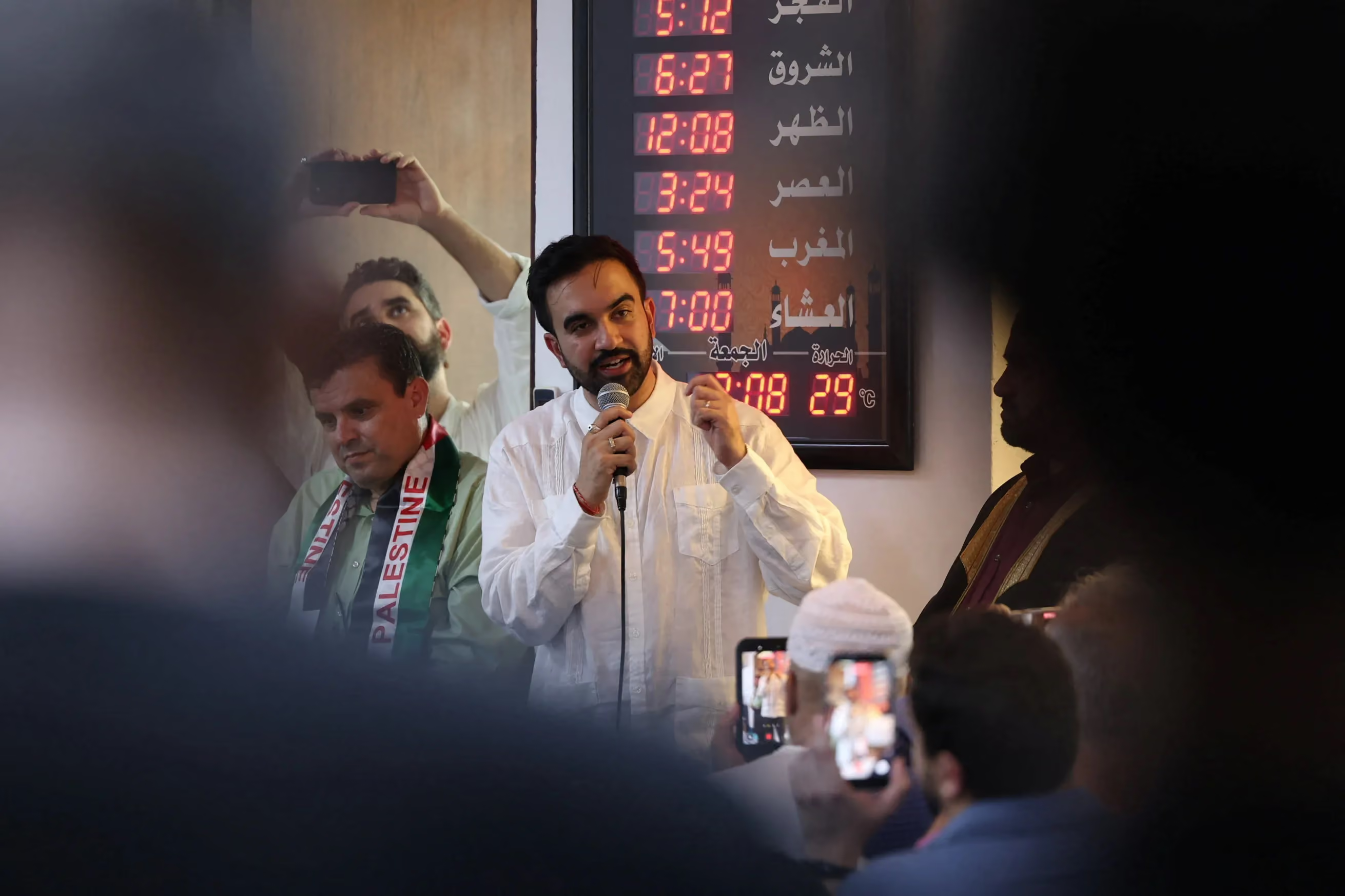
Mamdani never hid his agenda. He promised rent freezes, city-owned grocery stores, free health care for everyone, and the power for the city to seize private buildings from “bad landlords.” Daniel calls it what it is: Marxism—wrapped in compassion, funded by taxpayers far beyond New York.
At the same time, America is approving madness in its most vulnerable spaces. Cohen revisits the Gold’s Gym story of Tish Hyman, a black lesbian woman who was naked in the women’s locker room when a biological man walked in claiming to be a woman. When she objected, she was removed from the gym. He stayed.
The “most oppressed” in our culture are no longer the women who feel unsafe. They are the men who claim to be women and demand access to female spaces—even after a violent past. That is not compassion. It is confusion. Scripture says, “God is not a God of confusion but of peace” (1 Corinthians 14:33).
This same spirit of confusion shows up on the political right. Daniel confronts influential conservatives who platform open antisemites like Nick Fuentes without pushback. When Tucker Carlson gives a soft interview to a Holocaust denier and tells critics to “buzz off,” that is not courage—it is compromise.
The irony is painful. Some voices who claim to defend Christian values mock concern about real persecution. Ted Cruz highlights Christians slaughtered in Nigeria and Sudan, and Tucker calls it “weird.” Yet believers are being burned in churches, beheaded, and hunted for their faith. If we cannot call evil what it is, the problem is not our enemies—it’s our lack of discernment.
Money, Power, and the Battle for Our Hearts
The moral breakdown runs from City Hall to Capitol Hill. President Trump proposes sending Affordable Care Act subsidies directly to citizens instead of bloated insurance companies. Chuck Schumer would rather protect corporate profits than reopen government.
Then there is Nancy Pelosi. She entered Washington as a public servant and leaves with an estimated net worth in the hundreds of millions. Her stock portfolio beat top hedge funds and even Warren Buffett’s returns. When asked about insider trading, she dodged with nervous smiles.
Meanwhile, mainstream media runs tearful stories about people on government aid unable to afford eyebrow appointments. Daniel’s point is not cruelty—it is responsibility. Benefits meant to feed families were never designed to fund luxuries.
"For even when we were with you, we commanded you this: If anyone will not work, neither shall he eat." (2 Thessalonians 3:10)
Yet glimpses of sanity remain. Tennessee removed pride flags from public schools so classrooms can focus on education, not activism. Italy proposed banning face-covering Islamic garments in public, arguing that religious freedom should not create parallel societies. These are imperfect steps—but at least they recognize a truth: no nation survives when it refuses to say no to destructive ideologies.
A Biblical Response to a World on Fire
From Mamdani’s victory party to transgender men in women’s locker rooms to antisemitism and the persecution of Christians, Daniel Cohen returns to one truth: this is not political chaos—it is spiritual war.
The answer is not despair. It is not loyalty to pundits or politicians. The answer is returning to the Word of God. Genesis 1:27 tells us that God created humanity male and female. Romans 11 reminds us that God’s covenant with Israel stands. Ephesians 6 declares that our real enemies are not flesh and blood but spiritual powers of darkness.
So what should Christians do?
Wake up spiritually. Read Scripture so you can recognize lies from both left and right.
Refuse cowardice. When you see antisemitism or the abuse of the vulnerable, speak truth in love.
Live ready. Jesus is coming again—not to rule from New York or Brussels but from Jerusalem.
History is not falling apart. It is falling into place under His authority. Stay grounded in Scripture, stand with truth, and let your hope rest in Christ—not in the chaos of the world.
The violence we are witnessing across Western societies is no longer sporadic, accidental, or disconnected. It is ideological. Recent terror attacks and plots, spanning from Australia to Washington, D.C., from elite university campuses to major American cities, reveal a convergence of forces that are openly hostile to the moral framework that once anchored the West. The common thread is not nationality or circumstance, but a growing alliance between Islamist extremism and radical leftist movements, both committed to eroding Judeo-Christian civilization.
In Australia, the brutal attack on a Jewish gathering was a stark reminder that jihadist ideology does not recognize borders. Jewish families celebrating their faith were deliberately targeted, not because of geopolitical grievances, but because Islamist doctrine has long identified Jews as enemies to be eliminated. This was not random violence, nor was it a reaction to local conditions. It was the export of global jihad into a Western democracy that has repeatedly chosen denial over confrontation when it comes to Islamist ideology.
The same denial is evident in how Americans process violence at home. The shooting at Brown University has been framed primarily as another tragic campus incident, with authorities quick to assure the public that motive remains unclear. That may be procedurally accurate, but culturally evasive. American universities have become breeding grounds for ideological radicalization, where hostility toward faith, nationhood, and Western identity is normalized. Students are immersed in narratives that portray America as irredeemably evil, Christianity as oppressive, and violence as morally justified when cloaked in the language of resistance. When such ideas saturate the intellectual environment, violence should not surprise us.
The Convergence of Extremes and the Strategy of Chaos
The targeted attack on National Guard members in Washington, D.C. strips away any remaining illusion that this is merely a domestic social crisis. This was a calculated assault on representatives of the American state, carried out by someone shaped by radical Islamist beliefs. The symbolism is unmistakable. This was an attack on authority, order, and the legitimacy of the nation itself. It exposes the cost of importing unresolved ideological conflicts without demanding allegiance to American values or confronting radicalization within immigrant communities.
Perhaps the most revealing case is the terror plot disrupted in Los Angeles. Members of the Turtle Island Liberation Front were arrested while allegedly preparing coordinated bombings against civilian and law-enforcement targets. Their rhetoric blended revolutionary language, anti-colonial ideology, and militant pro-Palestinian messaging. This was not incoherent rage. It was a carefully assembled ideological framework that mirrors what we increasingly see on college campuses, in activist networks, and online spaces that glorify violence while condemning Western society as inherently illegitimate.
Federal analysts have begun describing this phenomenon as Nihilistic Violent Extremism, yet public discussion often strips the term of its most dangerous component. NVE is not limited to anarchists or radical leftists acting alone. It reflects a growing convergence between far-left revolutionary movements and jihadist ideology. While their ultimate visions differ, their immediate objectives align. Both seek to destabilize Western societies. Both reject Judeo-Christian moral authority. Both view chaos as a catalyst for transformation. Violence becomes not a tragedy, but a strategy.
This convergence explains why radical leftist groups increasingly excuse or rationalize Islamist violence, branding it resistance rather than terror. It also explains why jihadist movements find fertile ground within Western activist spaces that already despise national borders, religious tradition, and moral absolutes. Islamists bring ideological discipline and long-term ambition. Anarchists bring disruption, infrastructure sabotage, and a willingness to tear down institutions. Together, they form a volatile alliance capable of real harm.
The Los Angeles plot illustrates this dynamic with chilling clarity. The group’s members echoed Islamist talking points, adopted global revolutionary narratives, and aligned themselves with causes long exploited by jihadist movements to gain Western sympathy. This was not accidental overlap. It was ideological convergence. These movements may wear different masks, but they march toward the same goal: the dismantling of Western civilization’s moral and civic foundations.
A Spiritual Crisis That Demands Moral Clarity
What connects these acts of violence is not race, geography, or economic grievance. It is ideology. Each incident reflects a rejection of ordered liberty and an assault on the sanctity of life. Each is fueled by narratives that cast Judeo-Christian values as obstacles to liberation rather than the source of human dignity. Each thrives in a culture that refuses to define evil clearly and fears moral judgment more than moral collapse.
The refusal to confront Islamism honestly has accelerated this crisis. Political leaders, cultural institutions, and even some religious communities have chosen appeasement over truth. Radical leftist violence is excused so long as it adopts the language of justice. Islamist ideology is shielded behind claims of religious sensitivity. Meanwhile, ordinary citizens are told these threats are exaggerated, unrelated, or misunderstood.
History offers a sobering lesson. Civilizations rarely fall from external invasion alone. They unravel when moral clarity is abandoned and truth is replaced by grievance. When faith is displaced by ideology, violence follows. The recent wave of terror is not an anomaly. It is the predictable outcome of cultural and spiritual erosion.
This moment calls for discernment, not despair. The challenge before us is not merely political or security-based. It is spiritual. We are witnessing a revolt against the moral order that sustains freedom, justice, and peace. Countering it requires more than law enforcement or intelligence operations. It requires courage to name threats clearly, leadership willing to defend foundational values, and a renewed commitment to truth.
America’s strength has never rested solely on military power or economic dominance. It has rested on a moral framework rooted in Judeo-Christian principles. When those principles are undermined, the nation becomes vulnerable not only to enemies abroad, but to decay within.
The violence we are seeing is a warning. Whether we heed it will shape not only our national security, but our moral future. As Scripture reminds us, the struggle before us is not merely against flesh and blood, but against forces that seek to corrupt, divide, and destroy from the shadows. Recognizing that truth is the first step toward resisting it.
For more faith-filled content, watch Living Fearless Devotional on Real Life Network.
The violence we are witnessing across Western societies is no longer sporadic, accidental, or disconnected. It is ideological. Recent terror attacks and plots, spanning from Australia to Washington, D.C., from elite university campuses to major American cities, reveal a convergence of forces that are openly hostile to the moral framework that once anchored the West. The common thread is not nationality or circumstance, but a growing alliance between Islamist extremism and radical leftist movements, both committed to eroding Judeo-Christian civilization.
In Australia, the brutal attack on a Jewish gathering was a stark reminder that jihadist ideology does not recognize borders. Jewish families celebrating their faith were deliberately targeted, not because of geopolitical grievances, but because Islamist doctrine has long identified Jews as enemies to be eliminated. This was not random violence, nor was it a reaction to local conditions. It was the export of global jihad into a Western democracy that has repeatedly chosen denial over confrontation when it comes to Islamist ideology.
The same denial is evident in how Americans process violence at home. The shooting at Brown University has been framed primarily as another tragic campus incident, with authorities quick to assure the public that motive remains unclear. That may be procedurally accurate, but culturally evasive. American universities have become breeding grounds for ideological radicalization, where hostility toward faith, nationhood, and Western identity is normalized. Students are immersed in narratives that portray America as irredeemably evil, Christianity as oppressive, and violence as morally justified when cloaked in the language of resistance. When such ideas saturate the intellectual environment, violence should not surprise us.
The Convergence of Extremes and the Strategy of Chaos
The targeted attack on National Guard members in Washington, D.C. strips away any remaining illusion that this is merely a domestic social crisis. This was a calculated assault on representatives of the American state, carried out by someone shaped by radical Islamist beliefs. The symbolism is unmistakable. This was an attack on authority, order, and the legitimacy of the nation itself. It exposes the cost of importing unresolved ideological conflicts without demanding allegiance to American values or confronting radicalization within immigrant communities.
Perhaps the most revealing case is the terror plot disrupted in Los Angeles. Members of the Turtle Island Liberation Front were arrested while allegedly preparing coordinated bombings against civilian and law-enforcement targets. Their rhetoric blended revolutionary language, anti-colonial ideology, and militant pro-Palestinian messaging. This was not incoherent rage. It was a carefully assembled ideological framework that mirrors what we increasingly see on college campuses, in activist networks, and online spaces that glorify violence while condemning Western society as inherently illegitimate.
Federal analysts have begun describing this phenomenon as Nihilistic Violent Extremism, yet public discussion often strips the term of its most dangerous component. NVE is not limited to anarchists or radical leftists acting alone. It reflects a growing convergence between far-left revolutionary movements and jihadist ideology. While their ultimate visions differ, their immediate objectives align. Both seek to destabilize Western societies. Both reject Judeo-Christian moral authority. Both view chaos as a catalyst for transformation. Violence becomes not a tragedy, but a strategy.
This convergence explains why radical leftist groups increasingly excuse or rationalize Islamist violence, branding it resistance rather than terror. It also explains why jihadist movements find fertile ground within Western activist spaces that already despise national borders, religious tradition, and moral absolutes. Islamists bring ideological discipline and long-term ambition. Anarchists bring disruption, infrastructure sabotage, and a willingness to tear down institutions. Together, they form a volatile alliance capable of real harm.
The Los Angeles plot illustrates this dynamic with chilling clarity. The group’s members echoed Islamist talking points, adopted global revolutionary narratives, and aligned themselves with causes long exploited by jihadist movements to gain Western sympathy. This was not accidental overlap. It was ideological convergence. These movements may wear different masks, but they march toward the same goal: the dismantling of Western civilization’s moral and civic foundations.
A Spiritual Crisis That Demands Moral Clarity
What connects these acts of violence is not race, geography, or economic grievance. It is ideology. Each incident reflects a rejection of ordered liberty and an assault on the sanctity of life. Each is fueled by narratives that cast Judeo-Christian values as obstacles to liberation rather than the source of human dignity. Each thrives in a culture that refuses to define evil clearly and fears moral judgment more than moral collapse.
The refusal to confront Islamism honestly has accelerated this crisis. Political leaders, cultural institutions, and even some religious communities have chosen appeasement over truth. Radical leftist violence is excused so long as it adopts the language of justice. Islamist ideology is shielded behind claims of religious sensitivity. Meanwhile, ordinary citizens are told these threats are exaggerated, unrelated, or misunderstood.
History offers a sobering lesson. Civilizations rarely fall from external invasion alone. They unravel when moral clarity is abandoned and truth is replaced by grievance. When faith is displaced by ideology, violence follows. The recent wave of terror is not an anomaly. It is the predictable outcome of cultural and spiritual erosion.
This moment calls for discernment, not despair. The challenge before us is not merely political or security-based. It is spiritual. We are witnessing a revolt against the moral order that sustains freedom, justice, and peace. Countering it requires more than law enforcement or intelligence operations. It requires courage to name threats clearly, leadership willing to defend foundational values, and a renewed commitment to truth.
America’s strength has never rested solely on military power or economic dominance. It has rested on a moral framework rooted in Judeo-Christian principles. When those principles are undermined, the nation becomes vulnerable not only to enemies abroad, but to decay within.
The violence we are seeing is a warning. Whether we heed it will shape not only our national security, but our moral future. As Scripture reminds us, the struggle before us is not merely against flesh and blood, but against forces that seek to corrupt, divide, and destroy from the shadows. Recognizing that truth is the first step toward resisting it.
For more faith-filled content, watch Living Fearless Devotional on Real Life Network.
Ideology at War With the West: The Rising Alliance Behind Modern Terror
In a time when spiritual confusion is rising and truth is often diluted for comfort, moments of clarity matter more than ever. On a recent episode of Daniel Cohen Show on the Real Life Network, Daniel Cohen sat down for a powerful and deeply personal conversation with Jeff Morgan, an Israeli-based Jewish believer and evangelist whose life story testifies to the transforming power of the gospel.
Jeff Morgan’s journey is not one of cultural Christianity or inherited faith. It is a testimony forged through decades of depression, spiritual torment, and searching that ultimately led him to the truth of Yeshua as the Jewish Messiah. His story is a reminder that the gospel is not merely theological. It is personal, redemptive, and alive.
A Search for Identity That Led to Darkness
Jeff grew up in a secular Jewish home in the United States. Like many who feel unseen or unaccepted, he pursued validation through physical discipline, bodybuilding, and later New Age spirituality. What began as a desire for peace and self improvement slowly descended into despair. By his own admission, Jeff lived for years under what he believed was his own troubled spirit. In reality, it was something far darker.
Depression, self harm, and suicidal thoughts marked his adult life. He tried meditation, spiritual teachers, and self help systems, all promising enlightenment but delivering deeper emptiness. By his mid forties, Jeff had reached a breaking point. Financial strain, fear, and emotional exhaustion collided with the realization that nothing he pursued had brought lasting peace.
This moment of collapse became the doorway to transformation.
Encountering Jesus Through the Hebrew Scriptures
What makes Jeff’s testimony uniquely powerful is not just that he came to faith in Jesus, but how. He did not encounter Yeshua through Western religious tradition. He encountered Him through the Hebrew Bible.
As Jeff and his family began attending church, he struggled deeply with what he heard. Passages involving Moses and Elijah alongside Jesus confused him. Yet one moment changed everything. During a teaching on the transfiguration, Jeff understood that Moses represented the Law, Elijah represented the Prophets, and Jesus stood as the fulfillment of both. When the voice from heaven declared, “This is My beloved Son. Listen to Him,” Jeff knew the search was over.
That realization dismantled decades of spiritual deception. Jeff describes a sudden and total transformation. His desire for sin vanished. His idols were destroyed. His appetite for Scripture exploded. What he once believed was his own troubled spirit was revealed to be spiritual bondage, broken by the authority of Christ.
Ministry in Israel Requires Courage and Clarity
Jeff eventually returned to Israel with his family and joined Jews for Jesus before launching what would become his widely viewed street evangelism ministry. Through simple conversations and direct engagement with Jewish Israelis, Jeff asks a powerful question. Why do passages like Isaiah 53 sound like Jesus if they are found in the Tanakh?
Again and again, Orthodox Jews and secular Israelis alike assume these verses come from the New Testament. When they learn the truth, that these prophecies predate Christianity by centuries, they are forced to wrestle honestly with Scripture.
This work is not safe or socially accepted. Jeff has been spit on, threatened, and harassed. Evangelism in Israel is not a casual endeavor. It requires discernment, humility, and courage. Jeff’s approach is not confrontational. It is rooted in listening, asking questions, and allowing Scripture to speak for itself.
Highway 53 and the Call to Speak Up
Jeff’s newest initiative, Highway 53, is born from Isaiah’s prophetic vision. A highway in the wilderness. A way of holiness. A suffering servant who bears the sins of many. The name reflects both the mission and the message.
Highway 53 exists to encourage more Jewish believers to speak openly about their faith in Yeshua. Jeff believes the remnant spoken of in Scripture is growing, and that Jewish believers have a unique role to play in proclaiming the Messiah from Jerusalem to the ends of the earth.
This movement is not about abandoning Jewish identity. As Jeff makes clear, once Jewish always Jewish. Faith in Jesus does not erase heritage. It fulfills it.
The Gospel Is for the Jew First and Also for the Gentile
One of the most powerful moments in the conversation is Jeff’s reminder that the New Testament is deeply Jewish. Jesus is Jewish. The apostles were Jewish. The gospel story is the continuation of God’s covenant, not a replacement of it.
Jeff challenges believers to approach Jewish evangelism with love, patience, and understanding. Not with arguments or slogans, but with questions, Scripture, and genuine relationship. Truth does not need force. It needs faithfulness.
His story stands as living proof that no one is too broken, too deceived, or too far gone to be reached by God. What began as torment ended in truth. What was once despair became purpose.
To watch this full conversation and more bold, gospel centered content from a biblical worldview, visit Daniel Cohen on Real Life Network.
In a time when spiritual confusion is rising and truth is often diluted for comfort, moments of clarity matter more than ever. On a recent episode of Daniel Cohen Show on the Real Life Network, Daniel Cohen sat down for a powerful and deeply personal conversation with Jeff Morgan, an Israeli-based Jewish believer and evangelist whose life story testifies to the transforming power of the gospel.
Jeff Morgan’s journey is not one of cultural Christianity or inherited faith. It is a testimony forged through decades of depression, spiritual torment, and searching that ultimately led him to the truth of Yeshua as the Jewish Messiah. His story is a reminder that the gospel is not merely theological. It is personal, redemptive, and alive.
A Search for Identity That Led to Darkness
Jeff grew up in a secular Jewish home in the United States. Like many who feel unseen or unaccepted, he pursued validation through physical discipline, bodybuilding, and later New Age spirituality. What began as a desire for peace and self improvement slowly descended into despair. By his own admission, Jeff lived for years under what he believed was his own troubled spirit. In reality, it was something far darker.
Depression, self harm, and suicidal thoughts marked his adult life. He tried meditation, spiritual teachers, and self help systems, all promising enlightenment but delivering deeper emptiness. By his mid forties, Jeff had reached a breaking point. Financial strain, fear, and emotional exhaustion collided with the realization that nothing he pursued had brought lasting peace.
This moment of collapse became the doorway to transformation.
Encountering Jesus Through the Hebrew Scriptures
What makes Jeff’s testimony uniquely powerful is not just that he came to faith in Jesus, but how. He did not encounter Yeshua through Western religious tradition. He encountered Him through the Hebrew Bible.
As Jeff and his family began attending church, he struggled deeply with what he heard. Passages involving Moses and Elijah alongside Jesus confused him. Yet one moment changed everything. During a teaching on the transfiguration, Jeff understood that Moses represented the Law, Elijah represented the Prophets, and Jesus stood as the fulfillment of both. When the voice from heaven declared, “This is My beloved Son. Listen to Him,” Jeff knew the search was over.
That realization dismantled decades of spiritual deception. Jeff describes a sudden and total transformation. His desire for sin vanished. His idols were destroyed. His appetite for Scripture exploded. What he once believed was his own troubled spirit was revealed to be spiritual bondage, broken by the authority of Christ.
Ministry in Israel Requires Courage and Clarity
Jeff eventually returned to Israel with his family and joined Jews for Jesus before launching what would become his widely viewed street evangelism ministry. Through simple conversations and direct engagement with Jewish Israelis, Jeff asks a powerful question. Why do passages like Isaiah 53 sound like Jesus if they are found in the Tanakh?
Again and again, Orthodox Jews and secular Israelis alike assume these verses come from the New Testament. When they learn the truth, that these prophecies predate Christianity by centuries, they are forced to wrestle honestly with Scripture.
This work is not safe or socially accepted. Jeff has been spit on, threatened, and harassed. Evangelism in Israel is not a casual endeavor. It requires discernment, humility, and courage. Jeff’s approach is not confrontational. It is rooted in listening, asking questions, and allowing Scripture to speak for itself.
Highway 53 and the Call to Speak Up
Jeff’s newest initiative, Highway 53, is born from Isaiah’s prophetic vision. A highway in the wilderness. A way of holiness. A suffering servant who bears the sins of many. The name reflects both the mission and the message.
Highway 53 exists to encourage more Jewish believers to speak openly about their faith in Yeshua. Jeff believes the remnant spoken of in Scripture is growing, and that Jewish believers have a unique role to play in proclaiming the Messiah from Jerusalem to the ends of the earth.
This movement is not about abandoning Jewish identity. As Jeff makes clear, once Jewish always Jewish. Faith in Jesus does not erase heritage. It fulfills it.
The Gospel Is for the Jew First and Also for the Gentile
One of the most powerful moments in the conversation is Jeff’s reminder that the New Testament is deeply Jewish. Jesus is Jewish. The apostles were Jewish. The gospel story is the continuation of God’s covenant, not a replacement of it.
Jeff challenges believers to approach Jewish evangelism with love, patience, and understanding. Not with arguments or slogans, but with questions, Scripture, and genuine relationship. Truth does not need force. It needs faithfulness.
His story stands as living proof that no one is too broken, too deceived, or too far gone to be reached by God. What began as torment ended in truth. What was once despair became purpose.
To watch this full conversation and more bold, gospel centered content from a biblical worldview, visit Daniel Cohen on Real Life Network.
From Torment to Truth: A Jewish Evangelist’s Journey to Yeshua in the Land of Israel
The world is still shaking. A Hanukkah celebration meant to honor light, faith, and survival turned into a scene of terror when Jews gathered in Australia were brutally attacked. Fifteen people ranging from children to the elderly were murdered. Families were shattered. A rabbi who served his community for nearly two decades was killed. And yet, once again, the media hesitated to say what this was.
On The Daniel Cohen Show, Daniel Cohen refuses to play along with the silence. He names what others avoid and connects the dots the mainstream press refuses to draw.
Hanukkah Targeted by Terror
The attack at Bondi Beach was not random violence. It was deliberate. It was timed for the first night of Hanukkah. It targeted Jews gathered openly and peacefully. The attackers were a father and son who believed terror was a family mission. Survivors described lying on the ground for nearly twenty minutes as gunfire continued without resistance.
This was not a crime of opportunity. It was ideological. It was anti Semitic terrorism, and even the Australian prime minister acknowledged it as such. But acknowledgment without action only emboldens the next attack.
Hanukkah commemorates a refusal to surrender. The Maccabees stood against an empire that sought to erase Jewish faith, Jewish law, and Jewish identity. That same spirit was on display in Jerusalem as Jews danced and celebrated even after hearing of the massacre. Light does not retreat when darkness strikes. It shines brighter.
The Media Silence and the Permission Structure
Daniel Cohen warns that terror does not happen in a vacuum. It grows where excuses are made and where truth is avoided. In recent years, Western leaders including those in Australia, Canada, and the United Kingdom have moved toward recognizing a Palestinian state in response to pressure following October 7. Cohen argues that rewarding Hamas with legitimacy sends a dangerous message.
When leaders offer moral equivalence or political concessions after terror, radicals interpret it as permission. Massive pro Gaza demonstrations filled Sydney streets months before the attack. Chants escalated. Rhetoric hardened. And eventually, violence followed.
The media response followed a familiar pattern. Words like lone actor, deranged individual, and isolated incident replaced honest reporting. When eyewitnesses reported attackers shouting Islamic slogans, those details were minimized or ignored. Calling attention to ideology was labeled hateful. Silence became policy.
A Pattern Across Continents
The Bondi Beach massacre was not an isolated event. Within days, Americans were killed in Syria by an ISIS sympathizer embedded in local security forces. A Jewish student was murdered at Brown University after witnesses reported religious slogans before gunfire. Jewish homes in California were shot at while Hanukkah decorations were visible.
These events share a common target and a common ideological thread. Jews. Americans. Students. Faith. And yet policymakers and media institutions insist on treating each attack as unrelated.
Daniel Cohen challenges viewers to ask why eighty five percent of the world’s refugees, many from Muslim majority regions, are not being resettled in neighboring Muslim nations. Instead, they move to Western countries where leaders hesitate to enforce assimilation, law, or cultural boundaries. Cowardice is disguised as compassion.
Islamism and the West’s Crisis of Courage
Cohen does not argue against Muslims as people. He argues against an ideology that openly rejects freedom of speech, freedom of religion, and separation of mosque and state. Islamic scholars have said plainly that jihad and Sharia are not fringe beliefs. They are foundational.
Even leaders from the Middle East have warned the West. Years ago, a senior UAE official cautioned that political correctness and ignorance would invite terror into Europe and beyond. That warning has proven accurate.
The problem, Cohen says, is not just immigration or security. It is spiritual. America has grown soft. Churches have diluted truth. Many have replaced repentance with affirmation. Jesus never affirmed sin. He forgave sinners and called them to change.
Grace is not permission to remain in darkness. It is power to leave it.
Be Encouraged
Despite the violence and moral confusion, Daniel Cohen ends with hope. Hanukkah itself is a story of hope. One small jar of oil. One day of light. Eight days of miracle. A people who refused to bow.
Two centuries later, Jesus opened the door for Gentiles to worship the God of Abraham, Isaac, and Jacob. Jews and Christians are spiritually connected. When one is attacked, both are called to stand.
Scripture commands believers to mourn with those who mourn and pray even for enemies. That is what sets the people of God apart. Truth spoken in love. Courage without hatred. Light that cannot be extinguished.
The menorah still burns. Faith still stands. God is still on the throne.
Watch the full episode of The Daniel Cohen Show on Real Life Network.
The world is still shaking. A Hanukkah celebration meant to honor light, faith, and survival turned into a scene of terror when Jews gathered in Australia were brutally attacked. Fifteen people ranging from children to the elderly were murdered. Families were shattered. A rabbi who served his community for nearly two decades was killed. And yet, once again, the media hesitated to say what this was.
On The Daniel Cohen Show, Daniel Cohen refuses to play along with the silence. He names what others avoid and connects the dots the mainstream press refuses to draw.
Hanukkah Targeted by Terror
The attack at Bondi Beach was not random violence. It was deliberate. It was timed for the first night of Hanukkah. It targeted Jews gathered openly and peacefully. The attackers were a father and son who believed terror was a family mission. Survivors described lying on the ground for nearly twenty minutes as gunfire continued without resistance.
This was not a crime of opportunity. It was ideological. It was anti Semitic terrorism, and even the Australian prime minister acknowledged it as such. But acknowledgment without action only emboldens the next attack.
Hanukkah commemorates a refusal to surrender. The Maccabees stood against an empire that sought to erase Jewish faith, Jewish law, and Jewish identity. That same spirit was on display in Jerusalem as Jews danced and celebrated even after hearing of the massacre. Light does not retreat when darkness strikes. It shines brighter.
The Media Silence and the Permission Structure
Daniel Cohen warns that terror does not happen in a vacuum. It grows where excuses are made and where truth is avoided. In recent years, Western leaders including those in Australia, Canada, and the United Kingdom have moved toward recognizing a Palestinian state in response to pressure following October 7. Cohen argues that rewarding Hamas with legitimacy sends a dangerous message.
When leaders offer moral equivalence or political concessions after terror, radicals interpret it as permission. Massive pro Gaza demonstrations filled Sydney streets months before the attack. Chants escalated. Rhetoric hardened. And eventually, violence followed.
The media response followed a familiar pattern. Words like lone actor, deranged individual, and isolated incident replaced honest reporting. When eyewitnesses reported attackers shouting Islamic slogans, those details were minimized or ignored. Calling attention to ideology was labeled hateful. Silence became policy.
A Pattern Across Continents
The Bondi Beach massacre was not an isolated event. Within days, Americans were killed in Syria by an ISIS sympathizer embedded in local security forces. A Jewish student was murdered at Brown University after witnesses reported religious slogans before gunfire. Jewish homes in California were shot at while Hanukkah decorations were visible.
These events share a common target and a common ideological thread. Jews. Americans. Students. Faith. And yet policymakers and media institutions insist on treating each attack as unrelated.
Daniel Cohen challenges viewers to ask why eighty five percent of the world’s refugees, many from Muslim majority regions, are not being resettled in neighboring Muslim nations. Instead, they move to Western countries where leaders hesitate to enforce assimilation, law, or cultural boundaries. Cowardice is disguised as compassion.
Islamism and the West’s Crisis of Courage
Cohen does not argue against Muslims as people. He argues against an ideology that openly rejects freedom of speech, freedom of religion, and separation of mosque and state. Islamic scholars have said plainly that jihad and Sharia are not fringe beliefs. They are foundational.
Even leaders from the Middle East have warned the West. Years ago, a senior UAE official cautioned that political correctness and ignorance would invite terror into Europe and beyond. That warning has proven accurate.
The problem, Cohen says, is not just immigration or security. It is spiritual. America has grown soft. Churches have diluted truth. Many have replaced repentance with affirmation. Jesus never affirmed sin. He forgave sinners and called them to change.
Grace is not permission to remain in darkness. It is power to leave it.
Be Encouraged
Despite the violence and moral confusion, Daniel Cohen ends with hope. Hanukkah itself is a story of hope. One small jar of oil. One day of light. Eight days of miracle. A people who refused to bow.
Two centuries later, Jesus opened the door for Gentiles to worship the God of Abraham, Isaac, and Jacob. Jews and Christians are spiritually connected. When one is attacked, both are called to stand.
Scripture commands believers to mourn with those who mourn and pray even for enemies. That is what sets the people of God apart. Truth spoken in love. Courage without hatred. Light that cannot be extinguished.
The menorah still burns. Faith still stands. God is still on the throne.
Watch the full episode of The Daniel Cohen Show on Real Life Network.