
Stream Real Life Network Now

WATCH NOW
Christian Persecution


World News
25 min
The Stories the Media Decides You Don’t Need to Know
From attacks on Christians and church fires to newsroom decisions and what children are taught in schools, Daniel Cohen examines the stories receiving too little attention and the institutions shaping what Americans see and believe.
For decades, television newsrooms held enormous power over what Americans saw and what they never heard about. Producers chose the lead story, decided which events deserved follow-up coverage, and determined which stories would disappear after a few seconds or never make air at all.
That power has weakened, but it has not disappeared.
Today, independent media provides an opportunity to ask a question that traditional news organizations too often avoid: Why do some stories receive national attention while others with serious implications are barely acknowledged?
On Real Life Network, The Daniel Cohen Show goes where the news leads, especially when those stories intersect with faith, culture, politics, and a biblical worldview. Several recent stories provide an important reminder that media bias isn't limited to how a story is reported. Sometimes the more consequential decision is whether to report it at all.
When Attacks on Christians Barely Make the News
Pastor Martin Sedra and his wife, Millicent, recently experienced something no family should have to endure.
Sedra pastors Echo Church in Sydney, Australia, and has publicly spoken about Christianity, Islam, abortion, marriage, and other controversial cultural issues. According to video and the Sedras' account discussed on the show, masked protesters arrived outside their home shortly after the couple welcomed their first child. The group allegedly cut power to the house, threatened the family, and said they would return.
Whatever someone's political or religious disagreements with Sedra, threatening a family at its home crosses a line that should be obvious.
Yet the incident received little attention from major news organizations at the time it was discussed on the show.
That story comes alongside another troubling development: a series of fires involving churches.
The former St. Agnes Church in Toledo, Ohio, burned over the weekend. Another Toledo church, St. Anthony's, had suffered a fire only weeks earlier. Other recent church fires discussed on the program included Friendship Baptist Church in Cleveland, St. Simon Church in New Brunswick, Canada, and Buckingham Presbyterian Church in the United Kingdom. Importantly, the causes of these individual fires should not be assumed before investigators determine them.
But the broader problem of hostility toward churches is documented. The Family Research Council reported hundreds of hostile incidents against churches in 2024, including dozens categorized as arson or attempted arson.
That deserves attention.
Christians should resist the temptation to declare every church fire an act of religious persecution without evidence. At the same time, repeated attacks against Christian institutions should not become background noise simply because they do not fit the cultural narrative preferred by a newsroom.
Media bias isn't only found in misleading words. It can also be found in the stories that never receive enough attention for Americans to ask questions about them.
The same standard should apply regardless of the victims. An attack on a church should matter. An attack on a synagogue should matter. An attack on a mosque should matter. Threatening a Christian family should matter just as an attack against people because of their sexuality should matter.
Consistency is the test.
Who Decides What Counts as News?
A shooting outside a gay bar in Tucson raises precisely that question.
According to the account discussed on the program, two men were killed outside Venture-N by a gunman who later killed himself. Police reportedly found a note identifying additional LGBTQ businesses, raising concerns that the victims had been deliberately targeted. The show also highlighted reporting that the shooter was born in Gambia and was described by a relative as a practicing Muslim.
There is no justification for murdering innocent people because of their sexuality. None.
But there is also no justification for minimizing relevant facts about an attack because those facts complicate a preferred political narrative.
This is where consistency becomes essential. If the religious beliefs of a professing Christian attacker would become part of national coverage, the same journalistic curiosity should exist when an attacker comes from another religious background.
The point isn't to blame millions of peaceful Muslims for one man's actions. It is to report relevant facts without deciding beforehand which ones the audience is allowed to consider.
That principle also applies inside conservative media.
The departure of longtime Fox Business anchor Maria Bartiromo has generated questions after reports that she disagreed with a programming decision concerning coverage of a presidential address. According to the reports discussed on the show, Bartiromo wanted to cover President Trump's remarks and planned additional discussion afterward. Weeks later, she departed the network, which characterized the move as a business decision. The precise internal circumstances remain disputed and should be described accordingly.
But the episode illustrates a larger point.
A journalist's responsibility is not to protect viewers from stories executives consider inconvenient. It is to pursue information, establish facts, provide context, and allow audiences to evaluate what happened.
A news organization loses something fundamental when protecting a narrative becomes more important than pursuing a story.
That standard shouldn't change depending on whether the network is CNN, MSNBC, Fox News, or anyone else.
It is also why independent outlets matter. They cannot guarantee perfect journalism, and they should be held accountable like everyone else. But a decentralized media environment makes it considerably harder for a handful of executives to determine the boundaries of public discussion.
Parents Cannot Outsource Discernment
Media institutions aren't the only institutions Americans should scrutinize.
Parents should be asking similar questions about schools.
A video discussed on the program featured a kindergarten teacher describing an exercise in which young children were asked whether they wished they had been born another gender. Students who raised their hands were then invited to choose different names. The teacher subsequently posted that she had been fired and lost her teaching license.
Whatever debates adults want to have about gender, five-year-olds should not become instruments for an adult's ideological project.
Parents possess a responsibility that cannot simply be transferred to teachers, administrators, politicians, or government agencies.
That becomes particularly important as politicians increasingly speak about children collectively. Michigan Senate candidate Abdul El-Sayed, for example, has argued for policies based on imagining that “all of our kids were all of our kids,” connecting that idea to public education, health care, and child care. The program contrasted that philosophy with the conviction that parents retain the primary responsibility for raising and forming their children.
Schools certainly have an important role. Good teachers deserve gratitude and respect. But education never happens in a worldview vacuum. Someone is always teaching children what is true, what is good, what a human being is, and where authority ultimately resides.
For Christians, those questions cannot be surrendered to the state.
Parents can delegate instruction, but they cannot delegate their God-given responsibility to know what their children are being taught and who is shaping their worldview.
That principle connects these seemingly unrelated headlines.
News organizations shape what adults believe is important. Schools help shape what children believe is true. Politicians attempt to shape what citizens believe government should provide. Corporations increasingly communicate their own moral and cultural priorities.
In each case, Christians need discernment.
The answer is not paranoia, and it isn't assuming every institution is corrupt. It is paying attention. Ask what is being taught. Examine what is being omitted. Compare claims against the evidence. And above all, measure cultural messages against Scripture rather than allowing the culture to determine how Scripture should be understood.
That is increasingly necessary in an age when the most revealing part of a story may be the part someone decided wasn't worth telling.
Watch The Daniel Cohen Show on Real Life Network for news and commentary connecting the headlines to the good news through a biblical worldview.
World News
25 min
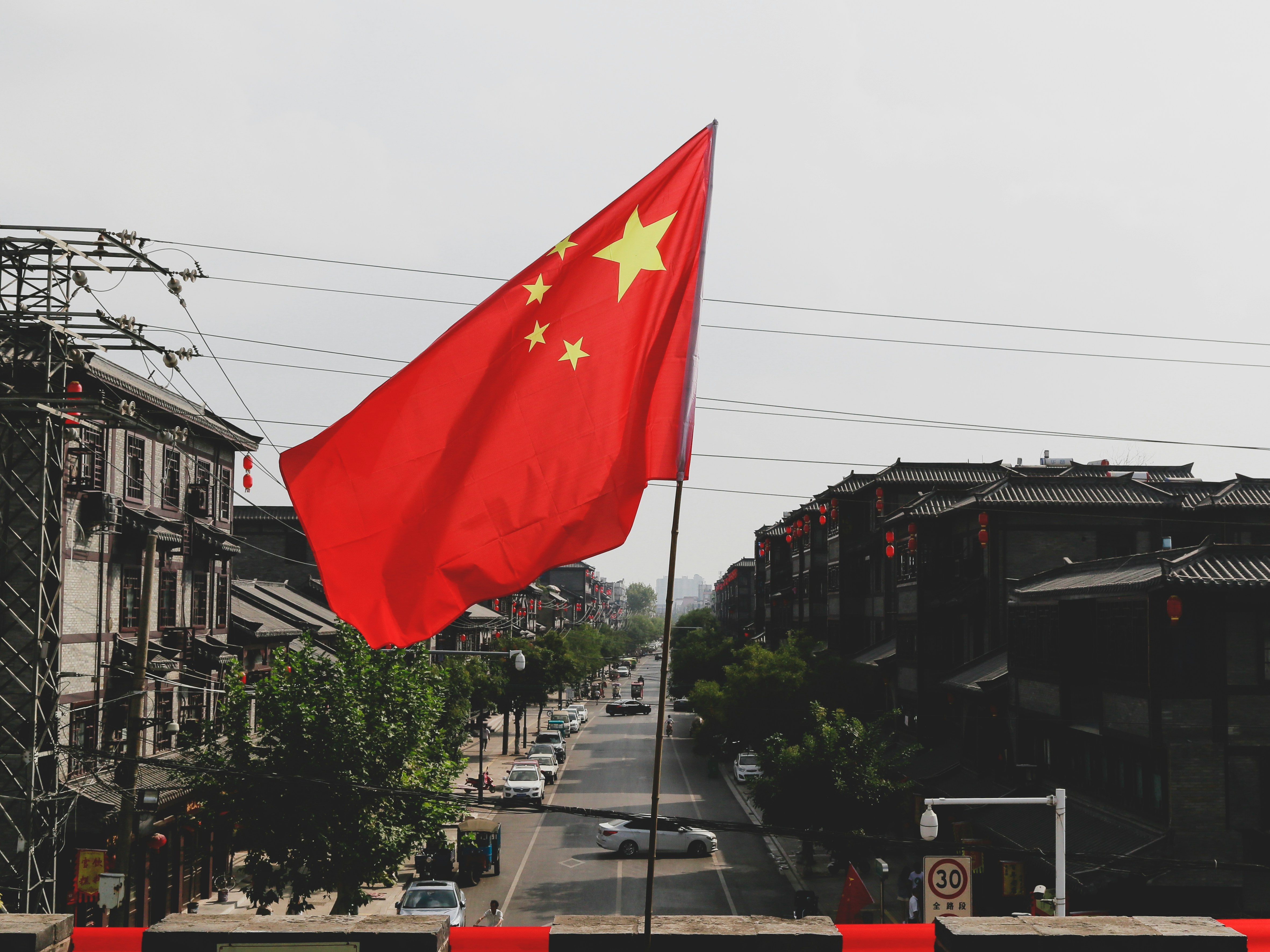
Campaign to Reunite Dying Chinese Pastor with Family Grows amid Increasing Crackdown
As China intensifies its crackdown on independent Christian churches, advocates are urging action for Pastor John Cao, a U.S. permanent resident with stage 4 cancer who remains barred from leaving China to reunite with his family.
As China’s communist regime continues to accelerate its oppression of Christian pastors and believers, a campaign to allow a persecuted pastor ailing from cancer to reunite with his family is intensifying ahead of Xi Jinping’s summit with President Donald Trump in Washington in September.
Last week, reports surfaced that three young pastors of the independent Maizhong Reformed Church in Fuyang have been sentenced “to prison terms of up to one year and seven months” simply for performing weddings and organizing religious instruction, among other ordinary pastoral work. The court accused the Christian pastors of “organizing illegal gatherings” after the communist regime had legally shut down the church, claiming that their activities “had severely disrupted public order.”
Outcry over the case has grown after the wife of one of the pastors, Xu Chao, described the miscarriage of justice on social media. “What is infuriating is that people who clearly committed no crime have been forcibly convicted, while those who illegally installed surveillance equipment in my home remain free from consequences,” she wrote. “Those who cause innocent people to suffer injustice are the ones who are guilty. History will remember everything that is happening today and will judge every decision that has been made.”
As noted by ChinaAid, the Chinese Communist Party (CCP) has increasingly employed charges of “illegal business operations,” “fraud,” “inciting subversion of state power,” and “organizing illegal gatherings” to describe routine activities of churches that are disfavored by the state ever since it instituted its revised Regulations on Religious Affairs in 2018. As a result, a number estimated to be in the thousands of “unregistered” house churches have been shut down, and hundreds of pastors have been imprisoned.
A particularly tragic case that is being spotlighted by human rights advocates is that of Pastor John Cao, a permanent resident of the U.S. who spent seven years in a Chinese prison simply for serving the destitute along the China-Myanmar border. As described by ChinaAid Founder and President Bob Fu, Cao is being restricted from leaving the country to reunite with his family despite suffering from rapidly progressing stage 4 prostate cancer.
“He has been a faithful pastor, humanitarian, [and] educator,” Fu related during “Washington Watch” Wednesday. “He could have chosen to lead a comfortable American dream life when he came to the U.S. more than 40 years ago. But he felt God called him to really continue the gospel ministry — and especially on the field of education in China. And so, he established essentially 16 schools for 2,000 children on the China-Myanmar border for those children who are under persecution by the Myanmar military regime and who otherwise would not have any education at all. He gathered churches from the Chinese underground church and American churches [to] help them. But for that, basically, he was lured back into China and then sentenced to seven years [of] imprisonment.”
Fu continued, “He served [every] single day of [the] seven years, and unfortunately, the Chinese government [is] still preventing him from coming back to reunite with his Caucasian-American wife … and their two sons and even their first grandchild. … [N]ow he has been diagnosed with stage 4 prostate cancer and [it] is spreading into his bones, and he’s not able even to walk anymore at the age of 67 years old.”
Fu, who serves as a senior fellow for International Religious Freedom at FRC, went on to urge President Trump to appeal to Chinese President Xi Jinping during their upcoming September 24 summit in Washington to allow Cao to reunite with his family. “[T]ime is of the essence,” he underscored. “We urge … President Trump to speak from really [a] humanitarian basis to President Xi Jinping … to just give back his passport and allow him to fly back to spend the rest of his limited time on this earth to be with his family.”
Fu highlighted a petition drive asking the president to advocate on behalf of Cao with a goal of reaching 100,000 signatures before the September 24 summit. “Please pray fervently that the Lord will grant mercy and grace for President Trump to hear these petitions and make an appeal to [Xi] to get Pastor John Cao to be home with his family in the next few weeks,” he concluded.
This article was originally written by Dan Hart and published on The Washington Stand. For more content like this, visit Real Life Network.
Faith & Culture
25 min
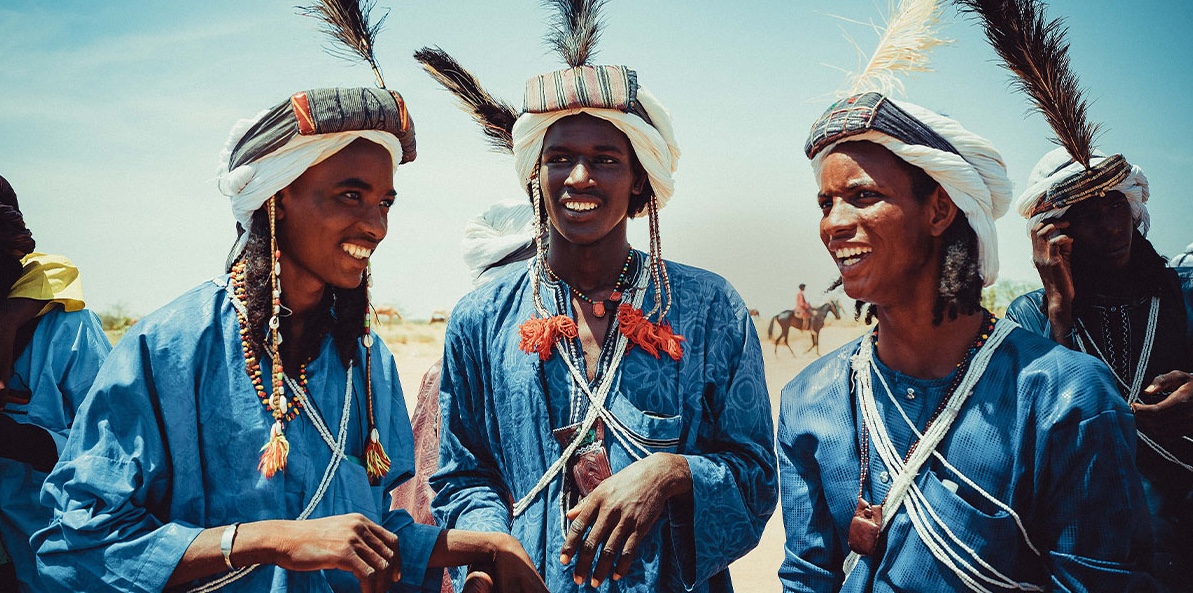
Fulani Muslims Are Turning to Christ, Despite the Cost
Three Fulani men in Nigeria share how they left Islam to follow Christ despite threats, persecution, and the possibility of losing everything, offering a powerful glimpse of how the gospel is advancing in some of the country’s most dangerous places.
Rounding the corner, I was surprised to see nearly a dozen Fulanis, mainly boys, sitting in a small hallway waiting to speak to us on a warm afternoon in Plateau State, Nigeria. Some smiled, and some just stared at my travel partner and me from Christian Freedom International as we entered the modest office space where we would be interviewing them.
The mainly Muslim Fulani tribe has risen in international awareness in recent years as antagonists in conflicts between Christians and Muslims in Nigeria, committing brutal acts of terrorism, violence, and kidnappings of Christians living in villages in Northern Nigeria. I witnessed the widespread scale of these attacks and their effects on Christian communities while visiting Nigeria earlier this year. However, the Fulanis lined up in the hallway were there to tell us a different story of what is happening among some Nigerian Muslims — they are turning to Christ.
Twenty-seven-year-old Mohamed was all smiles as he shared his story. Growing up in a Fulani Muslim family, he attended Islamic school where he was instructed to memorize the Qur’an in Arabic, a language he didn’t know. He asked his father why that was. Then he started to ask more and more questions about Islam, which made his parents suspicious.
So, Mohamed did his own research and continued to ask questions. It was at this time that he happened to become friends with a couple of Christians, who were able to tell him about Christianity. When Mohamed’s parents heard he was interested in Christianity, they gathered people in the community to persuade him to deny his growing conviction that the Christian faith was true. Yet, a woman in the community encouraged Mohamed to meet with her pastor — he did, and immediately gave his life to Christ.
After this, Mohamed’s mother acted very kindly to him and brought him a glass of milk. This was unusual given their strained relationship. Mohamed smelled what he thought to be rat poison in the milk and turned to his mother, asking “Mom, are you trying to kill me?” She denied it. He said, “Okay, well, it will be on your head.” After drinking one sip, Mohamed immediately doubled over and started vomiting. His mother said, “Let your God save you” and left him there.
Yet, Mohamed lived. When his mother came back to find him alive, she was furious and threatened to shoot him. He rose and started to run away just as his brother picked up a gun and tried to shoot him. In our interview, Mohamed lifted his pant leg to show the scar where a bullet had entered his leg as he escaped. Now, he is class president at his Bible school.
We also met 26-year-old Amadu. One night a few years ago, he had a dream of a man in white, but he couldn’t see the man’s face. Amadu prayed as a Muslim that God would show him what this dream meant. The dreams continued, and he couldn’t shake his need to understand them.
A small group of Christians at his work would gather on break to pray together. Searching for peace from his dreams, Amadu began to sit in on these gatherings. His Muslim boss told him to stop. But he needed someone to interpret his dreams, and his new Christian friends suggested he meet with their pastor.
This pastor told him that the man in white in his dreams was Jesus. The pastor said, “He wants to bring you from darkness to light and for you to know him.” Amadu asked, “What do I need to do?” The pastor told him he needed to accept Christ and become a Christian, but he told Amadu to go home and really think about it before making the decision because he knew it would be difficult with Amadu’s family.
A few weeks later, Amadu came back and announced he was ready to become a Christian. So, the pastor led him through the sinner’s prayer. Amadu started attending church, but something inside him told him not to tell his parents. Two months later, his parents began to ask why he wasn’t going to mosque or saying his daily Muslim prayers. Feeling their increasing scrutiny, Amadu made the hard decision to leave his parents’ house and flee to a different town. Amadu told us if his parents learned he became a Christian, “I will be killed.”
Another young man, Jalo, told us that he first became interested in Christianity when he was herding his father’s cattle. He would take the cattle to graze and sometimes go on to Christian farms, where his cattle could eat all the farmer’s crops in a single day. This is devastating to an impoverished farmer.
Yet, time and again, the Christian farmers would call Jalo’s father and say, “It’s okay, we forgive you, but please don’t do this again.” This was weird to Jalo. He thought, what kind of God do they serve that they forgive like this?
One day he asked the father of his Christian friend, “Why do you people always forgive when we do harm to you?” His friend’s father replied simply that Christians forgive. It was at that moment Jalo was sure he wanted to be a Christian. His friend told him to go home and that God would send someone to lead Jalo to Christ.
Jalo continued herding, and while he was sleeping overnight in a field, he began to have dreams. In one dream, a voice asked him, “You can have money, you can have everything. But what do you have if you have no salvation?”
With more determination than ever, Jalo pursued his Christian friend and asked to become a Christian. The friend took him to a pastor who gave Jalo a sober warning about the cost of following Jesus: “You will lose everything. They will persecute you. Christianity won’t give you anything… no money, not a wife. The only help we could maybe give you is send you to a Bible school.”
Jalo knew what it was to suffer; he had seen much suffering in the bush. And he was sure he wanted to follow Jesus.
Today, Mohamed, Amadu, and Jalo are all enrolled in the Bible college at Christian Faith Institute. There they are being discipled in the Bible and equipped to be missionaries and pastors themselves to be a witness for Christ in some very dark places.
I’m deeply grateful to have been able to travel to Nigeria with Christian Freedom International, a humanitarian aid group serving the persecuted church. Not only did I see first-hand the devastating impact of persecution, but I also saw the reasons to hope — that despite the darkness there, God is moving in the lives and hearts of those in the most difficult-to-reach and dangerous places.
Note: Names of those featured in this piece have been changed for their protection.
This article was originally written by Arielle Del Turco and published on The Washington Stand. For more content like this, visit Real Life Network.
World News
25 min
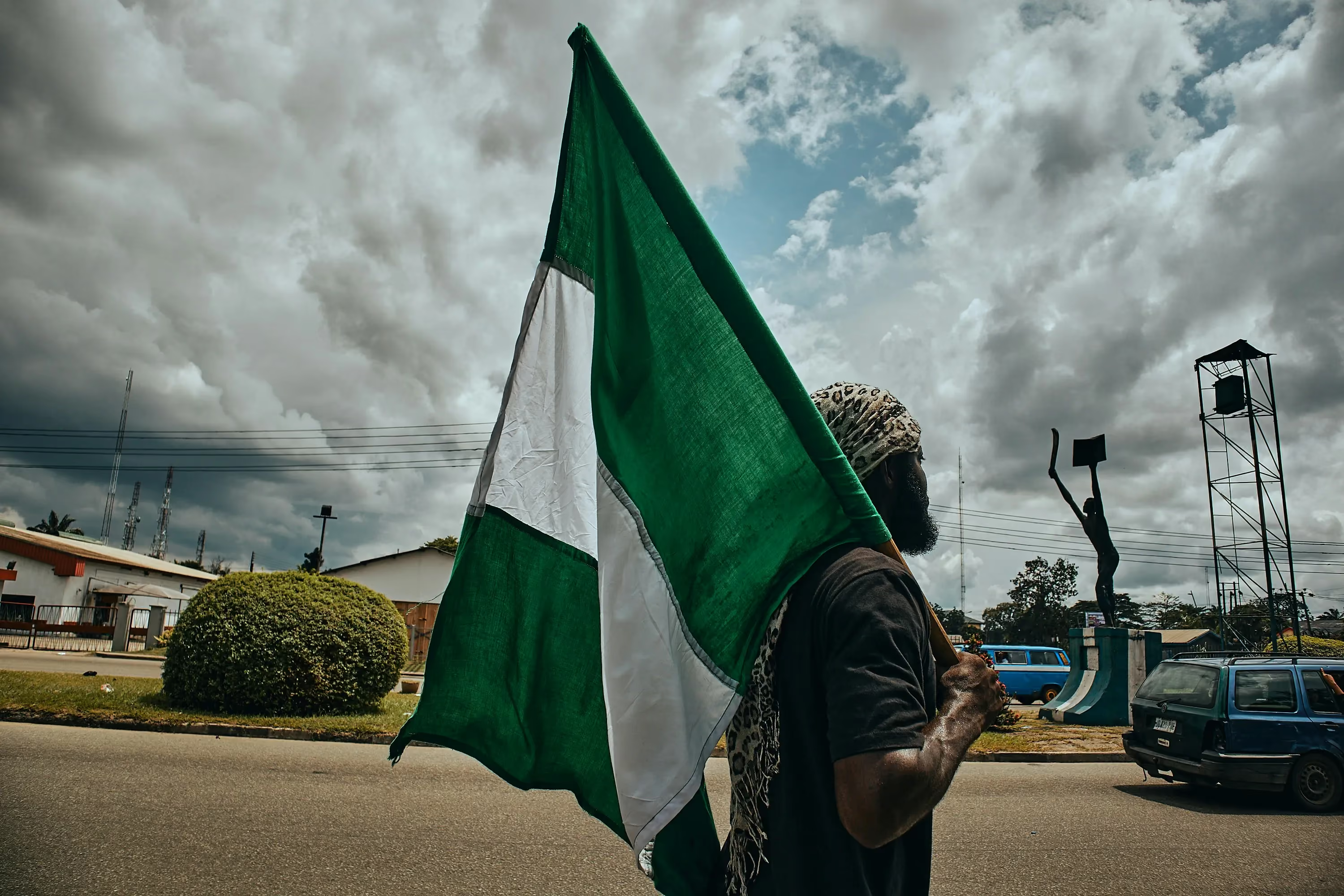
Under Nigerian Terrorists, Christians Faced Higher Rates of Execution and Captivity
In this exclusive interview, researcher Steven Kefas discusses a landmark report on violence and religious freedom in Nigeria, sharing sobering data, survivor stories, and why he believes the persecution of Christian communities demands greater global attention.
The blood of Christians is irrigating Africa’s soil, with Nigeria as an epicenter. As a senior research analyst at the Observatory of Religious Freedom in that continent (ORFA), Steven Kefas has been following closely horrific stories of martyrdom.
He is now one of the principal contributors to the explosive ORFA six-year study on violence and religious freedom in Nigeria. Because of Kefas’s investigative journalism, documenting human rights abuses and insecurity in Kaduna State, he faced growing pressure from authorities until he was arrested and imprisoned for 162 days in May 2019.
Kefas witnessed deaths among inmates and suffered health challenges. “An experience that only strengthened my resolve to continue exposing injustice,” he said for this interview.
For more than a decade, he has meticulously documented religious persecution, terrorism, mass killings, kidnappings, and forced displacement across Nigeria’s Middle Belt and other affected regions, combining field investigations, survivor interviews, and data analysis to better understand the drivers of violence and to ensure that the voices of victims are not ignored.
What were the key findings of the recent ORFA report on violence and faith in Nigeria?
The scale of violence documented by ORFA is staggering.
Between 2020 and 2025, our research documented 79,323 people killed and 34,773 civilians abducted across Nigeria. On average, that translates to about seven attacks and 36 deaths every single day over the six-year reporting period.
Of those killed, 42,033 were civilians, while 37,290 were security personnel or members of armed groups. One of the report’s most significant findings is that Boko Haram and the Islamic State West Africa Province (ISWAP), despite receiving the most international attention, accounted for only about 12% of civilian deaths during the reporting period.
By contrast, the groups ORFA classifies as Fulani terror groups were responsible for 18,577 civilian deaths — about 44% of all civilian killings documented.
The religious dimension of the violence is equally concerning. ORFA documented the killing of 28,551 Christians and 13,224 Muslims. After adjusting for the population of affected states, Christians were killed at approximately 4.4 times the rate of Muslims.
While abductions appeared relatively similar in raw numbers — 15,932 Christians and 15,272 Muslims — our companion study, Captivity by Creed, found significant differences in how victims were treated. Christian captives consistently faced higher ransom demands, longer periods in captivity, harsher treatment, greater pressure to renounce their faith, and a higher likelihood of being executed even after ransom payments had been made.
These findings challenge many prevailing assumptions about the conflict and underscore the need for a more evidence-based understanding of the violence affecting Nigeria.
What challenges did ORFA face in conducting field research?
The greatest challenges were security and funding.
Many of the communities we studied are active conflict zones where attacks remain frequent. Conducting field investigations often meant travelling into areas where there was a genuine risk of terrorist attacks, kidnappings, or ambushes. In many cases, our researchers had to work under extremely difficult conditions while ensuring the safety of survivors who agreed to speak with us.
Funding has also been a major limitation. ORFA has carried out this extensive research with relatively modest resources. Despite those constraints, we have built one of the most comprehensive datasets on religious freedom-related violence in Nigeria.
With greater financial support, we could expand our geographic coverage, increase the frequency of field investigations, verify even more incidents, and provide a more complete picture of the crisis.
Could you share some of the stories that had the greatest impact on you or your team while collecting the data?
The testimonies of survivors who spent months, and in some cases hundreds of days, in terrorist captivity had the greatest impact on me personally. Their accounts gave us rare insight into the internal operations of terrorist groups, their methods and, importantly, the motivations behind many of their atrocities.
One story that continues to haunt me involves Christian women abducted from communities in Southern Kaduna. Many were repeatedly sexually assaulted by their captors, forcibly impregnated, and pressured or compelled to convert to Islam while in captivity. After enduring months of unimaginable suffering and finally regaining their freedom, some returned home only to face rejection by their own families. In several cases, their husbands refused to accept them back because they returned with children conceived through rape.
These women survived terrorism only to encounter another form of trauma upon returning home. Their stories remind us that the consequences of terrorism extend far beyond the attack itself and often continue long after victims escape captivity.
What is the typical reaction of Nigerian authorities to reports of this kind?
The reaction has too often been one of denial or dismissal rather than serious engagement with the evidence.
Instead of acknowledging the scale of the crisis and responding to the concerns raised by independent researchers, authorities have frequently sought to downplay reports documenting religiously targeted violence. We saw this clearly when the U.S. government under President Donald Trump raised concerns about the persecution of Christians in Nigeria.
Rather than addressing the underlying issues, the Nigerian government strongly rejected those characterizations and publicly disputed the findings. It also retained the U.S.-based lobbying firm DCI Group under a contract reportedly worth approximately $9 million to improve Nigeria’s international image.
My hope is that future reports will be met not with denial but with constructive engagement, transparent investigation, and meaningful action to protect vulnerable communities.
Could it be said that the efforts of terrorist groups in Nigeria are aimed at eliminating or diminishing the Christian presence in the country, especially in the geographical and socio-political transition zone in central Nigeria known as The Middle Belt?
Based on ORFA’s findings, I believe there is compelling evidence that, particularly in Nigeria’s Middle Belt, many attacks by Fulani terror groups disproportionately target Christian communities.
The pattern we documented extends beyond isolated attacks.
The Middle Belt separates the predominantly Muslim far North from the mostly Christian South and is characterized by its high ethno-linguistic diversity and crucial agricultural output. Is that a factor for the violence?
Entire Christian farming villages have repeatedly been attacked, churches destroyed, clergy killed or abducted, and thousands of predominantly Christian communities forcibly displaced. In numerous cases, displaced communities have remained unable to return to their ancestral lands for years, with reports that some abandoned villages have subsequently been occupied by the attackers or others.
While motivations can vary across different armed groups and regions of Nigeria, the evidence from many parts of the Middle Belt indicates that Christian communities have been disproportionately targeted in ways that have significantly reduced their presence in affected areas.
In 2016, the BBC and other major media outlets framed the violence in Nigeria as disputes between herders. Have you seen any shift in the mainstream media narrative regarding the violence in Nigeria?
Yes, I believe there has been a gradual shift.
A decade ago, much of the international media described the violence primarily as “farmer-herder clashes,” implying that both sides were engaged in roughly equivalent communal disputes over land and grazing resources.
That framing overlooked the organized, sustained, and often highly lethal attacks against civilian communities that many local researchers and affected communities had been documenting for years.
Increasingly, however, journalists, researchers, policymakers, and international organizations are recognizing that many of these incidents cannot be adequately explained as resource conflicts alone. The scale, organization, and recurring targeting of civilian populations point to a much more serious security challenge involving terrorist violence carried out by armed Fulani militant groups in many parts of Nigeria.
While some media outlets continue to use the farmer-herder narrative, there is now a broader appreciation that the violence is more complex. Also, that terrorism, ideological extremism, criminality, and religious targeting all play significant roles in different parts of the country. I believe this more nuanced understanding is an important step toward developing effective responses.
This article was originally written by Yoe Suarez and published on The Washington Stand. For more content like this, visit Real Life Network.
Faith & Culture
25 min
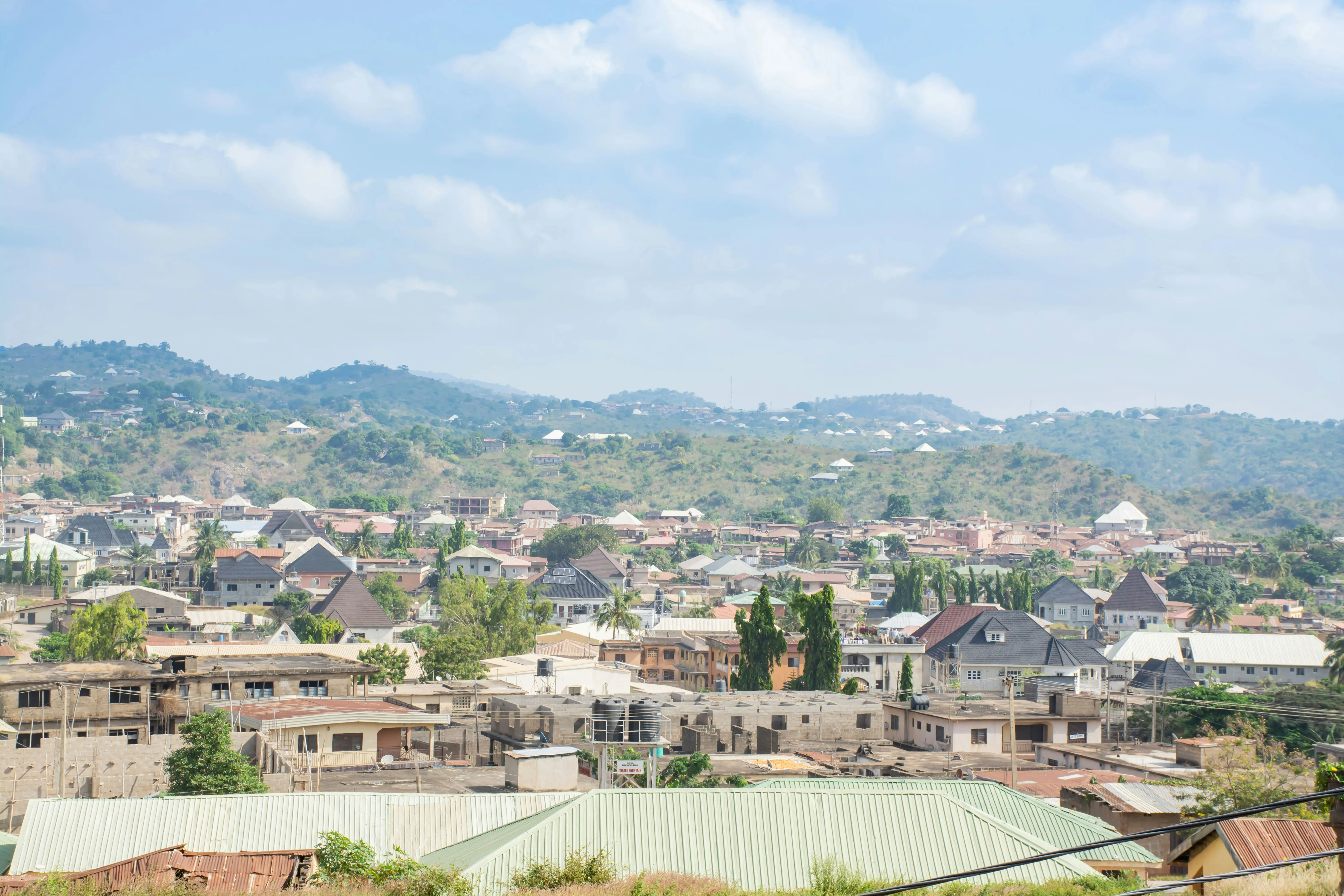
On the Ground in the Nigerian Villages under Attack
Despite enduring unimaginable loss and relentless persecution, Christians in Northern Nigeria continue to trust God with unwavering faith. Their stories reveal both the devastating cost of following Christ and the enduring hope that sustains them.
Patience is a 19-year-old Christian girl who has suffered far more grave injustices than most people are forced to endure in their lifetime.
In 2018, her father was killed by Fulani terrorists who broke into their house in the middle of the night.
In 2019, her grandfather and three of her extended relatives were killed in another Fulani attack on her village.
In 2020, she was raped by Fulani terrorists. At the time, she was just 14 years old.
In February 2026, her uncle also died at the hands of a Fulani terrorist.
Patience is from Plateau State, Nigeria, where I visited with the humanitarian organization Christian Freedom International a few months ago.
We were able to meet Patience and dozens of other Nigerian survivors of persecution and attacks. Many people rightly point out that the situation in Nigeria is complex, but staying next to a village known for facing repeated attacks and visiting survivors of persecution in their homes starts to bring the picture into focus.
I visited the small corner shop belonging to Amarachi, a middle-aged woman who could not be more ecstatic to see us. She showed us around her small shop — which she managed to start with the help of an organization who gave her seed money and taught her the basics about business.
After having us try a Nigerian snack, she wanted to show us her home several blocks away. In the modest rented house that she shared with her adult children, she told us about her husband’s death several years prior.
He was on his way home from a weekday prayer meeting at church when he was ambushed. Fulani militants rushed out of tall grass nearby and slaughtered him on the path. It was believed they were looking to target Christians leaving the church that day.
His wife and children were left to mourn their father’s death and do the best they could to carry on. His children are in college now. Amarachi had to provide for the family, so she opened her small store.
But Amarachi’s husband’s death wasn’t the end of the terror the family would face. Her village — located close to a Nigerian military lookout — routinely faces raids from Fulani militants. Typically, the militants target this village for kidnappings, charging steep ransoms to release the kidnapped victims. Families and churches must band together to offer a ransom and negotiate down to a feasible price.
One expert told me that kidnappings and ransoms are the militants’ largest source of income. These groups are often better equipped than the Nigerian military itself. When a large group of Fulani militants launches an attack, the military has been known to tell villagers to flee because they cannot defend against the militants.
My friend from Christian Freedom International asked Amarachi if she felt safe from local Fulani attacks since she had a courtyard door, main door to her house, and bedroom door — all with sturdy-looking locks. She gave us a confused look and said no. Our Nigerian driver explained that these would do little to stop attackers. He said they could break through any lock and gain entrance to any building. He called them “experts” at it.
I asked what she does during the overnight raids. Amarachi said that she simply lies in her bed and prays and tells her children to do the same. She doesn’t flee the village like many residents do during an attack. She believes that she has suffered enough, and God will not let her suffer more. So far, the militants haven’t targeted Amarachi’s house.
As an outsider, it’s difficult to grasp the normalized level of fear that must accompany daily life in a Christian village in Northern Nigeria. Yet, terrorism isn’t new for Nigerian Christians. The last few decades have seen an increase in the rise of Islamist terrorism and general violence against vulnerable Christian communities in Northern Nigeria. In 2014, the infamous terrorist group Boko Haram was at its height, seizing control of approximately 70,000 square miles in Northeast Nigeria.
In Jos, we met siblings Joy and Gabriel. They are now teenagers, but as children, they and their mother were captured by Boko Haram and held in one of their camps for over a month before being released. Their father was killed. Tears streaming down her face, Joy wanted to press through and share how Boko Haram destroyed her village in Northeast Nigeria, forcing those who survived to flee.
Patience, Joy, and Gabriel are now living at Christian Faith Institute (CFI), a non-denominational Bible school and ministry in Jos, Nigeria, where I was able to meet them. Founded by Australian missionaries Kent and Ruth Hodges, the ministry is dedicated to serving on the frontlines.
The Hodges, with their great African team, train Nigerians (and many from surrounding Sahel nations also impacted by terrorism), mainly from rural northern areas, to be pastors and missionaries themselves, equipping them to return to their villages across the north and share the good news of the gospel. At the Bible school, students are equipped with income-generating practical vocational training to be able to provide for themselves and their families. The Hodges also have a children’s crisis home and school that serves hundreds of kids, almost all of whom have faced persecution and terrorism themselves, like Joy and Gabriel.
While the violence in Nigeria has been ramping up for decades, it has gained more public awareness in the United States over the last few years. In November 2025, President Trump designated Nigeria as a “Country of Particular Concern” on religious freedom. The designation was first instated in the last year of President Trump’s first term and undone in President Biden’s first year in office.
On Christmas Day in 2025, the United States launched strikes against ISIS in northwestern Nigeria. In May 2026, the U.S. worked with Nigerian forces to strike more ISIS targets, killing the global ISIS second-in-command. However, experts and those on the ground say that the situation for Nigerian Christians has worsened, not improved, in recent months.
Now, religious freedom advocates are hoping the Trump administration keeps up the pressure on the Nigerian government until its leaders take concrete action and successfully protect Christians in Northern Nigeria. Though the darkness and gravity of the situation in Nigeria feel overwhelming, ministries like CFI are a reminder that God is at work there and hope is not lost.
On the last day of my trip, I spent time with one mother whose daughter asked when the “crisis” will end. She told her daughter she didn’t know if it would end, but to pray for protection for their family and for comfort for those experiencing loss.
Note: Names of the victims featured in this piece have been changed for their protection.
This article was originally published by The Washington Stand and written by Arielle Del Turco. For more content like this, visit Real Life Network.
Faith & Culture
25 min
The Fierce and Faithful: Honoring the Legacy of Female Martyrs on Day of the Christian Martyr
The Day of the Christian Martyr is an opportunity to remember courageous believers who remained faithful to Christ despite intense persecution. These stories of remarkable women challenge Christians today to live with the same bold, unwavering faith.
On June 29, Christians around the world will pause to observe the Day of the Christian Martyr. Church tradition marks this as the date the Apostle Paul was beheaded outside Rome. While history often highlights prominent men who laid down their lives for the gospel, there is another deeply convicting lineage of faith: the legacy of Christian women who refused to deny their Lord and Savior Jesus Christ.
This year, The Voice of the Martyrs is highlighting the story of Perpetua, a 22-year-old noblewoman martyred in ancient Carthage–modern-day Tunisisa–in A.D. 203. But Perpetua is far from alone. Across centuries, continents and cultures, bold, Godly women have faced their persecutors with unshakeable faith that should inspire us all.
As we prepare for Day of the Christian Martyr, here are five female martyrs whose stories remind us what it truly means to follow Christ at any cost.
Perpetua (Carthage, A.D. 203)
Perpetua was a young mother with a nursing infant when Roman officials arrested her for refusing to worship Rome’s false gods. Her father begged her to recant for the sake of her baby, but when asked at her trial, “Are you a Christian?” she simply replied, “I am a Christian.”
Led into the Roman arena, she was attacked by a rabid heifer. After being thrown to the ground, Perpetua calmly adjusted her tunic to protect her modesty and requested a pin to fix her disheveled hair. In Roman culture, loose hair was a sign of mourning and Perpetua wanted it known she was not mourning but rather joyfully preparing to meet her Creator. Ultimately, she guided the trembling sword of the gladiator to her own throat.
Perpetua's martyrdom inspired the church in Carthage to thrive and follow Christ at any cost.
Lizzie Atwater (China, 1900)
In the summer of 1900, the Boxer Rebellion claimed the lives of more than 32,000 Christians in China. Among them was Lizzie Atwater, a missionary who was pregnant when soldiers dragged her and 10 others out to be hacked to death.
Lizzie’s legacy lives on through her final letter home, where she calmly wrote, “Dear ones, I long for a sight of your dear faces, but I fear we shall not meet on earth. I am preparing for the end very quietly and calmly. The Lord is wonderfully near, and He will not fail me.”
Esther John (Pakistan, 1960)
Born as Qamar Zia in British-ruled India, she accepted Christ as a teenager after attending a Christian school. When her family later moved to Pakistan and tried to force her into a Muslim marriage, she fled to another city where she found a missionary who provided her with a Bible and a job working in an orphanage. After completing Bible training, she moved to Chichawatni, Pakistan, where she lived with American Presbyterian missionaries. She took up evangelism among rural women, teaching them the Scriptures and working alongside them in the fields before she was killed.
There was no investigation into her death, but she is remembered today as likely the first recorded martyr in Pakistan after the country gained independence from India.
Rocio Pino (Colombia, 2011)
Rocio Pino was known throughout her Colombian community for sharing the gospel with everyone she met. Her boldness drew the unwanted attention of the Revolutionary Armed Forces of Colombia.
Late one night, two guerrilla fighters knocked on her door under the pretense of needing mechanical help. While her husband stepped away to assist, the men questioned Rocio about her identity. When they knew it was Rocio, they shot her three times and fled, leaving her husband and daughter to watch her take her final breath. Rocio knew the risks of the Great Commission, yet chose obedience over safety.
The inspiring stories of these mothers, teachers and evangelists should inspire us. Their sacrifice challenges those of us living in Western comfort. Are we willing to speak of Jesus when it might cost us our social standing, just as these women spoke of our Lord and Savior Jesus Christ though it cost them their lives?
This July, I invite your church, family or small group to join in honoring heroes of the faith. VOM has prepared a free Digital Resource Kit, including a short film about Perpetua, sermon outlines and a guide for talking with children about persecution, all of which is available at Persecution.com/martyr.
Let us continue to pray for our persecuted brothers and sisters who still face violent opposition today, and let us commit to living with the same defiant, joyful faith these extraordinary women carried into eternity.
Founded in 1967 by Richard and Sabina Wurmbrand, The Voice of the Martyrs is a nonprofit, interdenominational missions organization serving persecuted Christians in the world's most difficult and dangerous places to follow Christ. For more information, visit https://www.persecution.com.
Thank you! Your submission has been received!
Oops! Something went wrong while submitting the form.
World News
For decades, television newsrooms held enormous power over what Americans saw and what they never heard about. Producers chose the lead story, decided which events deserved follow-up coverage, and determined which stories would disappear after a few seconds or never make air at all.
That power has weakened, but it has not disappeared.
Today, independent media provides an opportunity to ask a question that traditional news organizations too often avoid: Why do some stories receive national attention while others with serious implications are barely acknowledged?
On Real Life Network, The Daniel Cohen Show goes where the news leads, especially when those stories intersect with faith, culture, politics, and a biblical worldview. Several recent stories provide an important reminder that media bias isn't limited to how a story is reported. Sometimes the more consequential decision is whether to report it at all.
When Attacks on Christians Barely Make the News
Pastor Martin Sedra and his wife, Millicent, recently experienced something no family should have to endure.
Sedra pastors Echo Church in Sydney, Australia, and has publicly spoken about Christianity, Islam, abortion, marriage, and other controversial cultural issues. According to video and the Sedras' account discussed on the show, masked protesters arrived outside their home shortly after the couple welcomed their first child. The group allegedly cut power to the house, threatened the family, and said they would return.
Whatever someone's political or religious disagreements with Sedra, threatening a family at its home crosses a line that should be obvious.
Yet the incident received little attention from major news organizations at the time it was discussed on the show.
That story comes alongside another troubling development: a series of fires involving churches.
The former St. Agnes Church in Toledo, Ohio, burned over the weekend. Another Toledo church, St. Anthony's, had suffered a fire only weeks earlier. Other recent church fires discussed on the program included Friendship Baptist Church in Cleveland, St. Simon Church in New Brunswick, Canada, and Buckingham Presbyterian Church in the United Kingdom. Importantly, the causes of these individual fires should not be assumed before investigators determine them.
But the broader problem of hostility toward churches is documented. The Family Research Council reported hundreds of hostile incidents against churches in 2024, including dozens categorized as arson or attempted arson.
That deserves attention.
Christians should resist the temptation to declare every church fire an act of religious persecution without evidence. At the same time, repeated attacks against Christian institutions should not become background noise simply because they do not fit the cultural narrative preferred by a newsroom.
Media bias isn't only found in misleading words. It can also be found in the stories that never receive enough attention for Americans to ask questions about them.
The same standard should apply regardless of the victims. An attack on a church should matter. An attack on a synagogue should matter. An attack on a mosque should matter. Threatening a Christian family should matter just as an attack against people because of their sexuality should matter.
Consistency is the test.
Who Decides What Counts as News?
A shooting outside a gay bar in Tucson raises precisely that question.
According to the account discussed on the program, two men were killed outside Venture-N by a gunman who later killed himself. Police reportedly found a note identifying additional LGBTQ businesses, raising concerns that the victims had been deliberately targeted. The show also highlighted reporting that the shooter was born in Gambia and was described by a relative as a practicing Muslim.
There is no justification for murdering innocent people because of their sexuality. None.
But there is also no justification for minimizing relevant facts about an attack because those facts complicate a preferred political narrative.
This is where consistency becomes essential. If the religious beliefs of a professing Christian attacker would become part of national coverage, the same journalistic curiosity should exist when an attacker comes from another religious background.
The point isn't to blame millions of peaceful Muslims for one man's actions. It is to report relevant facts without deciding beforehand which ones the audience is allowed to consider.
That principle also applies inside conservative media.
The departure of longtime Fox Business anchor Maria Bartiromo has generated questions after reports that she disagreed with a programming decision concerning coverage of a presidential address. According to the reports discussed on the show, Bartiromo wanted to cover President Trump's remarks and planned additional discussion afterward. Weeks later, she departed the network, which characterized the move as a business decision. The precise internal circumstances remain disputed and should be described accordingly.
But the episode illustrates a larger point.
A journalist's responsibility is not to protect viewers from stories executives consider inconvenient. It is to pursue information, establish facts, provide context, and allow audiences to evaluate what happened.
A news organization loses something fundamental when protecting a narrative becomes more important than pursuing a story.
That standard shouldn't change depending on whether the network is CNN, MSNBC, Fox News, or anyone else.
It is also why independent outlets matter. They cannot guarantee perfect journalism, and they should be held accountable like everyone else. But a decentralized media environment makes it considerably harder for a handful of executives to determine the boundaries of public discussion.
Parents Cannot Outsource Discernment
Media institutions aren't the only institutions Americans should scrutinize.
Parents should be asking similar questions about schools.
A video discussed on the program featured a kindergarten teacher describing an exercise in which young children were asked whether they wished they had been born another gender. Students who raised their hands were then invited to choose different names. The teacher subsequently posted that she had been fired and lost her teaching license.
Whatever debates adults want to have about gender, five-year-olds should not become instruments for an adult's ideological project.
Parents possess a responsibility that cannot simply be transferred to teachers, administrators, politicians, or government agencies.
That becomes particularly important as politicians increasingly speak about children collectively. Michigan Senate candidate Abdul El-Sayed, for example, has argued for policies based on imagining that “all of our kids were all of our kids,” connecting that idea to public education, health care, and child care. The program contrasted that philosophy with the conviction that parents retain the primary responsibility for raising and forming their children.
Schools certainly have an important role. Good teachers deserve gratitude and respect. But education never happens in a worldview vacuum. Someone is always teaching children what is true, what is good, what a human being is, and where authority ultimately resides.
For Christians, those questions cannot be surrendered to the state.
Parents can delegate instruction, but they cannot delegate their God-given responsibility to know what their children are being taught and who is shaping their worldview.
That principle connects these seemingly unrelated headlines.
News organizations shape what adults believe is important. Schools help shape what children believe is true. Politicians attempt to shape what citizens believe government should provide. Corporations increasingly communicate their own moral and cultural priorities.
In each case, Christians need discernment.
The answer is not paranoia, and it isn't assuming every institution is corrupt. It is paying attention. Ask what is being taught. Examine what is being omitted. Compare claims against the evidence. And above all, measure cultural messages against Scripture rather than allowing the culture to determine how Scripture should be understood.
That is increasingly necessary in an age when the most revealing part of a story may be the part someone decided wasn't worth telling.
Watch The Daniel Cohen Show on Real Life Network for news and commentary connecting the headlines to the good news through a biblical worldview.
25 min
September 8, 2026
Daniel Cohen
World News
As China’s communist regime continues to accelerate its oppression of Christian pastors and believers, a campaign to allow a persecuted pastor ailing from cancer to reunite with his family is intensifying ahead of Xi Jinping’s summit with President Donald Trump in Washington in September.
Last week, reports surfaced that three young pastors of the independent Maizhong Reformed Church in Fuyang have been sentenced “to prison terms of up to one year and seven months” simply for performing weddings and organizing religious instruction, among other ordinary pastoral work. The court accused the Christian pastors of “organizing illegal gatherings” after the communist regime had legally shut down the church, claiming that their activities “had severely disrupted public order.”
Outcry over the case has grown after the wife of one of the pastors, Xu Chao, described the miscarriage of justice on social media. “What is infuriating is that people who clearly committed no crime have been forcibly convicted, while those who illegally installed surveillance equipment in my home remain free from consequences,” she wrote. “Those who cause innocent people to suffer injustice are the ones who are guilty. History will remember everything that is happening today and will judge every decision that has been made.”
As noted by ChinaAid, the Chinese Communist Party (CCP) has increasingly employed charges of “illegal business operations,” “fraud,” “inciting subversion of state power,” and “organizing illegal gatherings” to describe routine activities of churches that are disfavored by the state ever since it instituted its revised Regulations on Religious Affairs in 2018. As a result, a number estimated to be in the thousands of “unregistered” house churches have been shut down, and hundreds of pastors have been imprisoned.
A particularly tragic case that is being spotlighted by human rights advocates is that of Pastor John Cao, a permanent resident of the U.S. who spent seven years in a Chinese prison simply for serving the destitute along the China-Myanmar border. As described by ChinaAid Founder and President Bob Fu, Cao is being restricted from leaving the country to reunite with his family despite suffering from rapidly progressing stage 4 prostate cancer.
“He has been a faithful pastor, humanitarian, [and] educator,” Fu related during “Washington Watch” Wednesday. “He could have chosen to lead a comfortable American dream life when he came to the U.S. more than 40 years ago. But he felt God called him to really continue the gospel ministry — and especially on the field of education in China. And so, he established essentially 16 schools for 2,000 children on the China-Myanmar border for those children who are under persecution by the Myanmar military regime and who otherwise would not have any education at all. He gathered churches from the Chinese underground church and American churches [to] help them. But for that, basically, he was lured back into China and then sentenced to seven years [of] imprisonment.”
Fu continued, “He served [every] single day of [the] seven years, and unfortunately, the Chinese government [is] still preventing him from coming back to reunite with his Caucasian-American wife … and their two sons and even their first grandchild. … [N]ow he has been diagnosed with stage 4 prostate cancer and [it] is spreading into his bones, and he’s not able even to walk anymore at the age of 67 years old.”
Fu, who serves as a senior fellow for International Religious Freedom at FRC, went on to urge President Trump to appeal to Chinese President Xi Jinping during their upcoming September 24 summit in Washington to allow Cao to reunite with his family. “[T]ime is of the essence,” he underscored. “We urge … President Trump to speak from really [a] humanitarian basis to President Xi Jinping … to just give back his passport and allow him to fly back to spend the rest of his limited time on this earth to be with his family.”
Fu highlighted a petition drive asking the president to advocate on behalf of Cao with a goal of reaching 100,000 signatures before the September 24 summit. “Please pray fervently that the Lord will grant mercy and grace for President Trump to hear these petitions and make an appeal to [Xi] to get Pastor John Cao to be home with his family in the next few weeks,” he concluded.
This article was originally written by Dan Hart and published on The Washington Stand. For more content like this, visit Real Life Network.
25 min
Campaign to Reunite Dying Chinese Pastor with Family Grows amid Increasing Crackdown
August 20, 2026
The Washington Stand
Faith & Culture
Rounding the corner, I was surprised to see nearly a dozen Fulanis, mainly boys, sitting in a small hallway waiting to speak to us on a warm afternoon in Plateau State, Nigeria. Some smiled, and some just stared at my travel partner and me from Christian Freedom International as we entered the modest office space where we would be interviewing them.
The mainly Muslim Fulani tribe has risen in international awareness in recent years as antagonists in conflicts between Christians and Muslims in Nigeria, committing brutal acts of terrorism, violence, and kidnappings of Christians living in villages in Northern Nigeria. I witnessed the widespread scale of these attacks and their effects on Christian communities while visiting Nigeria earlier this year. However, the Fulanis lined up in the hallway were there to tell us a different story of what is happening among some Nigerian Muslims — they are turning to Christ.
Twenty-seven-year-old Mohamed was all smiles as he shared his story. Growing up in a Fulani Muslim family, he attended Islamic school where he was instructed to memorize the Qur’an in Arabic, a language he didn’t know. He asked his father why that was. Then he started to ask more and more questions about Islam, which made his parents suspicious.
So, Mohamed did his own research and continued to ask questions. It was at this time that he happened to become friends with a couple of Christians, who were able to tell him about Christianity. When Mohamed’s parents heard he was interested in Christianity, they gathered people in the community to persuade him to deny his growing conviction that the Christian faith was true. Yet, a woman in the community encouraged Mohamed to meet with her pastor — he did, and immediately gave his life to Christ.
After this, Mohamed’s mother acted very kindly to him and brought him a glass of milk. This was unusual given their strained relationship. Mohamed smelled what he thought to be rat poison in the milk and turned to his mother, asking “Mom, are you trying to kill me?” She denied it. He said, “Okay, well, it will be on your head.” After drinking one sip, Mohamed immediately doubled over and started vomiting. His mother said, “Let your God save you” and left him there.
Yet, Mohamed lived. When his mother came back to find him alive, she was furious and threatened to shoot him. He rose and started to run away just as his brother picked up a gun and tried to shoot him. In our interview, Mohamed lifted his pant leg to show the scar where a bullet had entered his leg as he escaped. Now, he is class president at his Bible school.
We also met 26-year-old Amadu. One night a few years ago, he had a dream of a man in white, but he couldn’t see the man’s face. Amadu prayed as a Muslim that God would show him what this dream meant. The dreams continued, and he couldn’t shake his need to understand them.
A small group of Christians at his work would gather on break to pray together. Searching for peace from his dreams, Amadu began to sit in on these gatherings. His Muslim boss told him to stop. But he needed someone to interpret his dreams, and his new Christian friends suggested he meet with their pastor.
This pastor told him that the man in white in his dreams was Jesus. The pastor said, “He wants to bring you from darkness to light and for you to know him.” Amadu asked, “What do I need to do?” The pastor told him he needed to accept Christ and become a Christian, but he told Amadu to go home and really think about it before making the decision because he knew it would be difficult with Amadu’s family.
A few weeks later, Amadu came back and announced he was ready to become a Christian. So, the pastor led him through the sinner’s prayer. Amadu started attending church, but something inside him told him not to tell his parents. Two months later, his parents began to ask why he wasn’t going to mosque or saying his daily Muslim prayers. Feeling their increasing scrutiny, Amadu made the hard decision to leave his parents’ house and flee to a different town. Amadu told us if his parents learned he became a Christian, “I will be killed.”
Another young man, Jalo, told us that he first became interested in Christianity when he was herding his father’s cattle. He would take the cattle to graze and sometimes go on to Christian farms, where his cattle could eat all the farmer’s crops in a single day. This is devastating to an impoverished farmer.
Yet, time and again, the Christian farmers would call Jalo’s father and say, “It’s okay, we forgive you, but please don’t do this again.” This was weird to Jalo. He thought, what kind of God do they serve that they forgive like this?
One day he asked the father of his Christian friend, “Why do you people always forgive when we do harm to you?” His friend’s father replied simply that Christians forgive. It was at that moment Jalo was sure he wanted to be a Christian. His friend told him to go home and that God would send someone to lead Jalo to Christ.
Jalo continued herding, and while he was sleeping overnight in a field, he began to have dreams. In one dream, a voice asked him, “You can have money, you can have everything. But what do you have if you have no salvation?”
With more determination than ever, Jalo pursued his Christian friend and asked to become a Christian. The friend took him to a pastor who gave Jalo a sober warning about the cost of following Jesus: “You will lose everything. They will persecute you. Christianity won’t give you anything… no money, not a wife. The only help we could maybe give you is send you to a Bible school.”
Jalo knew what it was to suffer; he had seen much suffering in the bush. And he was sure he wanted to follow Jesus.
Today, Mohamed, Amadu, and Jalo are all enrolled in the Bible college at Christian Faith Institute. There they are being discipled in the Bible and equipped to be missionaries and pastors themselves to be a witness for Christ in some very dark places.
I’m deeply grateful to have been able to travel to Nigeria with Christian Freedom International, a humanitarian aid group serving the persecuted church. Not only did I see first-hand the devastating impact of persecution, but I also saw the reasons to hope — that despite the darkness there, God is moving in the lives and hearts of those in the most difficult-to-reach and dangerous places.
Note: Names of those featured in this piece have been changed for their protection.
This article was originally written by Arielle Del Turco and published on The Washington Stand. For more content like this, visit Real Life Network.
25 min
Fulani Muslims Are Turning to Christ, Despite the Cost
August 13, 2026
The Washington Stand
World News
The blood of Christians is irrigating Africa’s soil, with Nigeria as an epicenter. As a senior research analyst at the Observatory of Religious Freedom in that continent (ORFA), Steven Kefas has been following closely horrific stories of martyrdom.
He is now one of the principal contributors to the explosive ORFA six-year study on violence and religious freedom in Nigeria. Because of Kefas’s investigative journalism, documenting human rights abuses and insecurity in Kaduna State, he faced growing pressure from authorities until he was arrested and imprisoned for 162 days in May 2019.
Kefas witnessed deaths among inmates and suffered health challenges. “An experience that only strengthened my resolve to continue exposing injustice,” he said for this interview.
For more than a decade, he has meticulously documented religious persecution, terrorism, mass killings, kidnappings, and forced displacement across Nigeria’s Middle Belt and other affected regions, combining field investigations, survivor interviews, and data analysis to better understand the drivers of violence and to ensure that the voices of victims are not ignored.
What were the key findings of the recent ORFA report on violence and faith in Nigeria?
The scale of violence documented by ORFA is staggering.
Between 2020 and 2025, our research documented 79,323 people killed and 34,773 civilians abducted across Nigeria. On average, that translates to about seven attacks and 36 deaths every single day over the six-year reporting period.
Of those killed, 42,033 were civilians, while 37,290 were security personnel or members of armed groups. One of the report’s most significant findings is that Boko Haram and the Islamic State West Africa Province (ISWAP), despite receiving the most international attention, accounted for only about 12% of civilian deaths during the reporting period.
By contrast, the groups ORFA classifies as Fulani terror groups were responsible for 18,577 civilian deaths — about 44% of all civilian killings documented.
The religious dimension of the violence is equally concerning. ORFA documented the killing of 28,551 Christians and 13,224 Muslims. After adjusting for the population of affected states, Christians were killed at approximately 4.4 times the rate of Muslims.
While abductions appeared relatively similar in raw numbers — 15,932 Christians and 15,272 Muslims — our companion study, Captivity by Creed, found significant differences in how victims were treated. Christian captives consistently faced higher ransom demands, longer periods in captivity, harsher treatment, greater pressure to renounce their faith, and a higher likelihood of being executed even after ransom payments had been made.
These findings challenge many prevailing assumptions about the conflict and underscore the need for a more evidence-based understanding of the violence affecting Nigeria.
What challenges did ORFA face in conducting field research?
The greatest challenges were security and funding.
Many of the communities we studied are active conflict zones where attacks remain frequent. Conducting field investigations often meant travelling into areas where there was a genuine risk of terrorist attacks, kidnappings, or ambushes. In many cases, our researchers had to work under extremely difficult conditions while ensuring the safety of survivors who agreed to speak with us.
Funding has also been a major limitation. ORFA has carried out this extensive research with relatively modest resources. Despite those constraints, we have built one of the most comprehensive datasets on religious freedom-related violence in Nigeria.
With greater financial support, we could expand our geographic coverage, increase the frequency of field investigations, verify even more incidents, and provide a more complete picture of the crisis.
Could you share some of the stories that had the greatest impact on you or your team while collecting the data?
The testimonies of survivors who spent months, and in some cases hundreds of days, in terrorist captivity had the greatest impact on me personally. Their accounts gave us rare insight into the internal operations of terrorist groups, their methods and, importantly, the motivations behind many of their atrocities.
One story that continues to haunt me involves Christian women abducted from communities in Southern Kaduna. Many were repeatedly sexually assaulted by their captors, forcibly impregnated, and pressured or compelled to convert to Islam while in captivity. After enduring months of unimaginable suffering and finally regaining their freedom, some returned home only to face rejection by their own families. In several cases, their husbands refused to accept them back because they returned with children conceived through rape.
These women survived terrorism only to encounter another form of trauma upon returning home. Their stories remind us that the consequences of terrorism extend far beyond the attack itself and often continue long after victims escape captivity.
What is the typical reaction of Nigerian authorities to reports of this kind?
The reaction has too often been one of denial or dismissal rather than serious engagement with the evidence.
Instead of acknowledging the scale of the crisis and responding to the concerns raised by independent researchers, authorities have frequently sought to downplay reports documenting religiously targeted violence. We saw this clearly when the U.S. government under President Donald Trump raised concerns about the persecution of Christians in Nigeria.
Rather than addressing the underlying issues, the Nigerian government strongly rejected those characterizations and publicly disputed the findings. It also retained the U.S.-based lobbying firm DCI Group under a contract reportedly worth approximately $9 million to improve Nigeria’s international image.
My hope is that future reports will be met not with denial but with constructive engagement, transparent investigation, and meaningful action to protect vulnerable communities.
Could it be said that the efforts of terrorist groups in Nigeria are aimed at eliminating or diminishing the Christian presence in the country, especially in the geographical and socio-political transition zone in central Nigeria known as The Middle Belt?
Based on ORFA’s findings, I believe there is compelling evidence that, particularly in Nigeria’s Middle Belt, many attacks by Fulani terror groups disproportionately target Christian communities.
The pattern we documented extends beyond isolated attacks.
The Middle Belt separates the predominantly Muslim far North from the mostly Christian South and is characterized by its high ethno-linguistic diversity and crucial agricultural output. Is that a factor for the violence?
Entire Christian farming villages have repeatedly been attacked, churches destroyed, clergy killed or abducted, and thousands of predominantly Christian communities forcibly displaced. In numerous cases, displaced communities have remained unable to return to their ancestral lands for years, with reports that some abandoned villages have subsequently been occupied by the attackers or others.
While motivations can vary across different armed groups and regions of Nigeria, the evidence from many parts of the Middle Belt indicates that Christian communities have been disproportionately targeted in ways that have significantly reduced their presence in affected areas.
In 2016, the BBC and other major media outlets framed the violence in Nigeria as disputes between herders. Have you seen any shift in the mainstream media narrative regarding the violence in Nigeria?
Yes, I believe there has been a gradual shift.
A decade ago, much of the international media described the violence primarily as “farmer-herder clashes,” implying that both sides were engaged in roughly equivalent communal disputes over land and grazing resources.
That framing overlooked the organized, sustained, and often highly lethal attacks against civilian communities that many local researchers and affected communities had been documenting for years.
Increasingly, however, journalists, researchers, policymakers, and international organizations are recognizing that many of these incidents cannot be adequately explained as resource conflicts alone. The scale, organization, and recurring targeting of civilian populations point to a much more serious security challenge involving terrorist violence carried out by armed Fulani militant groups in many parts of Nigeria.
While some media outlets continue to use the farmer-herder narrative, there is now a broader appreciation that the violence is more complex. Also, that terrorism, ideological extremism, criminality, and religious targeting all play significant roles in different parts of the country. I believe this more nuanced understanding is an important step toward developing effective responses.
This article was originally written by Yoe Suarez and published on The Washington Stand. For more content like this, visit Real Life Network.
25 min
Under Nigerian Terrorists, Christians Faced Higher Rates of Execution and Captivity
July 27, 2026
The Washington Stand
Faith & Culture
Patience is a 19-year-old Christian girl who has suffered far more grave injustices than most people are forced to endure in their lifetime.
In 2018, her father was killed by Fulani terrorists who broke into their house in the middle of the night.
In 2019, her grandfather and three of her extended relatives were killed in another Fulani attack on her village.
In 2020, she was raped by Fulani terrorists. At the time, she was just 14 years old.
In February 2026, her uncle also died at the hands of a Fulani terrorist.
Patience is from Plateau State, Nigeria, where I visited with the humanitarian organization Christian Freedom International a few months ago.
We were able to meet Patience and dozens of other Nigerian survivors of persecution and attacks. Many people rightly point out that the situation in Nigeria is complex, but staying next to a village known for facing repeated attacks and visiting survivors of persecution in their homes starts to bring the picture into focus.
I visited the small corner shop belonging to Amarachi, a middle-aged woman who could not be more ecstatic to see us. She showed us around her small shop — which she managed to start with the help of an organization who gave her seed money and taught her the basics about business.
After having us try a Nigerian snack, she wanted to show us her home several blocks away. In the modest rented house that she shared with her adult children, she told us about her husband’s death several years prior.
He was on his way home from a weekday prayer meeting at church when he was ambushed. Fulani militants rushed out of tall grass nearby and slaughtered him on the path. It was believed they were looking to target Christians leaving the church that day.
His wife and children were left to mourn their father’s death and do the best they could to carry on. His children are in college now. Amarachi had to provide for the family, so she opened her small store.
But Amarachi’s husband’s death wasn’t the end of the terror the family would face. Her village — located close to a Nigerian military lookout — routinely faces raids from Fulani militants. Typically, the militants target this village for kidnappings, charging steep ransoms to release the kidnapped victims. Families and churches must band together to offer a ransom and negotiate down to a feasible price.
One expert told me that kidnappings and ransoms are the militants’ largest source of income. These groups are often better equipped than the Nigerian military itself. When a large group of Fulani militants launches an attack, the military has been known to tell villagers to flee because they cannot defend against the militants.
My friend from Christian Freedom International asked Amarachi if she felt safe from local Fulani attacks since she had a courtyard door, main door to her house, and bedroom door — all with sturdy-looking locks. She gave us a confused look and said no. Our Nigerian driver explained that these would do little to stop attackers. He said they could break through any lock and gain entrance to any building. He called them “experts” at it.
I asked what she does during the overnight raids. Amarachi said that she simply lies in her bed and prays and tells her children to do the same. She doesn’t flee the village like many residents do during an attack. She believes that she has suffered enough, and God will not let her suffer more. So far, the militants haven’t targeted Amarachi’s house.
As an outsider, it’s difficult to grasp the normalized level of fear that must accompany daily life in a Christian village in Northern Nigeria. Yet, terrorism isn’t new for Nigerian Christians. The last few decades have seen an increase in the rise of Islamist terrorism and general violence against vulnerable Christian communities in Northern Nigeria. In 2014, the infamous terrorist group Boko Haram was at its height, seizing control of approximately 70,000 square miles in Northeast Nigeria.
In Jos, we met siblings Joy and Gabriel. They are now teenagers, but as children, they and their mother were captured by Boko Haram and held in one of their camps for over a month before being released. Their father was killed. Tears streaming down her face, Joy wanted to press through and share how Boko Haram destroyed her village in Northeast Nigeria, forcing those who survived to flee.
Patience, Joy, and Gabriel are now living at Christian Faith Institute (CFI), a non-denominational Bible school and ministry in Jos, Nigeria, where I was able to meet them. Founded by Australian missionaries Kent and Ruth Hodges, the ministry is dedicated to serving on the frontlines.
The Hodges, with their great African team, train Nigerians (and many from surrounding Sahel nations also impacted by terrorism), mainly from rural northern areas, to be pastors and missionaries themselves, equipping them to return to their villages across the north and share the good news of the gospel. At the Bible school, students are equipped with income-generating practical vocational training to be able to provide for themselves and their families. The Hodges also have a children’s crisis home and school that serves hundreds of kids, almost all of whom have faced persecution and terrorism themselves, like Joy and Gabriel.
While the violence in Nigeria has been ramping up for decades, it has gained more public awareness in the United States over the last few years. In November 2025, President Trump designated Nigeria as a “Country of Particular Concern” on religious freedom. The designation was first instated in the last year of President Trump’s first term and undone in President Biden’s first year in office.
On Christmas Day in 2025, the United States launched strikes against ISIS in northwestern Nigeria. In May 2026, the U.S. worked with Nigerian forces to strike more ISIS targets, killing the global ISIS second-in-command. However, experts and those on the ground say that the situation for Nigerian Christians has worsened, not improved, in recent months.
Now, religious freedom advocates are hoping the Trump administration keeps up the pressure on the Nigerian government until its leaders take concrete action and successfully protect Christians in Northern Nigeria. Though the darkness and gravity of the situation in Nigeria feel overwhelming, ministries like CFI are a reminder that God is at work there and hope is not lost.
On the last day of my trip, I spent time with one mother whose daughter asked when the “crisis” will end. She told her daughter she didn’t know if it would end, but to pray for protection for their family and for comfort for those experiencing loss.
Note: Names of the victims featured in this piece have been changed for their protection.
This article was originally published by The Washington Stand and written by Arielle Del Turco. For more content like this, visit Real Life Network.
25 min
On the Ground in the Nigerian Villages under Attack
July 7, 2026
The Washington Stand
Faith & Culture
On June 29, Christians around the world will pause to observe the Day of the Christian Martyr. Church tradition marks this as the date the Apostle Paul was beheaded outside Rome. While history often highlights prominent men who laid down their lives for the gospel, there is another deeply convicting lineage of faith: the legacy of Christian women who refused to deny their Lord and Savior Jesus Christ.
This year, The Voice of the Martyrs is highlighting the story of Perpetua, a 22-year-old noblewoman martyred in ancient Carthage–modern-day Tunisisa–in A.D. 203. But Perpetua is far from alone. Across centuries, continents and cultures, bold, Godly women have faced their persecutors with unshakeable faith that should inspire us all.
As we prepare for Day of the Christian Martyr, here are five female martyrs whose stories remind us what it truly means to follow Christ at any cost.
Perpetua (Carthage, A.D. 203)
Perpetua was a young mother with a nursing infant when Roman officials arrested her for refusing to worship Rome’s false gods. Her father begged her to recant for the sake of her baby, but when asked at her trial, “Are you a Christian?” she simply replied, “I am a Christian.”
Led into the Roman arena, she was attacked by a rabid heifer. After being thrown to the ground, Perpetua calmly adjusted her tunic to protect her modesty and requested a pin to fix her disheveled hair. In Roman culture, loose hair was a sign of mourning and Perpetua wanted it known she was not mourning but rather joyfully preparing to meet her Creator. Ultimately, she guided the trembling sword of the gladiator to her own throat.
Perpetua's martyrdom inspired the church in Carthage to thrive and follow Christ at any cost.
Lizzie Atwater (China, 1900)
In the summer of 1900, the Boxer Rebellion claimed the lives of more than 32,000 Christians in China. Among them was Lizzie Atwater, a missionary who was pregnant when soldiers dragged her and 10 others out to be hacked to death.
Lizzie’s legacy lives on through her final letter home, where she calmly wrote, “Dear ones, I long for a sight of your dear faces, but I fear we shall not meet on earth. I am preparing for the end very quietly and calmly. The Lord is wonderfully near, and He will not fail me.”
Esther John (Pakistan, 1960)
Born as Qamar Zia in British-ruled India, she accepted Christ as a teenager after attending a Christian school. When her family later moved to Pakistan and tried to force her into a Muslim marriage, she fled to another city where she found a missionary who provided her with a Bible and a job working in an orphanage. After completing Bible training, she moved to Chichawatni, Pakistan, where she lived with American Presbyterian missionaries. She took up evangelism among rural women, teaching them the Scriptures and working alongside them in the fields before she was killed.
There was no investigation into her death, but she is remembered today as likely the first recorded martyr in Pakistan after the country gained independence from India.
Rocio Pino (Colombia, 2011)
Rocio Pino was known throughout her Colombian community for sharing the gospel with everyone she met. Her boldness drew the unwanted attention of the Revolutionary Armed Forces of Colombia.
Late one night, two guerrilla fighters knocked on her door under the pretense of needing mechanical help. While her husband stepped away to assist, the men questioned Rocio about her identity. When they knew it was Rocio, they shot her three times and fled, leaving her husband and daughter to watch her take her final breath. Rocio knew the risks of the Great Commission, yet chose obedience over safety.
The inspiring stories of these mothers, teachers and evangelists should inspire us. Their sacrifice challenges those of us living in Western comfort. Are we willing to speak of Jesus when it might cost us our social standing, just as these women spoke of our Lord and Savior Jesus Christ though it cost them their lives?
This July, I invite your church, family or small group to join in honoring heroes of the faith. VOM has prepared a free Digital Resource Kit, including a short film about Perpetua, sermon outlines and a guide for talking with children about persecution, all of which is available at Persecution.com/martyr.
Let us continue to pray for our persecuted brothers and sisters who still face violent opposition today, and let us commit to living with the same defiant, joyful faith these extraordinary women carried into eternity.
Founded in 1967 by Richard and Sabina Wurmbrand, The Voice of the Martyrs is a nonprofit, interdenominational missions organization serving persecuted Christians in the world's most difficult and dangerous places to follow Christ. For more information, visit https://www.persecution.com.
25 min
The Fierce and Faithful: Honoring the Legacy of Female Martyrs on Day of the Christian Martyr
July 1, 2026
Todd Nettleton
World News
Only days after U.S. President Donald Trump left a Beijing summit with CCP Chairman Xi Jinping, where religious freedom and jailed religious leaders were discussed, authorities in eastern China demolished a prominent church, razing the building with large excavators last week. Yazhong Church (also referred to as Yayang Church), an unregistered Protestant church in Wenzhou, Zhejiang Province — a region known as “China’s Jerusalem” — has been under siege since late last year.
On December 14 and 15, local authorities arrested 103 church members in a pre-dawn raid and took control of the church building, as confirmed last week in new reporting by Le Monde. That same week, at a public event, an unidentified government official announced: “We will see this campaign through to the end.”
Five months later, on Sunday, May 17, heavy construction vehicles passed through tightly controlled security checkpoints set up by authorities, according to multiple sources confirmed by ChinaAid News. On May 18, crews began to demolish the multi-level structure from the top down. By 11 a.m. Beijing Time on Tuesday, May 19, the beautiful and ornate sanctuary had been reduced to rubble.
Concurrently with the demolition, authorities arrested four additional church members, one identified as You Ci’en, according to local sources, cited anonymously to protect their safety. They join 18 other members of Yazhong Church previously jailed by the Chinese Communist Party (CCP) authorities.
The families of all detained individuals reportedly received official warnings instructing them to remain silent, sources familiar with the situation stated to ChinaAid News. Authorities reportedly imposed strict information controls ahead of the demolition, measures that sources said appeared intended to limit public scrutiny.
Multiple confidential sources said the area surrounding the church had been placed under lockdown in recent weeks, while checkpoints and guard posts were established roughly one kilometer from the site to prevent unauthorized access. The church cross was also covered with black cloth prior to the demolition.
Wenzhou has been called “China’s Jerusalem” due to its large Christian population. The destruction of Yazhong Church escalates a broader suppression campaign in Taishun County, documented over months by ChinaAid News.
The campaign has included continuous surveillance, stringent information controls, and the closure of businesses linked to alleged church members.
“My brothers and sisters in the faith have stood strong for so long,” said Bob Fu, president of Texas-based nonprofit group ChinaAid and a senior fellow at Family Research Council. “More so than the loss of a church building, I lament how the CCP has cracked down on this area known for its faithful Christians and oppressed them more and more day by day.”
He added, “These recent actions show that the persecution of Christians by Chinese authorities has intensified, becoming more institutionalized and targeted.”
Church Resisted Order to Display Chinese flag
The conflict originated from the church’s resistance to what congregants perceived as increasingly aggressive methods of religious repression imposed by local Chinese Communist Party authorities.
Yazhong Church is affiliated with the “Local Church” movement (also known as the “Assembly” movement), a faith tradition that traces its origins to the early 21st-century Chinese preacher Watchman Nee and shares historical roots with the British Closed Brethren movement.
Due to its location in the remote mountainous region of southern Zhejiang, the church has maintained the independent traditions characteristic of Wenzhou’s local churches and has historically kept a distance from local government authorities.
According to congregants, tensions escalated significantly during the previous summer. The immediate catalyst was a government directive requiring the Chinese national flag to be displayed inside the sanctuary and a flagpole erected on church grounds, which believers regarded as an infringement on the sanctity of their faith.
Subsequently, in June 2025, government personnel entered the church property by force, demolished part of the outer wall, and installed the flagpole, prompting collective protests and sparking a standoff between the church and the authorities.
Analysts who closely monitor religious freedom in China note that Wenzhou has been among the most aggressive regions in implementing religious policies over the past decade. Only churches affiliated with the state-controlled Three-Self Patriotic Movement are officially sanctioned.
“Any Christian church unwilling to submit to state power — even this one, without any political involvement — the Chinese Communist Party feels it has to silence and even destroy,” said Fu.
Pre-Christmas ‘Inspection’ Led to Mass Church Detentions
Chinese authorities planned the operation against Yazhong Church several months in advance, as previously reported by ChinaAid News.
On December 14 and 15, 2025, Zhejiang authorities deployed large numbers of special police and riot-control officers to Yayang Town, conducting coordinated “inspection operations” at 12 local church gathering sites.
During the operation targeting Yazhong Church, more than 100 believers were dispersed and temporarily detained.
As the government’s campaign intensified, the scope of detentions broadened. To date, 22 believers, including church leaders Lin Enzhao and Lin Enci, have been subjected to long-term criminal detention, according to multiple sources.
Authorities charged them with the ambiguous offense of “picking quarrels and provoking trouble,” a broad public-order offense frequently used against activists and religious groups.
However, sources note that four church members were recently released on bail pending trial.
Last week, French media outlet Le Monde continued its reporting on believers in Yayang last week with a video detailing new developments following an extensive January investigation.
‘Our Prayers Are Not Reduced to Rubble’
Despite ongoing international scrutiny, local authorities’ demolition of Yazhong Church reflects continuing tensions between Beijing and independent Christian communities across China. Observers have compared the incident to the 2014 demolition of Sanjiang Church in Wenzhou, which drew international attention. In this recent case, sources said authorities imposed a near-total ‘information vacuum’ before demolition crews arrived.
Law enforcement personnel at the scene reportedly imposed strict monitoring of electronic devices. Individuals attempting to take photographs or record video with mobile phones were immediately intercepted, expelled, or detained, sources tell ChinaAid News.
Human rights advocacy groups state that the authorities’ severe restrictions on online discussion and information dissemination highlight the sensitivity of such actions.
One analyst, granted anonymity for his safety, asked: “If the demolition was entirely lawful and proper, why would authorities go to such extraordinary lengths to impose a total information blackout?”
As of publication, neither the Wenzhou municipal government nor the Taishun County Public Security Bureau had issued a statement.
Sources indicated that local police continue to conduct sporadic arrests and interrogations targeting believers involved in the incident or those attempting to speak publicly about it.
“Our sources confirm that this beautiful and sacred place of worship has been destroyed — but our prayers are not reduced to rubble,” insisted Fu. “May this loss wake up the global church to what’s happening in China, a great conflict between faithful believers and state power.
This article was originally written by Goa Zhensai and published on The Washington Stand. For more content like this, visit Real Life Network.
25 min
Prominent Church in East China Demolished amid Escalating Crackdown
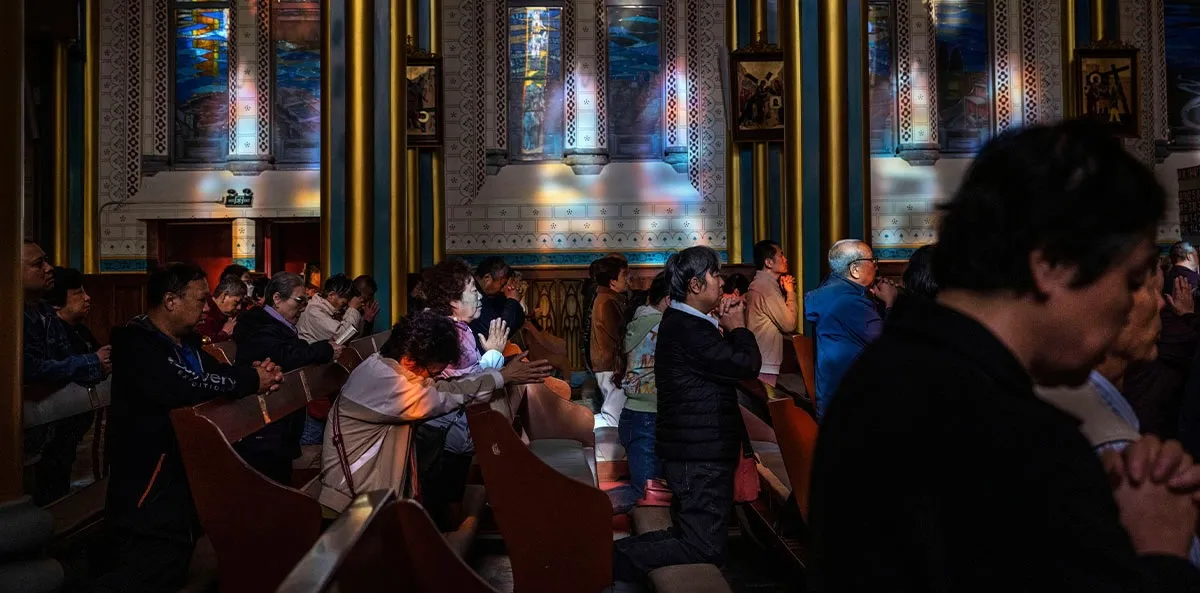
May 25, 2026
The Washington Stand
World News
If you want clear, biblical worldview analysis on Israel, Bible prophecy, the Middle East, and the cultural battles shaping the church, watch The Daniel Cohen Show on the Real Life Network. From Israel to California, believers are asking the same question: how do we read the headlines without panic, and how do we stay faithful without going numb? In this conversation with Pastor Jack Hibbs from the Real Life Network flagship studios in Chino Hills, we talk Israel and Iran, the underground church, Hollywood’s silence, and why the church must recognize Bible prophecy with courage, not fear.
Israel in the Headlines and Prophecy in Real Time
I’m speaking to you from Israel, about 9,000 miles away from Chino Hills, and Pastor Jack and I start with the reality that never stops being true: when Israel moves, the world watches. But believers should watch with more than curiosity. We should watch with a Bible open.
Pastor Jack is teaching a new series designed to help the church recognize Bible prophecy. That word matters: recognize. Not obsess. Not panic. Not speculate into the weeds. Recognize what Scripture has already told us would happen, then live steady, faithful, and unshaken.
Israel’s covenant identity is not a political slogan. It is a biblical fact rooted in the God of Abraham, Isaac, and Jacob. Pastor Jack points to what Scripture foretold: God drawing His people back from the four corners of the earth, the return to the land, the resurgence of antisemitism, and Israel surrounded by enemies. The headlines may feel chaotic, but prophecy tells us God is not improvising.
When Israel is in the news, Christians should sit up and take notice through a biblical worldview, not cable news emotion.
We also talk about Iran, because the eyes of the world keep shifting there. The regime appears weaker than it has been in years, the streets are unstable, and the region is watching. Pastor Jack frames it with clarity: Persia is Bible land. Iran today occupies the map where Scripture has already spoken about nations, hostility, and God’s purposes in the last days. That does not mean we set dates or write fan fiction. It means we remember God’s Word does not return void.
Iran’s Underground Church and the God Who Still Speaks
One of the most powerful parts of this conversation is not geopolitical. It is personal. We talk about the underground church in Iran and the testimonies that keep surfacing, stories of people who had never held a Bible, never entered a church, never had access to Christian resources, and yet encountered Jesus in dreams.
To some, that sounds impossible. To anyone who has read Acts, it sounds familiar.
Pastor Jack makes a point that lands with weight: God is not limited by tyrants, borders, or censorship. He can move through dreams, providence, a whispered prayer, and a digital download that no regime can fully stop. He references something that has been discussed publicly before: huge spikes in Scripture and sermon content being accessed inside Iran, even during the early COVID years. Whether it is a digital Bible, a sermon clip, or a single verse shared quietly, God uses it all.
God can shake the nations, but He also pursues one soul trapped under tyranny, because the gospel is always personal.
And that’s where Pastor Jack presses the church to do what the church is called to do. Pray for the people of Iran. Pray for freedom. Pray for protection for believers who are gathering quietly, risking everything to follow Jesus. Pray for courage, wisdom, and endurance.
We also address the glaring hypocrisy of our modern “human rights” class. Many celebrity voices have spent years condemning Israel, but they go silent when the Iranian regime brutalizes its own people. Pastor Jack’s answer is blunt: cowardice. And he points to the spiritual reality that fear of retaliation often silences people who are bold only when it is safe.
Israel is an easy target for the fashionable crowd. The church is an easy target. But confronting a regime that punishes dissent? That costs something. And too many of the loudest voices do not speak when speaking is dangerous.
Faith, Politics, and the Courage to Engage
Then we pivot to America, because you cannot separate faith and public life. You can try, but you will be disciplined by the world you refuse to engage. Pastor Jack says it plainly: believers must stop being spectators while their children’s minds are shaped by ideologies that hate truth, hate order, and hate God’s design.
We talk about activism aimed at protecting lawlessness and shaming enforcement, with schools even encouraging walkouts that put kids in danger. Pastor Jack’s counsel is practical and forceful: parents should stand up, push back, and hold institutions accountable. Organized disruption is not “grassroots” just because someone says it is. Often it is coordinated, funded, and designed to destabilize.
From there, we come home to California. I ask the question a lot of people are asking right now: is California salvageable? Pastor Jack says yes, and he explains why. In his view, the state has hit rock bottom, and that is exactly where a turnaround becomes possible. He points to growing momentum, stronger candidates, and a sharpening public awareness of fraud, corruption, and one party decay.
He also warns that if California turns, the church will be called to serve, not hide. Not merely comment from the sidelines, but engage in the work of rebuilding a moral foundation and defending what is true.
We close with something Pastor Jack says that I want every believer to remember, because it cuts through the noise: you live in a world of faith and politics whether you admit it or not. You either engage or you get vandalized by the culture.
Bible prophecy is not given to scare the church, but to steady the church and keep us obedient when the world shakes.
If you want more conversations like this, grounded in Scripture and unafraid of the moment we’re living in, watch The Daniel Cohen Show on the Real Life Network and share it with someone who needs clarity right now.
Related Articles
25 min
Daniel Cohen and Pastor Jack Hibbs: Israel, Iran, and Bible Prophecy Without Fear
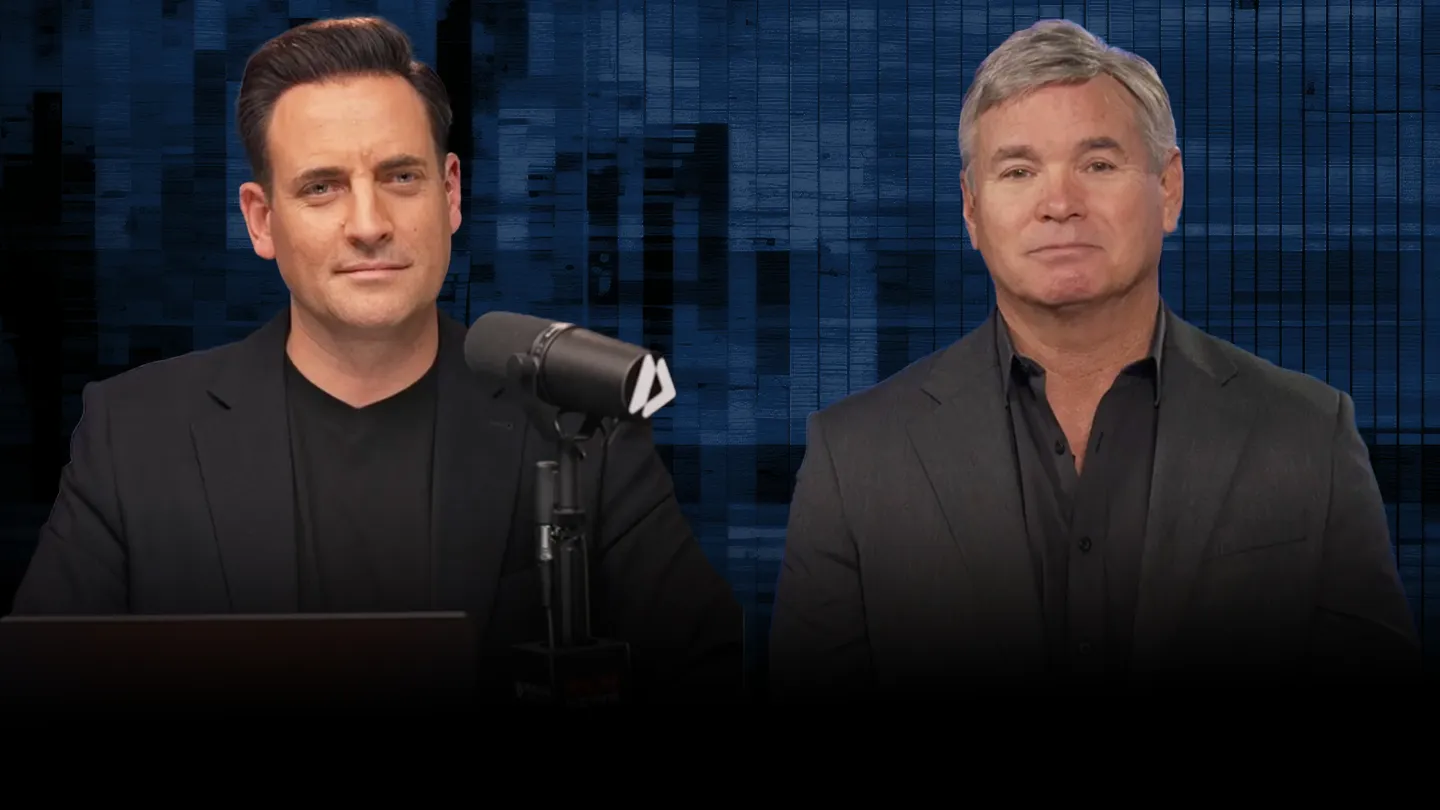
February 16, 2026
Daniel Cohen
World News
If you want Christian news, biblical truth, and a biblical worldview without apology, watch the Daniel Cohen Show on the Real Life Network. The UK is becoming a case study in what happens when a nation loses its spiritual backbone, its birth rates collapse, and leaders keep importing a population that does not share the country’s values. This is not abstract. It is measurable, visible, and accelerating.
The UK’s Demographic Collapse Is Real, and It Changes Everything
Let me start with the numbers, because feelings do not matter as much as facts. The total fertility rate in the UK hit a record low in 2024, around 1.41 children per woman. You need roughly 2.1 just to maintain a stable population without mass immigration. That gap is a demographic free fall. And it is not only England. Italy, Germany, Spain, the broader continent, it is a civilizational decline playing out in real time.
Then you add another layer. The 2021 census showed Christians in England and Wales declining sharply, while the “no religion” category surged. Meanwhile, the Muslim population has grown significantly in the last decade, and Muslim families on average have higher birth rates. That matters, because population change is not linear. It compounds.
When a nation stops replacing itself, someone else will replace it.
And let us be honest about something that polite society refuses to say out loud. Demographic change does not require a majority to reshape a country. It only requires concentrated communities, organized voting blocs, and leaders willing to trade identity for power. City by city, council by council, neighborhood by neighborhood, the transformation becomes permanent.
This is why you are seeing Britain water down its public Christian identity while making room for public Islamic identity. They will tell you it is “inclusion.” No, it is surrender dressed up as virtue.
The Double Standard Is the Story, and It Is Getting Darker
The UK was the land of the King James Bible, of C.S. Lewis, of missionary sending churches that helped shape the modern West. Now you have Christmas markets rebranded as “winter markets,” vendors told not to say Christmas, and public celebration toned down because the government cannot guarantee security. That is not inclusivity. That is fear.
At the same time, Ramadan celebrations and Islamic symbolism are publicly elevated, promoted, and normalized. And if you say, Daniel, you are picking on Muslims, slow down. I am describing what the UK has already become. A country can choose multiculturalism, but if it loses the confidence to defend its own culture, it is not multiculturalism. It is replacement through intimidation and demographic momentum.
Look at the stories coming out of the UK about policing speech. People questioned for posts. People arrested over comments. Police and even mental health professionals showing up at someone’s door because they expressed concern. Street preachers confronted and arrested, while other groups operate with security, intimidation, and protection.
A nation that criminalizes Christian speech while excusing Islamist intimidation is a nation in spiritual free fall.
And then there is the part the establishment tried to bury for years: grooming gangs. Documented cases of large scale abuse, and a public conversation that was muted because leaders were terrified of being called racist. Protecting children became less important than protecting careers. That is moral rot.
This Is a Warning to America, and Christians Cannot Stay Passive
Here is why I keep asking the “rescue” question. If a country becomes unsafe for Jews, it does not stop with Jews. If a country becomes unsafe for Christians to openly practice and speak, it does not stop with words. And if a government keeps importing a population that does not assimilate and then punishes native citizens for noticing, you are watching a nation unravel.
We are already seeing the same patterns in the United States. Pockets of Islamist influence. The red green alliance where radicals on the left and Islamists share the same political incentives. And a culture that calls any pushback “hate” while it quietly enforces a double standard.
This is not about hating people. This is about loving truth and protecting your children’s future. It is about refusing to be bullied into silence. It is about Christians acting like Christians, not spectators. Run for a school board. Show up at city council. Vote. Organize. Mentor. Build churches that are not ashamed of the gospel.
Because the takeover is not always tanks. Sometimes it is ballots, benefits, intimidation, and a population that has been trained to be afraid to speak.
And if you want a clear lens on what’s happening and how it connects to biblical truth, watch the Daniel Cohen Show on the Real Life Network. Share it with your family, send it to your church group, and get the app, because this is the kind of moment where staying quiet is not neutrality. It is surrender.
Related Articles:
25 min
UK Under Siege: Birth Rates Crashing, Christmas Canceled, and Christians Silenced
.webp)
January 23, 2026
Daniel Cohen